At a time when activists and campaigners are being asked to prove impact in ever more measurable ways, we wanted to ask a different question: what actually counts as a ‘win’? And what does it take to keep going when everything feels stacked against you?
As part of a new series on rights movements and what makes change possible, we spoke to Harsh Mander, a long-time human rights activist in India whose work spans areas from the right to food and shelter to his Caravan of Love campaign against hate violence and lynching.
Mander famously resigned from his position as a senior civil servant in the wake of the 2002 Gujarat riots, choosing instead to dedicate his life to justice work on behalf of marginalised communities. Since then, he has led landmark Supreme Court interventions on the right to food, homelessness and social protection. For many, he remains a deeply respected moral voice.
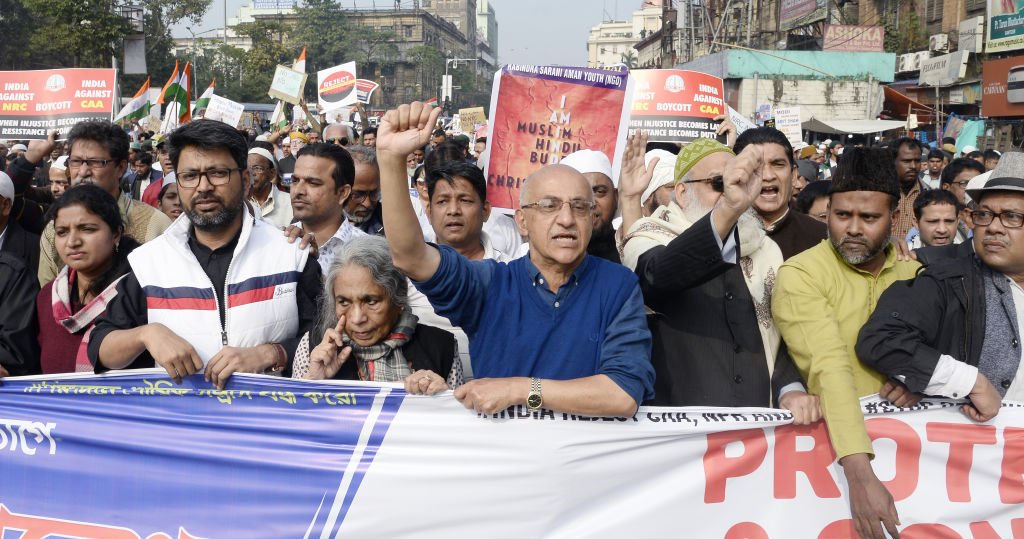
But he has also drawn sustained hostility from the Indian state, including criminal investigations, searches and legal action targeting him and organisations he has been associated with – moves widely seen by rights groups as part of a broader crackdown on dissent. A reminder that even speaking, organising, or documenting injustice carries real personal risk – and that not giving up can be a form of victory in itself.
Get our free Daily Email
Get one whole story, direct to your inbox every weekday.
Sign up now
His answers resist easy narratives of victory. Instead, they point toward something slower, harder, and perhaps more honest: that sometimes the work is the win.
Before you read, a couple of questions for you: Have you come across any clear victories for social movements? What does a ‘win’ look like in your context – and who gets to define it? Write to us at [email protected]. We’d like this to be a conversation.
This interview has been edited for length and clarity.
Looking back at your work, what would you describe as the actual win? What changed in a real material sense? And why does that change matter?I'm a little wary about the idea of big wins, because in the nature of the work that I have chosen, the most important battles are those where victory is very hard. When you're working with the most oppressed and the most marginalised of people, holding together and fighting back is the battle, is the victory.
Standing in solidarity with people who are suffering great deprivation and injustice. We filed a case, collectively through the People’s Union for Civil Liberties, seeing that there should be a legal fundamental right to food, and hunger should be unacceptable and unlawful. And in that, the Supreme Court then appointed me as one of their commissioners. I was given the responsibility to help draft the National Food Security Act.
I also went to the courts for a number of other issues – for instance, challenging the idea that begging is a crime. It's a colonial hangover. And that, to treat begging as a crime and not as a situation of deprivation in which the state needs to intervene positively.
Homeless people were dying in large numbers on the streets and the government virtually had no programme, no shelters. I went to the Supreme Court. We got an order which said that the right to shelter is an extension of the fundamental right to life, and more than 2,000 homeless shelters came up across the country.
But I have realised over time, one big learning is that a just and equal state can only exist in a just and humane society.
The answers to great injustices are not simply amending a law or getting a court order. So, understand that there's a cultural comfort with inequality in India's long history of caste for 2,000 years. Unless we fight the acceptance of the legitimacy, the inevitability of inequality, simply a law is not going to change the material conditions of people who are at the bottom of this unequal social order.
The homeless shelters – it was heartbreaking to me. The government erected the shelters; they literally resembled what I would call Victorian poor houses, where it's just housing bodies at night and ejecting them in the morning to not have the scandal of hundreds of deaths. The ideas of dignity, respect – that the shelter is not the destination of a homeless person but part of a long journey – were not there.
And even when I went back to the courts, they could not understand – we've given you shelters now, what's the big deal?
In the Caravan of Love, I try to reach out to families of people who have been killed in acts of lynching in India over the last 10, 12 years. The crowds gather and beat an unarmed Muslim man to death and videotape it and circulate it. This is performative hate violence.
So I resolved with a group that we would reach the homes of each of these people who are lynched. We seek forgiveness. We say, you're not alone in your suffering. We pledge to be with you as you fight for justice and pick up the broken pieces of life, and you will tell your story.
Now that is a journey again – I started in 2017, and it continues because hate continues. This work continues. Persecution has only increased, including of me. So it's harder and harder to do this.
But what I see is that there is a societal deepening of radicalisation in India, and actually in most parts of the world. Strangely, more and more people around the world are choosing leaders who are teaching us to hate.
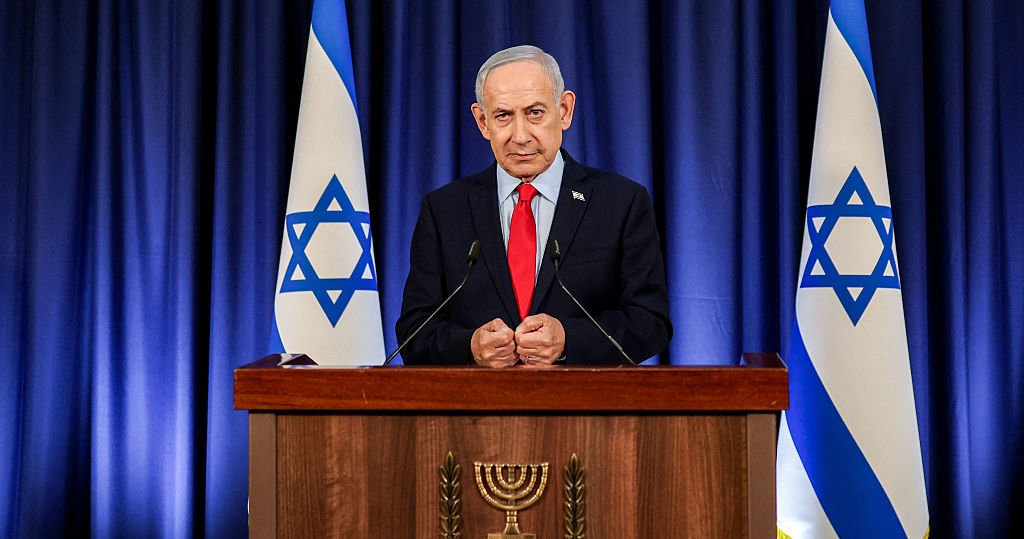
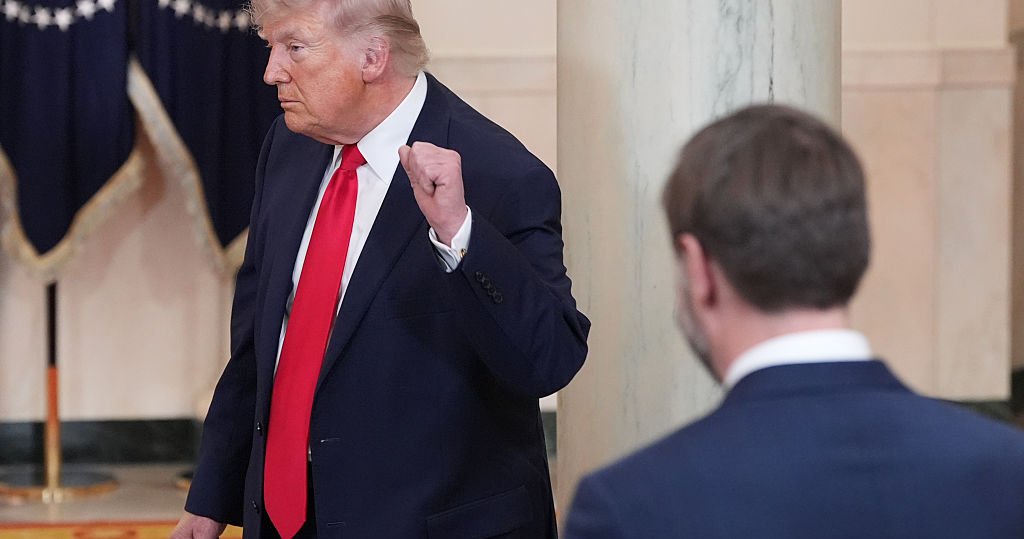
If I feel the problem is Narendra Modi or Donald Trump or Binyamin Netanyahu, I think I'm missing the point – because these are people who are chosen by people.
So there is a larger civilisational crisis, I believe. And it's not enough to engage with policy – you have to engage with society: power, inequalities, prejudices, beliefs, and its potential for rebuilding a humane society. I think that's my big learning.
When did it almost fall apart? How do you keep going – and not lose hope?Yeah, that's a question I keep asking myself.
I'll tell you a little story. There is a young man – this group of young people who were agitating against the changes in India's citizenship law, which was targeting India's Muslims. It became a nationwide battle and he was put into prison, charged with a conspiracy.
When he came out, he was completely unbending. I had a long talk with him. I asked him, after everything you've faced, do you still have hope?
And he said, “na-umeed hona kufr hai” – despair is blasphemy.
It's a very interesting idea. I feel, however hard times become, hope is a public duty. Because if you feel nothing can get better, then you don't do anything. But if you believe that however hard things are, they can get better, then you are responsible to do all that is necessary to make things better.
In our own context in India, in this really difficult time where I see my life's work as battling hate on the one hand, battling indifference and acceptance of very unequal lives on the other – one of my books is called Looking Away: Inequality, Prejudice and Indifference in New India – if I just looked around at my own social class in India, it would be very hard to hold onto hope.
There is something peculiar to our context. In the US, if you are white, there's a greater chance you'd vote Trump. If you're white with a university degree, the chances come down significantly. In India, it's the opposite. If you're upper-class Hindu, the chance that you're voting Modi’s Bharatiya Janata Party is higher; with a university degree, even higher; with elite institutions, even higher.
The kind of prejudice you hear in everyday conversations – among people who have held high positions, had the best life chances – is quite frightening.
I find that working-class Indians, to a much greater degree, still live a life of mutual respect, where you live with diversity as a way of life.
If I have to think of the quintessential Indian, who would she be? She would be this woman who comes out of her home, walks down the road, sees a mosque and bows her head. She goes a little further, sees a church, bows her head. Goes further, sees a temple, bows her head. I've not seen that woman anywhere else in the world, but I see her here.
And that gives me hope.
And the acts of kindness, of solidarity – that shows that our moral centre is not completely broken.
I studied Nazi Germany to try to understand what is happening in our own country. Historians told me that the percentage of non-Jewish Germans who saved Jewish lives was perhaps 0.01%. I would say that we are still very far from there. Whenever there are large riots, there are people who come out and try to save lives, put their own lives at risk. So there's a humanity that we retain.
The belief in the goodness of human nature, the potential of goodness in human nature, I think is what keeps me going.
What have you had to navigate or give up along the way?I never regretted leaving the civil service.
The civil service is an extraordinary place in India. You have enormous power. It's very important to use that power not as something that you deserve, but something that is given to you in trust, so that you can use that power to change the lives of those who suffer the greatest oppression and deprivation.
I valued whatever I could do. And yet when this massacre happened in Gujarat, I realised that India was hurtling in a direction exactly the direction where it is now.
Where you can fight many battles as part of the state, but this battle is so fundamental that I can only fight it as an independent individual.
A lot of people wonder why I don't enter mainstream politics. I wonder if it is my own limitation – that I find it very difficult to negotiate grey moral areas. The political system involves all sorts of difficult moral choices which you might make for the larger good. I'm unable to allow myself to do that.
I often wonder whether that is a limitation, and I could have done more. But it is necessary for me to say: this is right, this is wrong.
So the third choice is working in civil society.
I could have worked with homeless kids and set up a beautiful institution for a few hundred children. It would have made me very happy and those children very happy. But what about the million others?
So I have chosen to work more in terms of attempting a model in societal engagement, with values.




Comments (0)