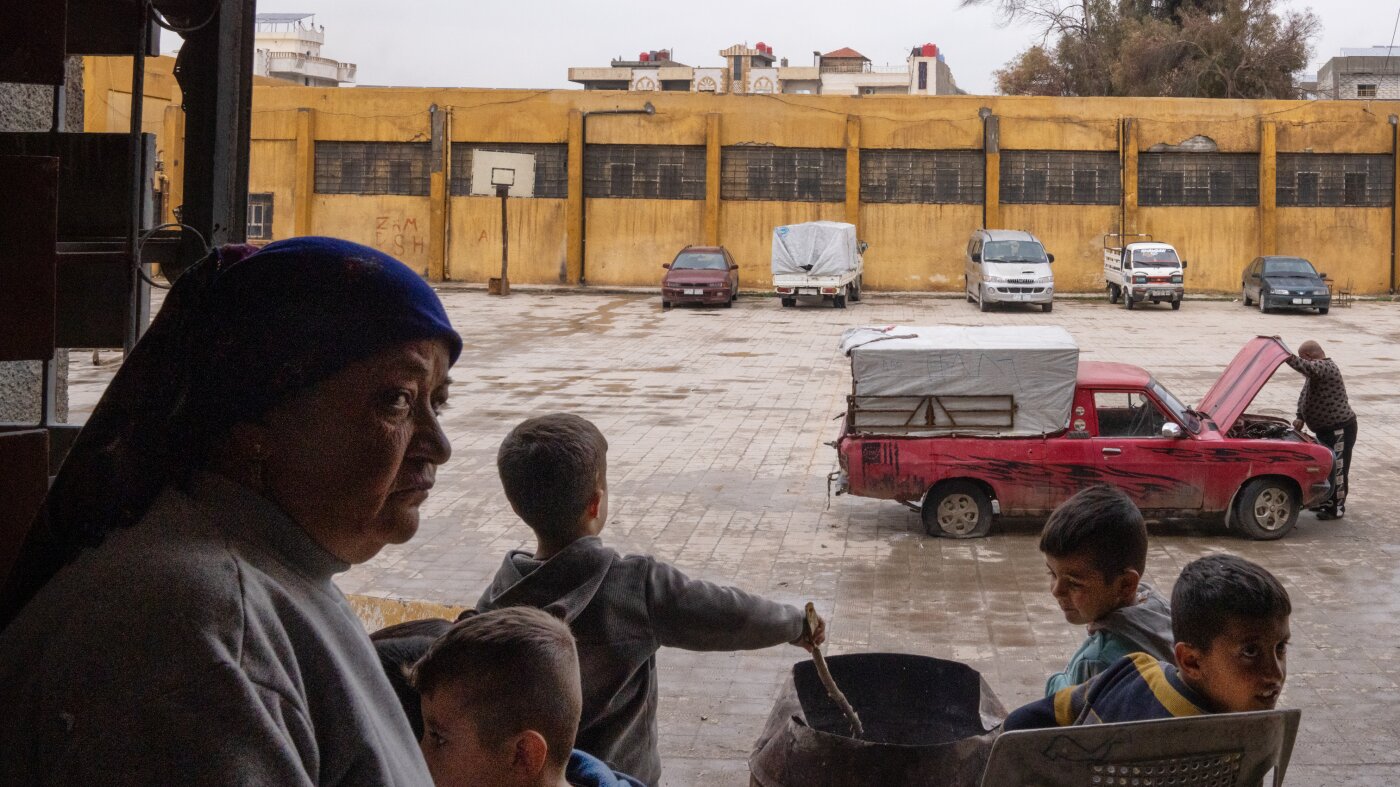
Iran's foreign minister visits Moscow Monday after stops in Pakistan and Oman and calls with regional partners, but there are no signs of direct talks with Washington as diplomacy stalls.
A MARTÍNEZ, HOST:
Iran's foreign minister is in St. Petersburg today as part of a diplomatic blitz that's included trips to Pakistan and Oman and calls with Arab counterparts over the weekend. But missing from this flurry of diplomacy is any sign of a meeting between Washington and Tehran. NPR international correspondent Aya Batrawy joins us from Dubai. So President Trump initially said he was sending his negotiators to Pakistan this weekend to meet with Iran. Then he quickly canceled the trip. So what happened?
AYA BATRAWY, BYLINE: OK, A. There are two competing narratives here. One puts Trump in control, and the other suggests Iran is calling the shots. Let's start with Trump. He said he decided to cancel that trip to Pakistan, which is mediating here, because it would involve too much time wasted on traveling and said Iran's leadership is in disarray. That's something he's been saying over many days now. Now, on Truth Social, he said, quote, "nobody knows who is in charge, including them." And he said the U.S. holds all the cards and that if Iran wants to talk, all they have to do is call. So he told reporters that Iran put forward a proposal that wasn't good enough and that just 10 minutes after he canceled that trip to Pakistan, Iran put forward a better proposal.
Iran, though, has not confirmed any of this, A, and it never said it agreed to another round of talks. Actually, Iran continues to say the U.S. can't be trusted and that it must end its naval blockade out there in the Arabian Sea on Iranian ships first. So this weekend, what we saw was Iran's foreign minister, Abbas Araghchi, going as planned to Pakistan, and only after he left did Trump say he canceled his envoys' travel there. Another aspect to note here is that it's not Araghchi who's actually leading these talks with the U.S. It's Iran's powerful head of Parliament, Mohammad Bagher Ghalibaf, who remains in Tehran.
MARTÍNEZ: And what do we know about why Iran sent its foreign minister abroad?
BATRAWY: Well, there's pressure from its most important allies and neighbors for the Strait of Hormuz to open and questions about what a realistic deal could look like - whether it could be narrowly focused on getting oil, gas, fertilizers and other essentials flowing again through that waterway in exchange for an end to the U.S.-Israeli war. But then that raises the question of - what was the point of this war if it's to reopen a waterway that was already open?
Now, Araghchi, the foreign minister - you know, he made a stop in Oman - that's the other country that borders the Strait of Hormuz - to discuss what he said was close coordination. And today, he is rounding out his tour in Russia with meetings there. He also spoke by phone with the foreign ministers of Saudi Arabia, Qatar, Egypt. These Arab countries and China are pushing for those 13 million barrels of oil a day that are stuck in the Gulf to freely flow through the strait again, which Iran currently controls.
MARTÍNEZ: Yeah. President Trump told Fox News that Iran is also facing pressure from the U.S. naval blockade. He said Iran has three days before it runs out of storage for oil and has no ships to put it on.
BATRAWY: You know, he says Iran's oil pipelines will explode not because of American bombs, but because Iran has no place to store that on to relieve that pressure underground. But that's an extremely short timeline, giving Iran just until Tuesday. I asked Amena Bakr - she's the head of Mideast energy research from Kpler - about that claim of three days. She says Iran is running out of storage, but it's closer to 20 days at current production levels.
AMENA BAKR: But usually, what happens is that before they run out of storage, they begin to slowly cut production. And that's what happened with the other Gulf countries, too - Kuwait, Iraq, even the UAE. I mean, they don't wait to fill up their storage.
BATRAWY: Right. So she says Iran has a southern terminal outside the Strait of Hormuz in the south. And she says it could be used for rerouting some of that Iranian oil, provided that they can get their ships there to bypass the U.S. blockade. The U.S. Navy CENTCOM says that they've intercepted nearly 40 Iranian ships, but, you know, there's been a shadow fleet of Iranian ships that have gotten through.
MARTÍNEZ: That's NPR's Aya Batrawy. Thank you very much.
BATRAWY: Thanks, A.
(SOUNDBITE OF MUSIC)
Copyright © 2026 NPR. All rights reserved. Visit our website terms of use and permissions pages at www.npr.org for further information.
Accuracy and availability of NPR transcripts may vary. Transcript text may be revised to correct errors or match updates to audio. Audio on npr.org may be edited after its original broadcast or publication. The authoritative record of NPR’s programming is the audio record.