There's no end in sight for the dueling U.S. and Iranian naval blockades. This raises a host of challenges as for the possibility of an extended standoff or a resumption of hostilities.
STEVE INSKEEP, HOST:
We have an initial price for the war in Iran. The Pentagon estimates the military has spent $25 billion so far for ammunition, jet fuel and other expenses.
MICHEL MARTIN, HOST:
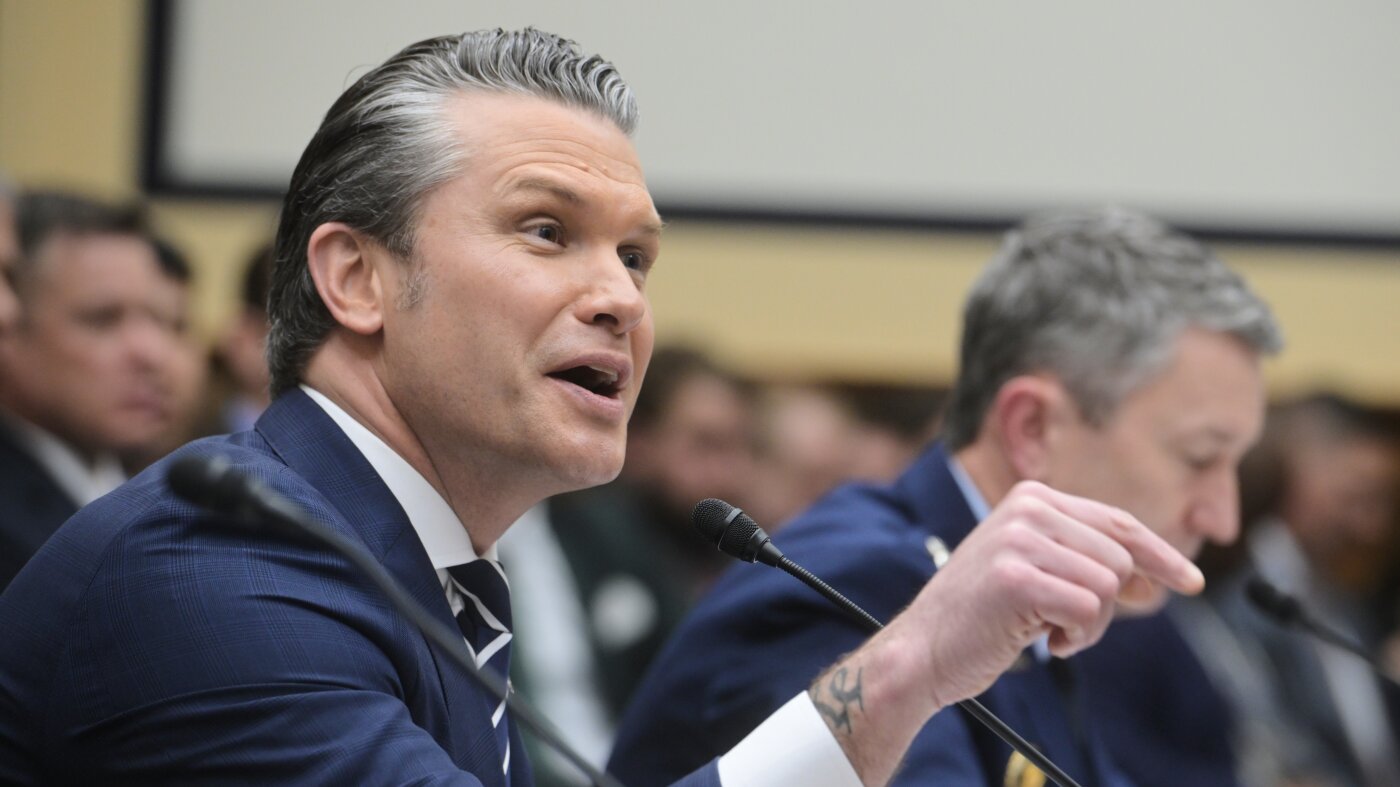
A Pentagon official offered that number in testimony before Congress. Defense Secretary Pete Hegseth testified, too, and he talked about the people he says are the military's true enemies.
(SOUNDBITE OF ARCHIVED RECORDING)
PETE HEGSETH: The biggest adversary we face at this point are the reckless, feckless and defeatist words of congressional Democrats and some Republicans.
MARTIN: In a moment, we'll hear from a senator who will be questioning Hegseth later today. But we're going to start with an update on the dueling U.S. and Iranian naval blockades.
INSKEEP: NPR national security correspondent Greg Myre is following that standoff. Greg, good morning.
GREG MYRE, BYLINE: Hi, Steve.
INSKEEP: What's happening in the strait as of today?
MYRE: Well, not a lot. Shipping traffic remains at an almost total standstill. Both sides say they're inflicting economic pain - and they are - and both believe the other side will blink first. Now, I spoke with Kevin Donegan. He's a retired Navy vice admiral. A decade ago, he commanded the 5th Fleet, which is based in Bahrain. He says the U.S. could keep this blockade going indefinitely.
KEVIN DONEGAN: It's very sustainable with the forces they have in the region now because they can even peel some of that back and move others into the region and do a rotation.
MYRE: And Iran also believes it can maintain its blockade using a combination of mines at sea and drones and missiles from the shore.
INSKEEP: Does the U.S. have the capability to clear those mines and defend against those drones?
MYRE: Well, it does. And Donegan says a negotiated agreement would be the best, safest way to reopen the strait, and those talks are stalled at the moment. Now, he says the Navy can clear the mines, though it takes time to do this and to further weaken Iran's forces on land. He's now at the Middle East Institute in Washington, so he doesn't have access to the Navy's plans. But based on his experience, he believes the U.S. is relying on unmanned vessels to clear mines.
DONEGAN: Remotely controlled surface ships and remotely controlled - I wouldn't call them submarines. They more look like big torpedoes, so to speak, and they can find any mines that are there. So you basically open two good passageways through, one coming in, one coming out.
INSKEEP: OK. If you open passageways, would the Navy then escort oil tankers?
MYRE: Well, yes. He says they could do that, but there would still be risk. And right now, it doesn't seem the U.S., either the Navy or the military at large, is prepared for this. And the shipping companies don't seem to have the appetite for that level of risk. Also, this would be a partial solution at best. You wouldn't see the same level of prewar shipping traffic, not even close, according to Donegan. He says before the war, more than a hundred ships sailed through the strait daily to and from Iran, to and from Arab countries, carrying oil, natural gas and other key components of the global economy.
INSKEEP: OK. Hard to get up to that level again. How long has the U.S. been planning for a scenario like it faces now?
MYRE: Well, a long time, Steve. The U.S. naval presence in the Gulf dates to 1949. The 5th Fleet was formally established in Bahrain in 1995, specifically to protect the flow of oil. Here's Donegan again.
DONEGAN: It's at the forefront of everything that we did in the 5th Fleet, including knowing that if we carried out military operations, this would be a card that the Iranians would play. It's completely expected that this is what they would do, and it's built into your planning process.
MYRE: So Iran's move was no surprise to the U.S. Navy. If there was any surprise, it's the Gulf has remained open despite all the Middle East turmoil over the decades.
INSKEEP: NPR's Greg Myre. Thanks so much.
MYRE: Sure thing, Steve.
Copyright © 2026 NPR. All rights reserved. Visit our website terms of use and permissions pages at www.npr.org for further information.
Accuracy and availability of NPR transcripts may vary. Transcript text may be revised to correct errors or match updates to audio. Audio on npr.org may be edited after its original broadcast or publication. The authoritative record of NPR’s programming is the audio record.








Comments (0)