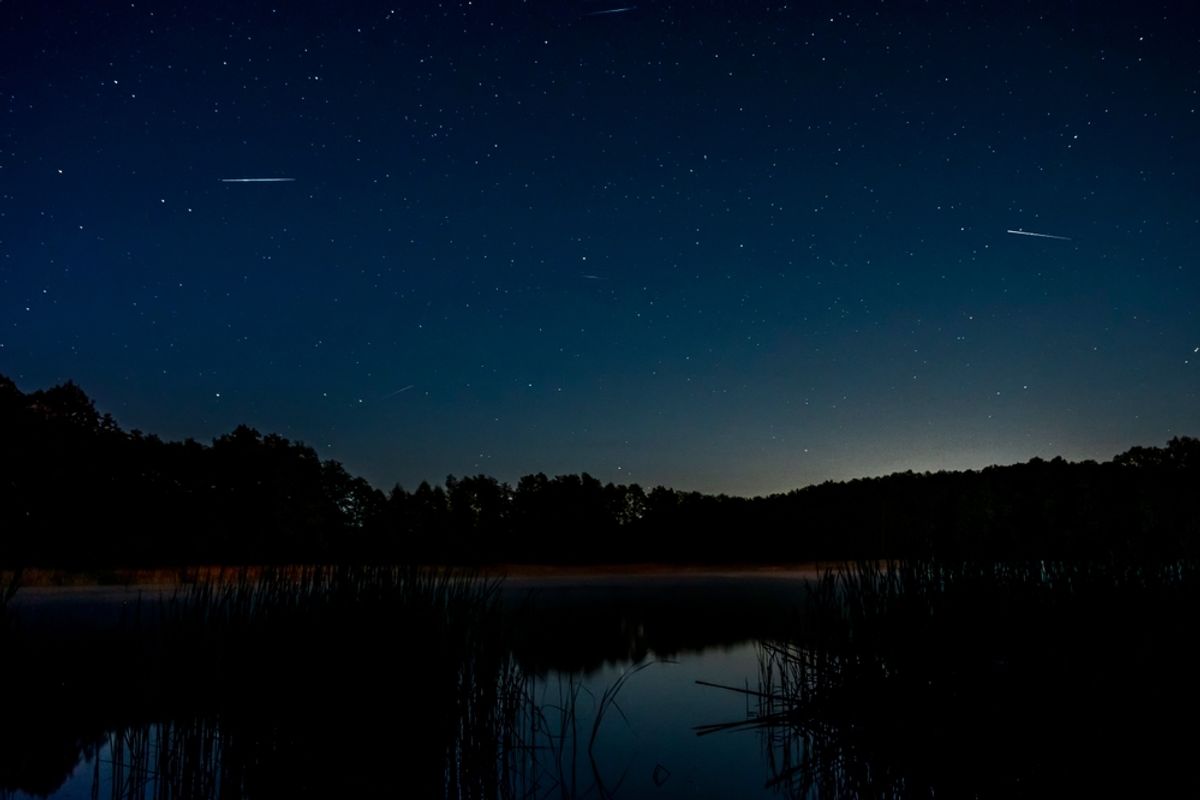
The 2026 Eta Aquarids meteor shower will soon appear at full force, filling the sky with streaks of light in the early morning of May 6, 2026. Every year, this meteor shower emerges at the constellation Aquarius, with meteors traveling at about 40.7 miles per second as they enter Earth’s upper atmosphere. This time around, the Eta Aquarids are poised to peak between May 5 and May 6.
If you want to see the Eta Aquarids at their peak, you’ll have to stay up late. The best time to view them will be right before dawn on May 6; meteor showers like this one are typically clearest around midnight and pre-dawn. Fortunately, you won’t need any binoculars or telescopes to see the meteors shoot across the sky.
Here’s everything you can do to get the most breathtaking view of the Eta Aquarids.
How to Watch the Eta Aquarids
The Eta Aquarids (or Eta Aquariids) are active every year from around April 19 to May 28, but they always peak in early May.
The ideal way to view this meteor shower is from the Southern Hemisphere; this is because the constellation Aquarius — the source of the Eta Aquarids “radiant,” or the point in the sky where the meteors will appear to originate — is higher up in the Southern Hemisphere than it is in the Northern Hemisphere at this time of year.
Though views from the Southern Hemisphere can’t be beat, the Eta Aquarids will still be visible in the Northern Hemisphere, where they’ll look like “earthgrazers” — long meteors that appear so low on the horizon that it seems like they’re skimming the surface of Earth, according to NASA. Those watching in the Northern Hemisphere will likely see between 10 and 30 meteors per hour before dawn.
To view the Eta Aquarids, it’s recommended to find a viewing spot where the sky is darkest, away from city lights or street lights. As you look up after midnight on May 6, you should start to see the meteor shower pop up. The meteors will show up near the brightest star in Aquarius, Eta Aquarii, the namesake of the Eta Aquarids and one of the four stars that make up a pattern representing a water jar.
A waning gibbous Moon during the Eta Aquarids’ peak will brighten the sky, slightly reducing visibility, but the meteor shower will still be visible to the naked eye regardless.
Read More: Meteor Traveling 35,000 MPH Explodes Over Texas, Possibly Striking a Houston House
Crumbs from Halley's Comet
As you watch a meteor shower, you’re seeing what are essentially crumbs left behind by a passing comet or asteroid. In the case of the Eta Aquarids, these crumbs come from Halley’s Comet (officially designated as Comet 1P/Halley).
Halley’s Comet takes approximately 76 years to orbit the Sun; it was last observed in 1986, and it won’t be seen again until 2061. Whenever the comet returns to the inner solar system, it sheds small pieces of ice and rock that become the Eta Aquarids. Earth then passes through the cluster of meteors, which burn up as they hit the atmosphere at high speeds, creating the streaks of light seen in the sky during a meteor shower.
Meteor showers often leave glowing “trains,” trails of debris that last anywhere from a few seconds to several minutes. According to the American Meteor Society, the fast meteors in the Eta Aquarids produce a high percentage of persistent trains, although there are few fireballs (exceptionally bright meteors).
Upcoming Meteor Showers in 2026
Even if you aren’t able to catch the Eta Aquarids, you’ll still have ample opportunities to experience meteor showers in 2026. While the next few months will bring the occasional faint meteor shower, the more impressive showers start to become visible during the second half of the year.
One of the most popular meteor showers to look forward to is the Perseids meteor shower, which will peak around August 12 to 13 in 2026. The Perseids are famous for their bright fireballs and colorful trails — during this meteor shower, it’s possible to see as many as 50 to 100 meteors per hour.
Meteor showers will continue to be especially frequent in fall and winter: Ones to mark on the calendar include the Orionids in October (which, like the Eta Aquarids, also come from debris left by Halley’s Comet), the Leonids in November, and the Geminids in December.
Read More: A Meteorite Burst Through Ann Hodges' Roof in 1954 and Struck Her Mid-Nap — Leaving a Large Bruise and Making History
Article Sources
Our writers at Discovermagazine.com use peer-reviewed studies and high-quality sources for our articles, and our editors review for scientific accuracy and editorial standards. Review the sources used below for this article:
This article references information from NASA:
Eta Aquarids This article references information from the American Meteor Society:
Eta Aquarids