I met a young man in his twenties in the intensive care unit at Nasser Hospital in Khan Younis, Gaza. He was the victim of an Israeli rocket attack three weeks earlier near the yellow line. His left leg was amputated above the knee, and the part of the extremity that remained had multiple external fixators in place; he also had multiple other lacerations and suffered severe abdominal trauma requiring open laparotomy, bowel resection, and ostomy placement. He was intubated and had developed a ventilator-associated pneumonia with a multidrug-resistant bacterium called Acinetobacter. He was on a combination of antibiotics that would probably be ineffective.
In Gaza, there is a lot of what we infectious disease specialists refer to as “drug-bug mismatch”—patients often get placed on antibiotics that are ineffective against the offending pathogen due to a limited antibiotic arsenal and a growing antibiotic resistance crisis.
Due in part to ongoing restrictions on the entry of lifesaving medicines by the Israeli Occupation, the antibiotic supply is severely limited in Gaza, often changing week to week based on availability of donations from the World Health Organization. Patients unnecessarily die from often treatable infections because of delays in receiving effective antibiotic therapy.
The collapse of the healthcare system, overwhelming overcrowding in and around hospitals, and breakdown of hygiene and sanitation infrastructure all conspired to facilitate the spread of multidrug-resistant bacteria and exacerbate Gaza’s antimicrobial resistance burden. Even before the genocide, Gaza suffered from high levels of antibiotic resistance, which has since accelerated. Heavy metal contamination from explosive remnants from Israeli airstrikes is also contributing to the selection of resistant bacteria in the environment.
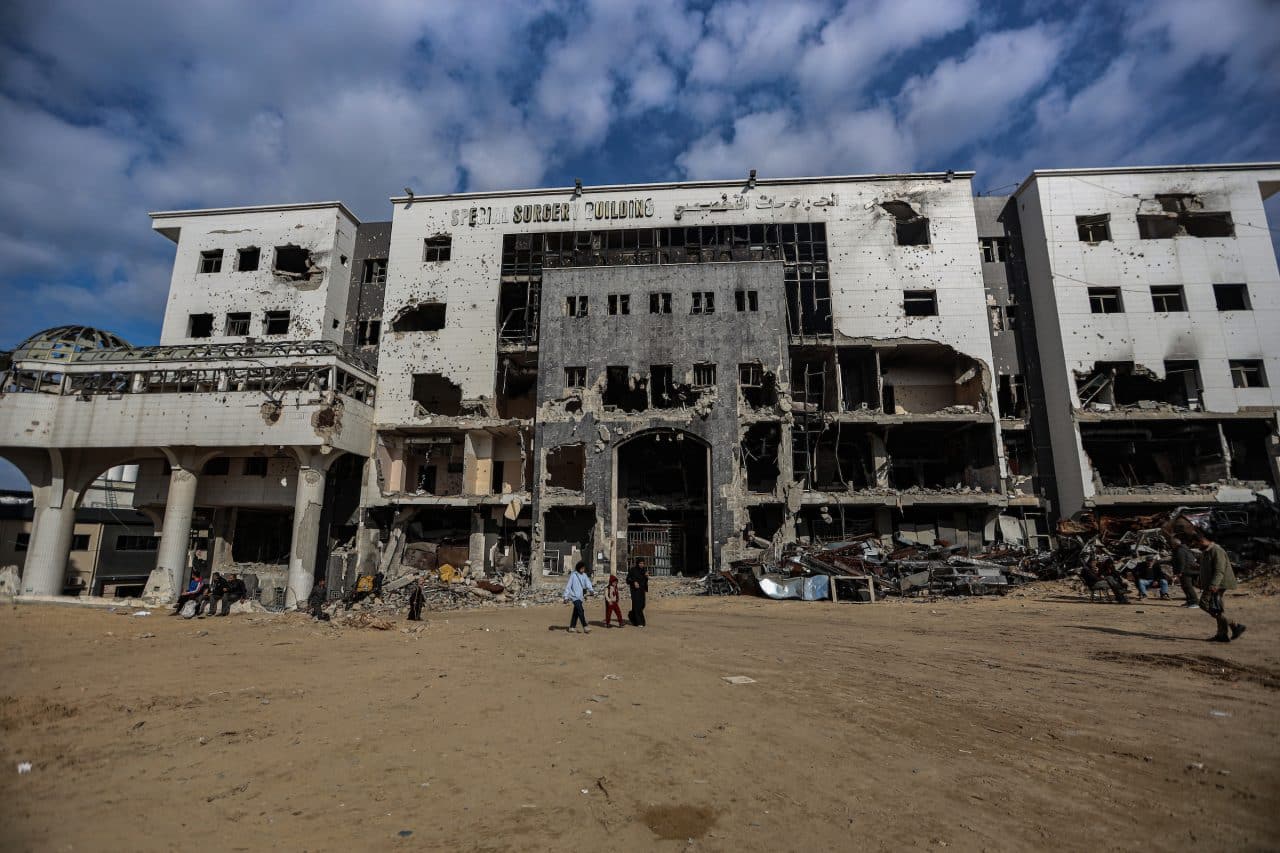
Prior to Israel’s medicide, Gaza was home to 38 hospitals, many providing advanced specialty care; now there are only a handful of remaining hospitals functioning at a fraction of their prior capacity, for a population of over two million people in dire need.
Hospital and public health laboratory capacity is severely limited in Gaza because of targeted destruction of laboratory infrastructure and blockade of supplies by the Occupation. Microbiology laboratories struggle to perform essential, time-sensitive diagnostic tests, such as cultures to identify bacteria from various body specimens and environmental sites, and antibiotic susceptibility tests to predict the best treatment options for the individual patient and the hospital population at large. These constraints also impair infectious disease surveillance and outbreak response measures.
Infection prevention and control efforts have faced extraordinary challenges following Israeli assaults on Gaza’s hospitals and surrounding communities. Hospitals were overwhelmed with civilian casualties, making adherence to basic principles of hygiene such as handwashing, sterilization of medical equipment, and proper wound care nearly impossible. Severe overcrowding facilitated the spread of infectious diseases. Since the “ceasefire”, hospitals have continued to face severe shortages of alcohol-based hand sanitizer, solutions to sterilize medical equipment, and personal protective equipment.
The risk of infection, however, extends beyond the hospital walls. During our time in Gaza, our group of volunteers was invited by a representative of the Ministry of Health to bear witness to life in the tent camps surrounding the hospital. It struck me that each of these tents was crowded with entire families who had experienced multiple displacements. The first thing I noticed was the stench of raw sewage and garbage in the air. Debris littered the ground. Latrines were dug in the sand that would overflow when it rained. These conditions increased susceptibility to communicable respiratory, skin, and diarrheal diseases.
They also created an ideal breeding ground for rodents. One of the resident doctors at Nasser Hospital, whom I spoke with, described a cluster of leptospirosis cases on the wards in early February. Leptospirosis is a serious bacterial infection that spreads from rodents to people; infection can present with pneumonia, kidney and liver failure, and result in death without proper treatment. Extensive rainfall and flooding in the tents surrounding the hospital likely exposed people to rodent urine and feces, leading to disease transmission.
Walking down the dusty streets of Khan Younis, it became apparent to me how Israel was attempting to make life unlivable for Gazans by destroying their built environment. The air was thick with particulate matter and smoke, making breathing labored. Patients with underlying breathing conditions were especially vulnerable to respiratory viral infections like influenza and COVID and to bacterial pneumonia; I saw several patients admitted with pneumonia to Nasser Hospital.
Visiting the local grocery store, the shelves were stocked with overpriced junk food and highly processed foods. Fresh produce was rare. Even before the genocide and famine, Gaza was kept chronically food insecure, at the brink of starvation, by the Occupation. Malnutrition weakens the immune system and predisposes patients, especially young children, to infection. During my visit, I witnessed a heartbreaking scene of small children queuing up with large, empty pots outside a makeshift soup kitchen near the hospital, screaming and crying with hunger. Between manufactured malnutrition, traumatic injuries, and the burden of chronic and infectious diseases, it is not surprising that Gaza has one of the lowest life expectancies in the world.
Returning to the case of the twentysomething-year-old patient in the intensive care unit, his assault did not end with the Israeli rocket attack that tore his body apart. He was subsequently subjected to more insidious forms of violence by the Occupation: his ability to fight off infection was compromised because of malnutrition due to ongoing limitations on entry of nutritious food; he developed pneumonia from spread of bacteria in the unit due to restrictions on entry of cleaning supplies and personal protective equipment; and once he developed the pneumonia, his treatment options were severely limited due to an insufficient supply of effective antibiotics.
I encountered many such patients in Gaza. An elderly woman who developed an infected pressure ulcer on her hip from prolonged sitting on the hard floor of her tent resulting in sepsis and requiring surgical debridement and intravenous antibiotics; a young woman who developed a highly contagious parasitic infestation from scabies due to overcrowding and poor hygiene conditions in her family’s tent; another woman who developed severe gastroenteritis and diarrhea likely from drinking contaminated water leading to dehydration and kidney failure.
A discussion on the threat posed by infectious diseases in Gaza would be incomplete, however, without addressing frontline healthcare workers, who play essential roles in preventing and slowing the spread of infections in the healthcare setting. Gaza’s doctors, nurses, and infection preventionists have endured great difficulty during the genocide, facing multiple displacements and challenges in securing food and clean water. One of the doctors I spoke with, whose best friend had been killed, told me everyone in Gaza had lost someone or something precious to them.
Other hospital staff, particularly those in leadership positions, like Dr. Hussam Abu Safiya, the director of Kamal Adwan Hospital, have been kidnapped, tortured, and unlawfully detained by the Occupation, while others like Dr. Hammam Alloh, a nephrologist from Al-Shifa Hospital, have been murdered, leaving critical gaps in the healthcare workforce; such gaps have been linked to increased risk of hospital-acquired infections.
Gaza’s medical students and trainees have also been denied their right to medical education, including education and training on infection prevention and antimicrobial stewardship, over the preceding two and a half years of assault. This poses serious challenges to curbing and decelerating the emergence of antimicrobial resistance in Gaza’s teaching hospitals.
Addressing the growing threat of infectious diseases in Gaza requires bold, urgent action. Firstly, a true ceasefire must be enacted. This includes lifting restrictions on entry of lifesaving medical supplies and medicines, particularly antibiotics. Humanitarian workers must be allowed unimpeded access into Gaza and currently imprisoned healthcare workers must be freed. Patients requiring specialty care must be allowed medical evacuation—many of these patients succumb to infectious complications while awaiting safe passage. Resources must be allocated to rebuilding Gaza’s sanitation infrastructure, healthcare system, and laboratory capacity. Only with these prerequisites in place can hospital infection prevention and control and antimicrobial stewardship programs realize their full potential. Finally, the systems of apartheid and occupation that created the conditions for medicide must be dismantled; Israel must be held accountable for its genocidal actions in Gaza.