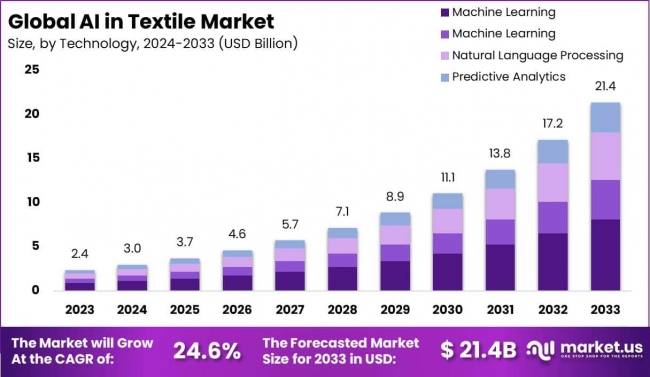
AI in Textile Market By Application Report Highlights Growth in Smart Manufacturing Technologies
The AI in Textile Market By Application report explores how artificial intelligence is transforming the global textile industry through intelligent automation and advanced analytics. Textile manufacturers are increasingly investing in AI-powered solutions to improve production efficiency, maintain product quality, and support sustainable operations. The growing demand for faster production cycles an... moreAI in Textile Market By Application Report Highlights Growth in Smart Manufacturing Technologies
The AI in Textile Market By Application report explores how artificial intelligence is transforming the global textile industry through intelligent automation and advanced analytics. Textile manufacturers are increasingly investing in AI-powered solutions to improve production efficiency, maintain product quality, and support sustainable operations. The growing demand for faster production cycles and cost-effective manufacturing is accelerating the adoption of AI technologies across textile facilities worldwide.
Artificial intelligence is improving textile manufacturing by enabling real-time monitoring and automated decision-making. AI systems can optimize machine settings, reduce operational inefficiencies, and improve production output. These technologies help manufacturers maintain consistent quality standards while minimizing production delays and labor-intensive tasks.
The report highlights the growing importance of AI in textile quality control and defect detection. AI-enabled computer vision systems can inspect fabrics automatically and identify defects with greater accuracy than traditional inspection methods. These systems reduce human error and help manufacturers improve customer satisfaction by ensuring higher product quality.
AI is also playing an important role in textile design and fashion innovation. Intelligent software platforms analyze market trends, customer behavior, and purchasing patterns to support product development. Designers can use AI-generated insights to create new textile patterns and fashion collections that align with consumer preferences. This allows companies to reduce development time and improve competitiveness in the market.
Supply chain optimization is another major application area covered in the report. AI-driven forecasting systems improve inventory management and demand prediction, helping companies reduce excess stock and improve logistics efficiency. These technologies provide better visibility across the supply chain and support more efficient business operations.
In addition, AI technologies are helping textile companies improve sustainability efforts. Intelligent manufacturing systems optimize water usage, energy consumption, and waste management during production processes. As environmental concerns continue to influence industry strategies, AI-based sustainability solutions are becoming increasingly important for textile manufacturers worldwide.
Overall, the AI in Textile Market By Application report demonstrates how artificial intelligence is driving innovation, efficiency, and long-term growth across the textile industry.