
Remember me
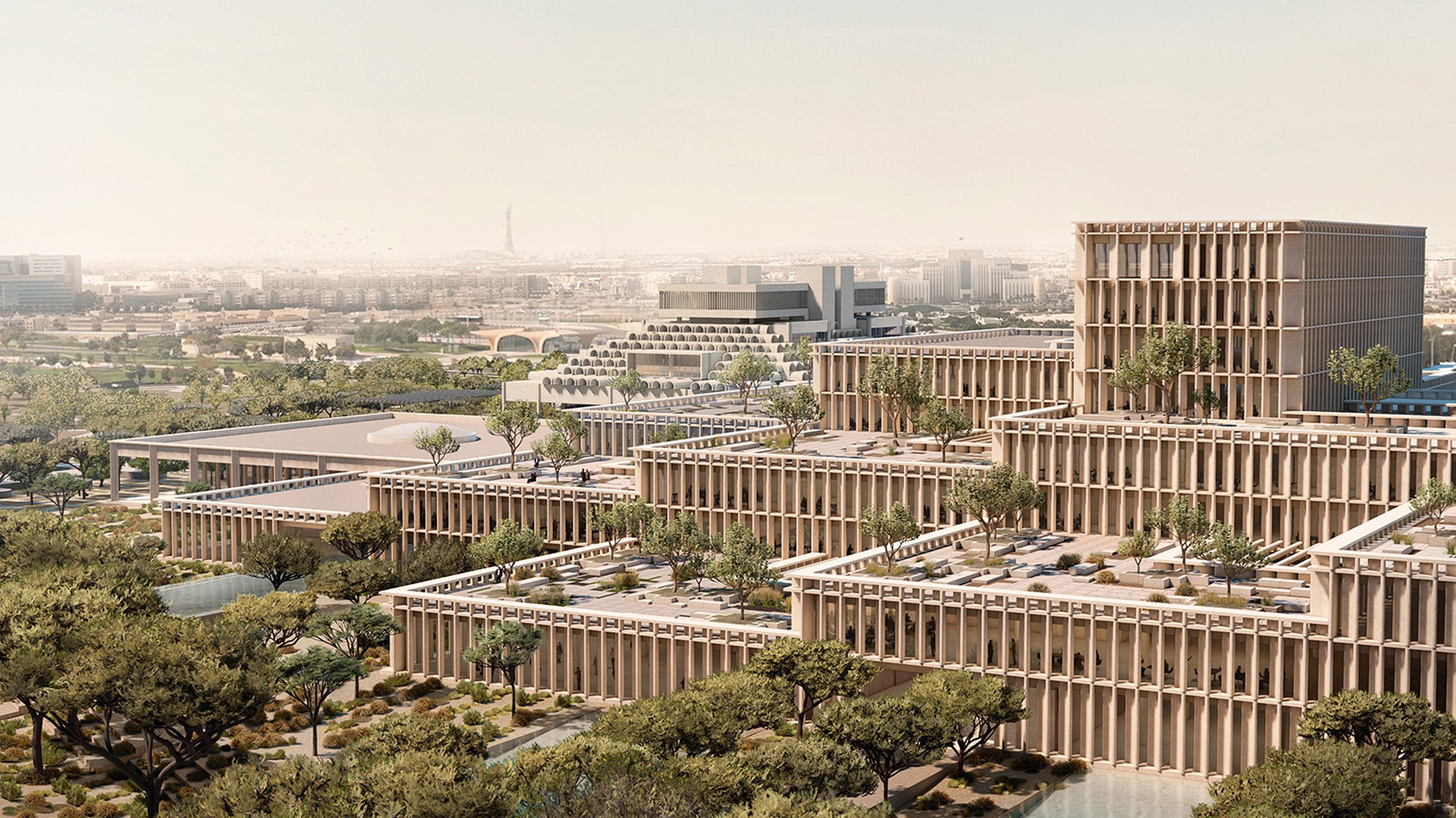
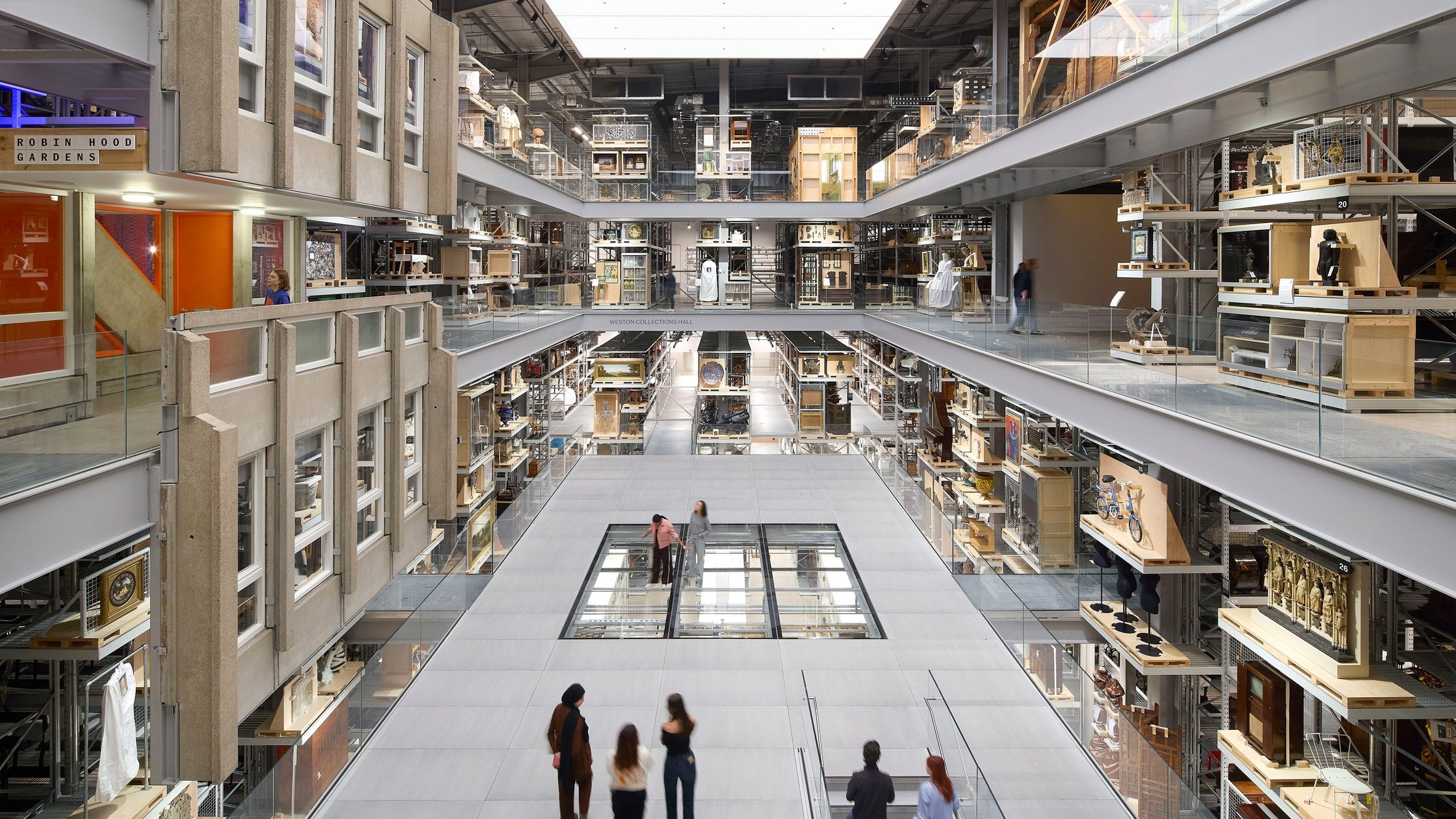
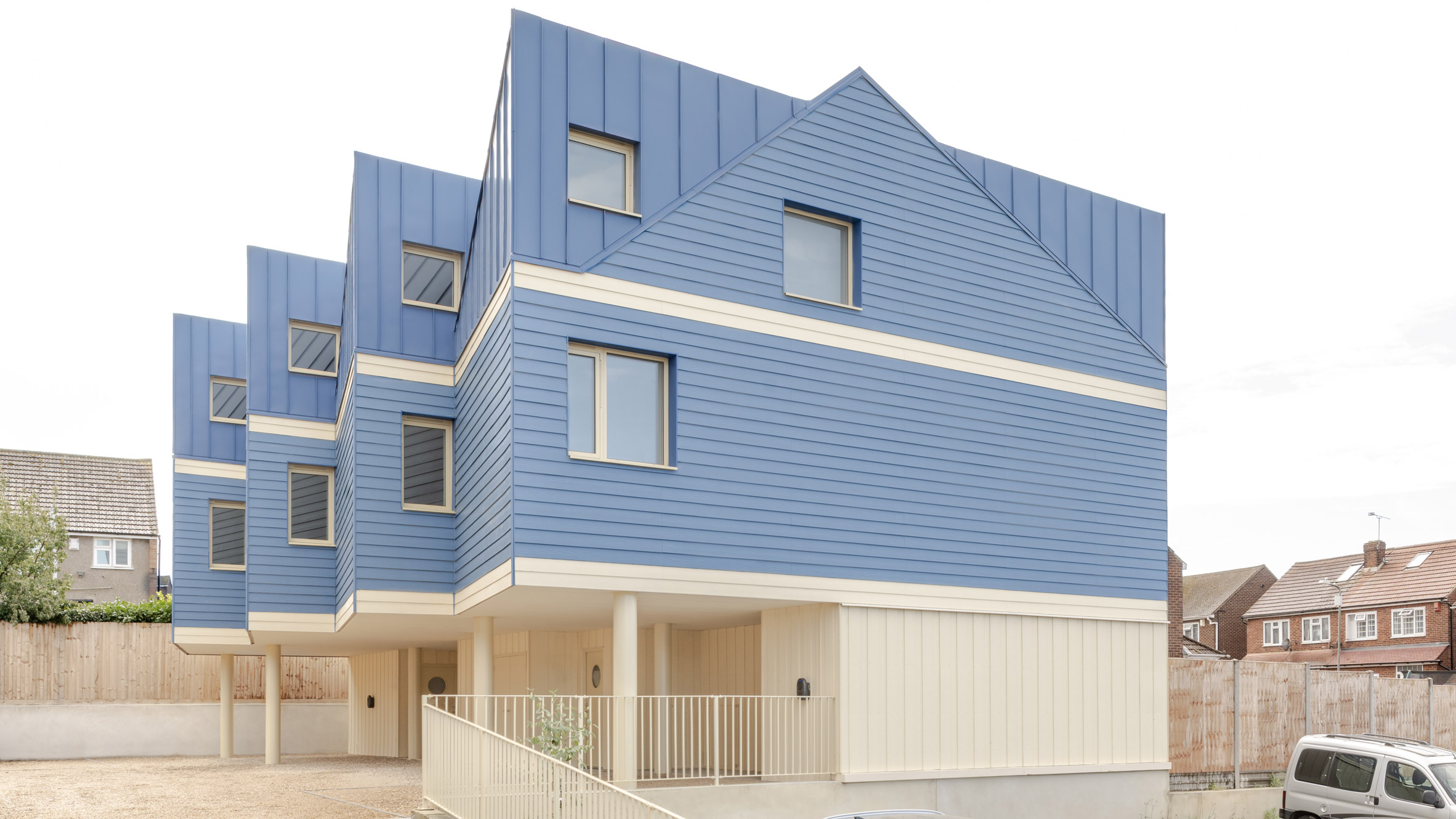
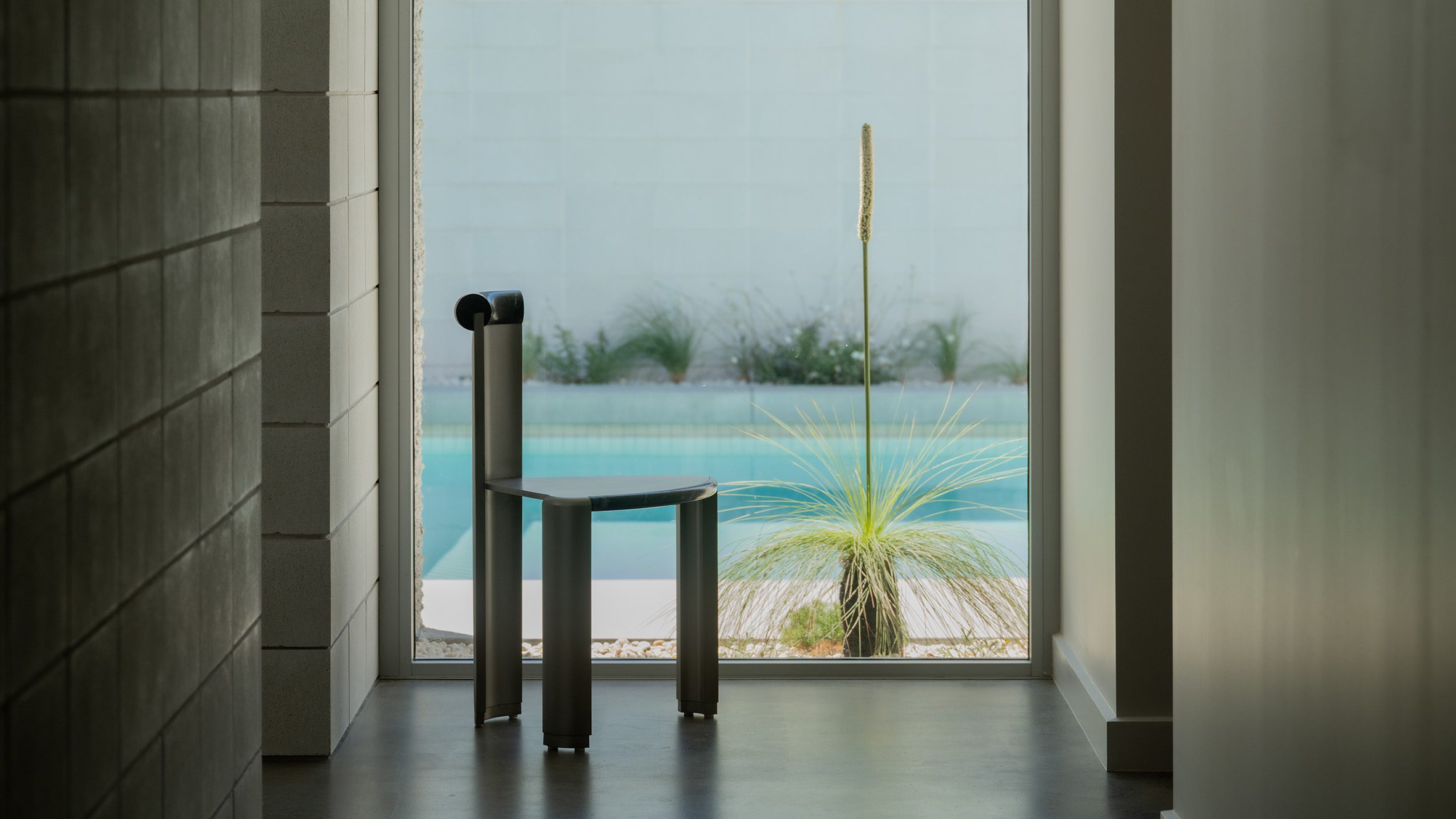
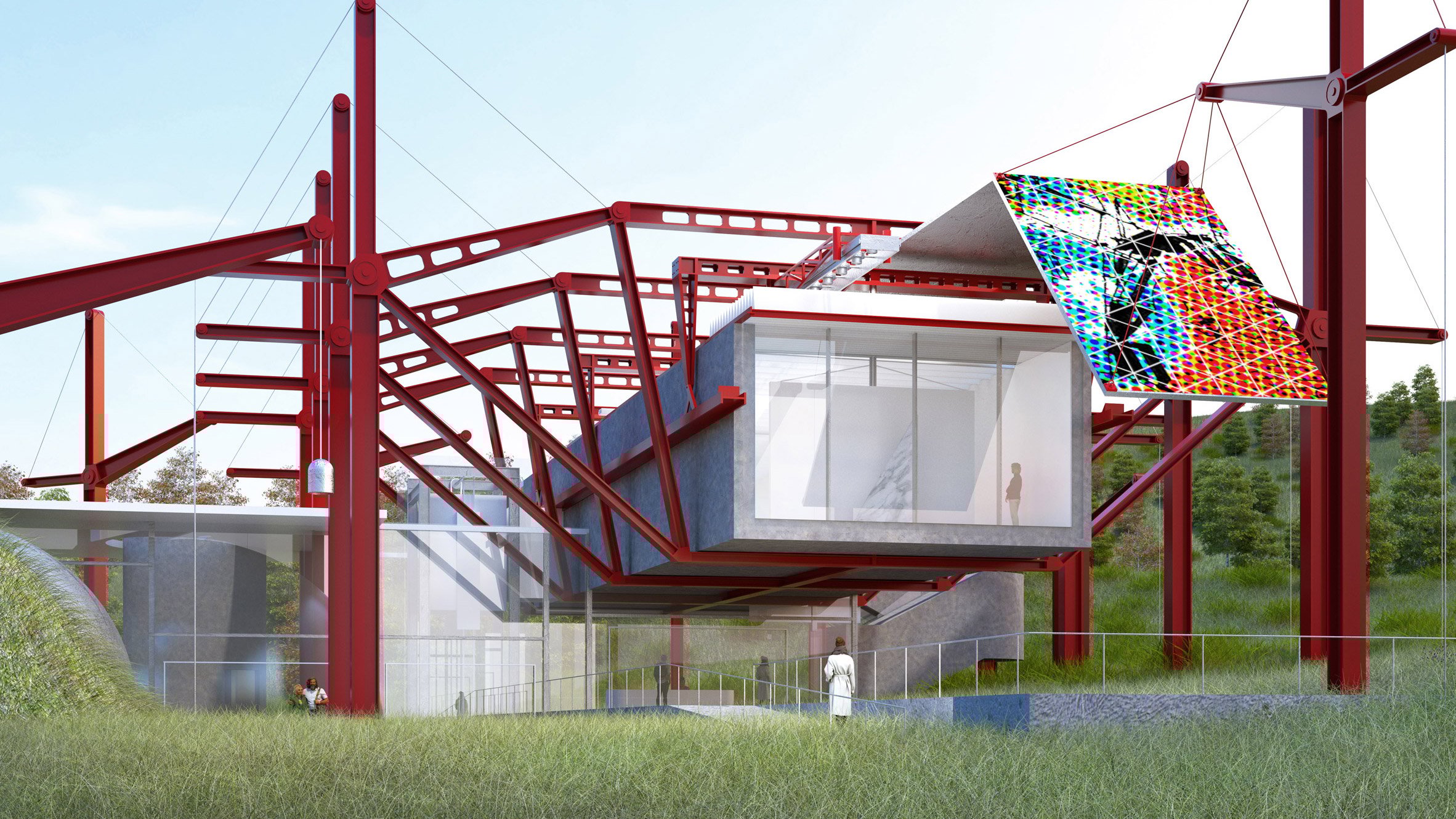

Dezeen School Shows: a project that explores building with hempcrete and straw is among the work by students at the University of Melbourne.
Also featured is an exploration of architecture's impact on gold mines, and a proposal for the use of site-specific materials.
Institution: University of Melbourne
School: Faculty of Architecture, Building and Planning
Courses: Master of Landscape Architecture and Master of Landscape Architecture
Tutors: Samuel Hunter, Andre Bonnice, Dayne Trower, Simona Falvo and Benjamin Lau
School statement:
"The Master of Architecture equips students with the creative and critical thinking skills to push the envelope of architectural change in terms of the design and production of buildings as well as critique of their technical, aesthetic, social and environmental performance.
"The Master of Landscape Architecture gives students the knowledge and skills to help improve our built and natural environments through innovative design.
"This work is from Master of Landscape Architecture and Master of Architecture studios, which embed the exploration of representational techniques and materiality into their design studio teaching."

Group project: Denatured Vision
"In the context of colonial, industrial and urban transformation of the Birrarung and the Abbotsford landscape, our vision is not to restore some imagined pristine past, but to reimagine coexistence between urban demands and the site's ecological possibilities.
"At the heart of our vision are three fundamental commitments. First, we think of architecture as a process, not a product. We avoid seeing our finished drawings as a 'masterplan', rather we see our esquisse drawings as speculative, atmospheric and incomplete.
"Second, we prefer multiplicity over monumentality. We refuse singular dominance, which has been at the core of the colonial transformation of Melbourne's landscape. Instead, we propose a field of relationships of constructions that are in tune with nature.
"Third, we approach environmental justice through spatial practice. We design for a site that has been exploited, for a river that has been harmed, and for communities, human and more-than-human, that have been displaced.
"We have organised our collective work around fifteen objectives – this is our denatured vision. Not a return to nature, but an emergence with it. Not architecture that sits upon the land, but architecture that is woven into its cycles."
Students: Stella Gorman, Jenny Yang, Shalynn Ng, Erin Judkins, Kelly Liang, Hira Jajoria, Nish Kuttuva Anand, Emma Ya Lin Yeo, Kate Zhao, Ale Sotelo Cortes, Zhixing Lin, Kai Dickson, Dorsa Pouraliakbar, Ming Zhe Teo and Xinue Qiu
Course: Master of Architecture
Tutor: Samuel Hunter
Email: samuel[at]architectureassociates.net

Botanica Studio by Huang Tzujung
"This project sees landform and planting as a living rhythm that connects the movement of the city with the calm of the coast. Planting acts as a language, guiding people through shifting views, seasonal changes, and the rise and fall of the ground.
"Zone one introduces the rhythm through gentle slopes and upright wind-responsive species forming the first visual beat.
"Zone two becomes the core experience where layers of vivid plants interweave between different mound heights, immersing people within movement, colour and texture.
"Zone three lowers and opens the land, using soft, translucent planting to release the rhythm back to the ground, allowing the landscape to end quietly, while maintaining a lingering sensory presence."
Student: Huang Tzujung
Course: Masters of Landscape Architecture
Tutors: Nano Langenheim and Elliot Summers
Email: tzujungh[at]student.unimelb.edu.au

Basin by Leo Liu
"The Basin's hydrology is a dialogue between unmediated flow and intentional civic shaping, fixing that dialogue to a clear datum, a thin, floating steel gutter line that holds the horizon steady.
"The datum lets the existing dairy and new integration read as one family, while all the work happens below.
"In the section, under the line, ground and programme step to the site's fall, catch water on roofs, convey it along rills at terrace joints and collect it in the dent.
"Tanks, reed planters, ramps and landings occupy these stepped bands, turning the basin edge into a negotiated conflux of hydrologic, ecological and social.
"The datum gives calm order; the landscape beneath remains adaptive and porous, which architecture explains the water rather than erasing it."
Student: Leo Liu
Course: Master of Architecture
Tutors: Dayne Trower and Simona Falvo
Email: kai3[at]student.unimelb.edu.au

Ways of Knowing by Jasmine Hocking
"Situated across two sites on Wurundjeri Woi-wurrung and Yorta Yorta Country, the project highlights the importance of centring First Nations voices as part of a just transition towards a low-emission future.
"It considers the role of architecture in facilitating practices that support self-determination through material experimentation and active stewardship in the country.
"Drawing on First Nations ways of knowing, it investigates what a holistic approach to low-carbon architecture looks like, with a strong focus on programme, site regeneration and relationally.
"Through this approach, the architecture becomes a tool rather than an outcome, with its material expression and design becoming secondary to its programme and ambitions.
"Material re-use and subtle gestures responding to the site are favoured, acknowledging the strength that exists in ad-hoc community-based architecture.
"By using architecture to support this transition, First Nations communities have the space to engage with practices deeply tied to place and culture, with the agency to decide how this knowledge might be shared."
Student: Jasmine Hocking
Course: Master of Architecture
Tutors: Andre Bonnice
Email: jasmine.hocking[at]student.unimelb.edu.au

Waste in Motion by Megan Collins
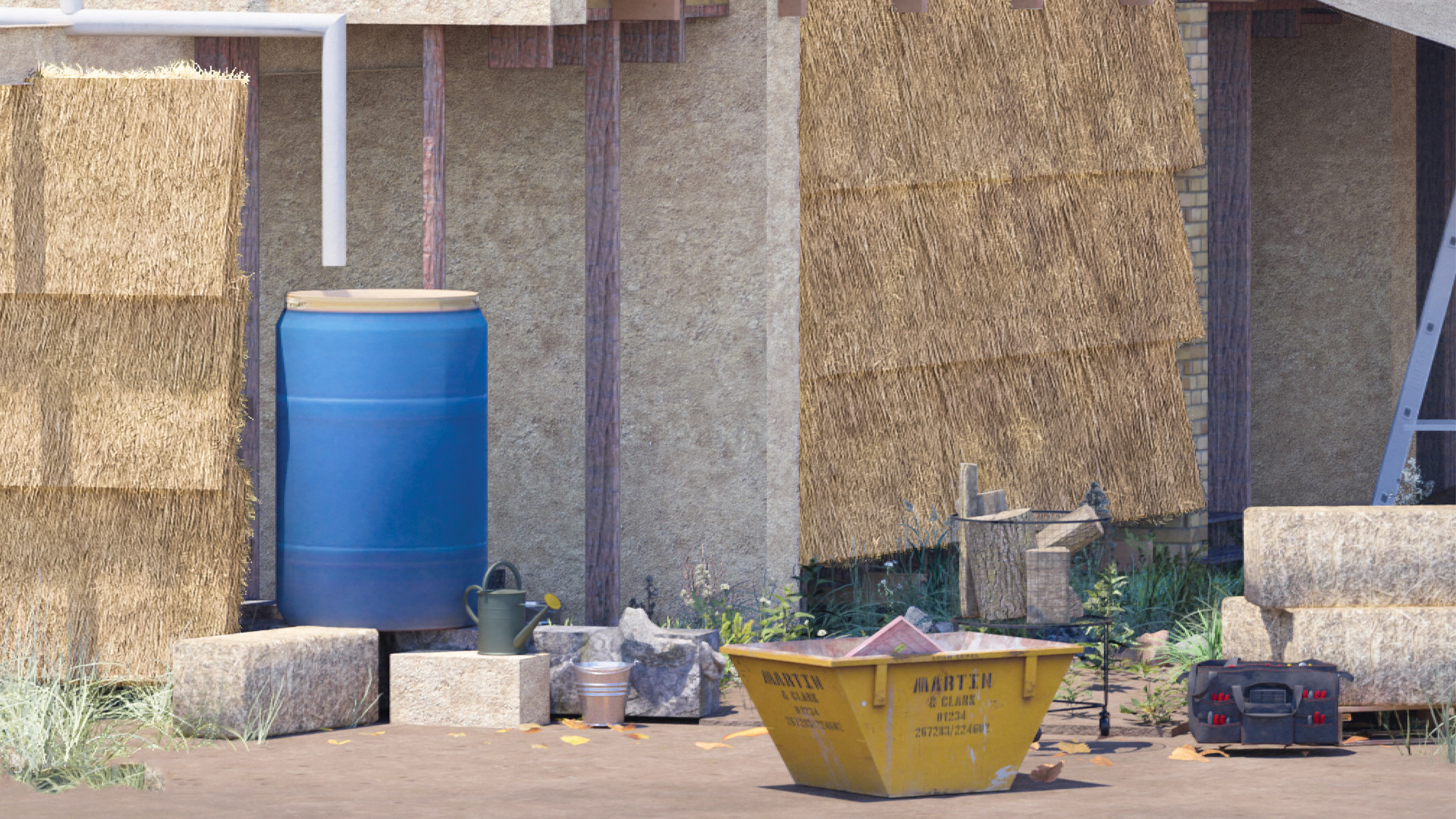
"Set between urban Melbourne and rural Dookie, the project explores how site-specific waste materials already in circulation, excavated earth and agricultural straw, can be repositioned as structural building material within architecture.
"Grounded in the recognition that waste streams are untapped and misunderstood resources, the design exchanges materials between sites to produce contrast and reciprocity – a straw-built hub emerging within Carlton's dense urban grid and an earth-formed bothy embedded within Dookie's agricultural landscape.
"By working directly with what is being dug up, harvested or discarded, the architecture restores continuity between material and place.
"Straw becomes structure in the city; earth becomes shelter in the countryside. Through this deliberate swap, embodied carbon is reduced, transport distance is minimised, and vernacular logics are reactivated.
"Together, the two buildings function as a paired system, urban and rural, light and heavy, large and compact, advancing a circular, honest and site-attuned material culture for Victoria, Australia."
Student: Megan Collins
Course: Master of Architecture/Master of Urban Cultural Heritage
Tutor: Andre Bonnice
Email: megan.e.collins[at]student.unimelb.edu.au

Basin by Vivian Xu
"Rather than an object, the design is a piece of water infrastructure tuned to site.
"Gutters collect roof water and guide it to the edge; overflow lips form brief spills; steps and ledges allow, hold or slow the flow, adjusting its pace and the sound it makes.
"From small additions to the existing building, the structural language reinterprets loggia and buttress as a continuous sloped walkway that reads contour, tightening into support where the ground presses close and loosening into span where it falls away.
"Some elements are carved to buttress and retain, while others are lifted to keep water moving beneath.
"The architecture is a calibrated conduit: cut for stillness and storage, elevate for light and passage, hold and slow, then finally release water in rhythm with the land."
Student: Vivian Xu
Course: Master of Architecture
Tutors: Dayne Trower and Simona Falvo
Email: duo.xu3[at]student.unimelb.edu.au

Basin by Amy He
"The Basin is a landscape defined by its flood-prone nature. Floodwaters gather within the Liverpool Retarding Basin, storing life for the town and for each season, water swells and retreats.
"The design reimagines that rhythm as connection rather than division.
"A reticulated waterway threads through the site, linking existing tanks, creeks and drainage systems into a continuous cycle that channels water back into the floodplain.
"The flow becomes legible, transforming excess into resource, balancing resilience, ecology, and human experience. Like the Dandenong Creek that feeds it, the waterway functions as a living vein, branching and softening as it moves.
"As the waterway turns to walkway, the connective logic extends to circulation. A continuous path binds buildings and landscapes, from the cafe, theatre, archive museum, chapel and educational place, into a shared sequence of thresholds.
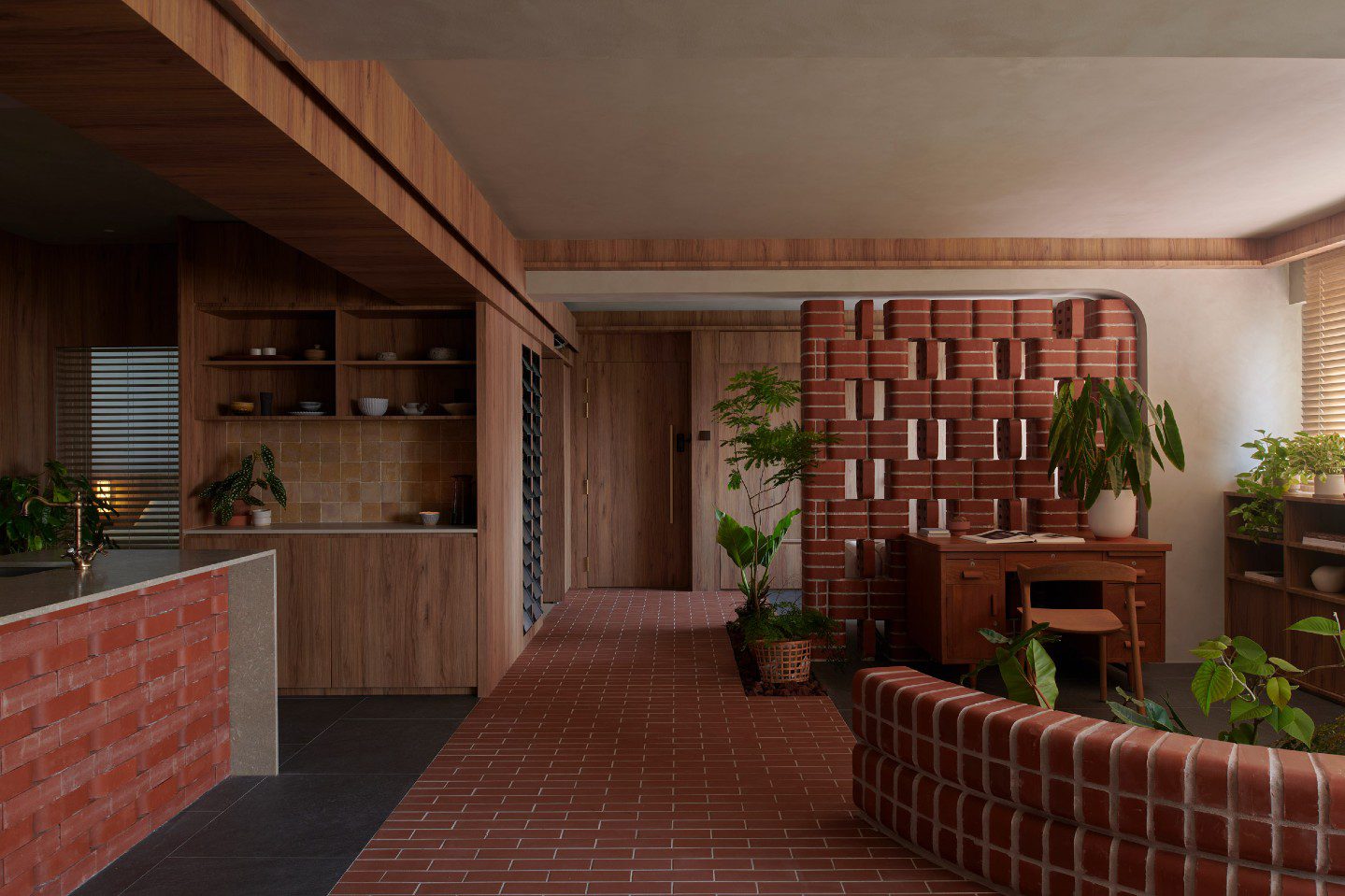
"Brick, glass, and timber, material and spatial transitions articulate thresholds between public and private, new and old, reinforcing the layered history of The Basin."
Student: Amy He
Course: Master of Architecture
Tutors: Dayne Trower and Simona Falvo
Email: zhiqing.he[at]student.unimelb.edu.au

Blyvooruitzicht (Happy Prospect) by Long-Lee Chen
"Once emblematic of South Africa's wealth and dominance in gold extraction, Blyvooruitzicht Gold Mine now exemplifies abandonment, environmental decay and unresolved historical traumas.
"This thesis addresses how architecture can intervene in this hazardous and complex context – not as beautification or merely adaptive reuse, but as a means to dramatise and expose these realities.
"The project intends to make visible the histories of unjust labour, exploitation and environmental damage inflicted over time.
"Environmental and cultural justice are inseparable in this context. This design proposal positions architecture as a negotiator among past trauma, justice and environment.
"The architectural intervention bears witness to extraction and injustice, while providing a platform for repair and reparation.
"Hybrid programmes unfold across the abandoned mine shaft: a monumental marketplace and a civic assembly space support collective engagement with silenced histories."
Student: Long-Lee Chen
Course: Master of Architecture
Tutor: Benjamin Lau
Email: longlee.chen[at]student.unimelb.edu.au

Trombe Walls by Yujie Weng
"Conducted across two sites, an inner urban district in Melbourne and a rural setting in Dookie, this work investigates how architecture might realign itself with passive thermal systems.
"Contemporary buildings have grown increasingly dependent on industrial materials and mechanical systems, creating high embodied and operational carbon footprints while severing the longstanding relationship between construction, climate and local material cultures.
"The research adopts the Trombe wall as a shared climatic framework, examining how the thermal properties of hempcrete, straw and earth can be mobilised to harness solar gain and airflow.
"The result demonstrates how bio-based Trombe wall assemblies can moderate temperature, reduce energy use and re-establish an intimate dialogue between material behaviour and environmental performance."
Student: Yujie Weng
Course: Master of Architecture
Tutors: Andre Bonnice
Email: yujie.weng[at]student.unimelb.edu.au

Material Compliance by Zhaoying Ge
"This project explores bio-based construction through a material cycle across two sites, a biomaterial hub in Parkville with an off-grid bothy in Dookie.
"Locally sourced straw, earth and hemp move from rural site to urban prototype, closing the loop between production and application.
"By working with the abilities and limitations of biomaterials including straw thatch, earth daub, hempcrete and similar materials, the design follows material logic through careful assembly and spatial arrangement.
"Here, straw becomes a water-shedding skin, earth forms fire-resistant mass and hempcrete provides a stable, separation barrier for space. Their placement follows material logic, working only where their strengths can take effect, negotiating urban regulation, rural fire exposure and moisture-heavy environments.
"By working directly with their vulnerabilities and capacities, the project finds architecture in the balance between constraint and performance, exploring possibilities for biomaterial construction."
Student: Zhaoying Ge
Course: Maste of Architecture
Tutor: Andre Bonnice
Email: zhaoying.ge[at]student.unimelb.edu.au
Partnership content
This school show is a partnership between Dezeen and University of Melbourne. Find out more about Dezeen partnership content here.
Comments (0)