
Remember me
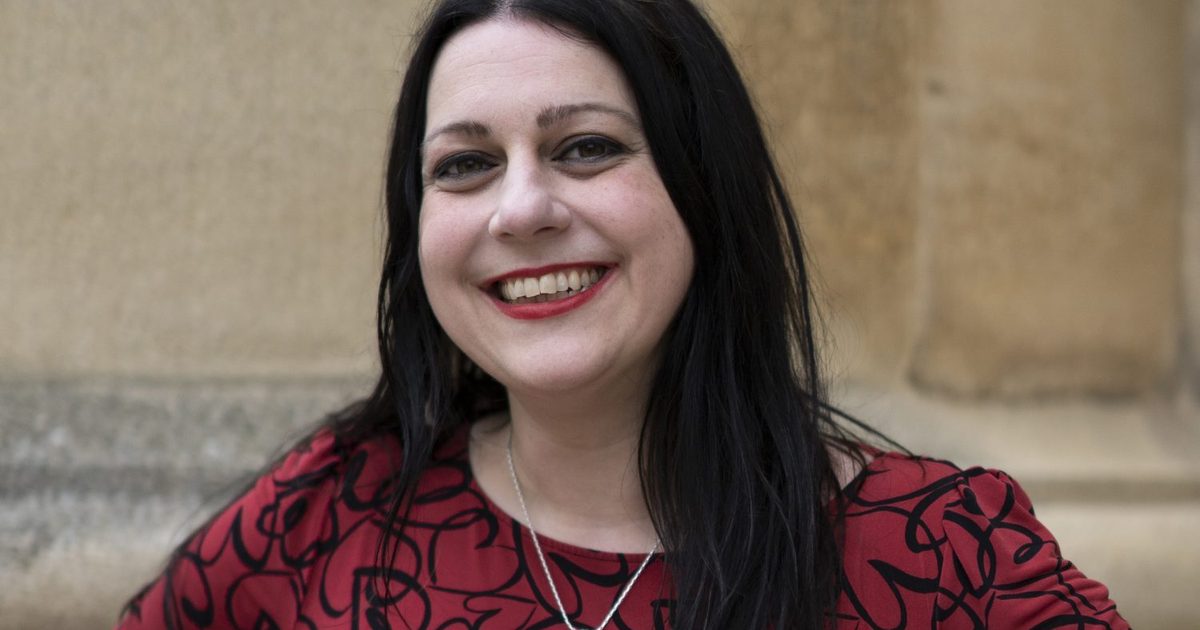
Janina Ramirez: From the start of my academic career, I learned from [Palestinian-American literary critic and activist] Edward Said and others the value of acknowledging one’s perspective: being transparent about who you are, rather than claiming some sense of neutral empirical truth.
For me, identity rests on three pillars. First, I am a woman. Second, class: I come from an immigrant, working-class background. Third, heritage: Polish-Irish, born in Dubai, raised in the UK, married to a Spanish-Scot, with a distinctly European sense of self. With all that, I wasn’t going to get away without a Catholic upbringing: convent school, just very Roman Catholic foundations. I’m not practising now, but it gave me empathy for faith and an understanding of belief.
These roots inevitably shape my work. When I published The Private Lives of the Saints [in 2015], my aunt, a Franciscan missionary, told me how proud she was. I had to laugh because the book dismantled saintly myths rather than celebrating them. Yet she was right: I was still that Catholic schoolgirl, writing about religious figures, even as I reframed them.
Questions of nationality also ran through my research. My first book required careful choices of terms: ‘Irish’, ‘Welsh’, ‘Scottish’, ‘British Isles’ – each politically charged. By Femina [2022], the pattern was striking: nations everywhere reclaiming heritage, from Scandinavia’s Vikings to France’s Cathars. The focus of my latest book crystallised while writing about [queen and saint] Jadwiga of Poland. My grandmother, who owned a bronze of Pope John Paul II, reminded me how faith and identity intertwine. In my lifetime, that pope canonised women I now study, using them to shape national narratives. So the direction of this new book was clear even as I finished the last one.

Queen Isabella of Castile, pictured in a 15th-century illumination. Five centuries after her death, the Spanish monarch is still used as an icon to shape national identity as essentially Castilian (Image by Topfoto)
You explore how women such as Joan of Arc and Isabella of Castile became symbols of national identity. Do you think their stories continue to shape how nations see themselves today?I open the book with one of [French far-right nationalist politician] Jean-Marie Le Pen’s impassioned rallies at the statue of Joan of Arc on the Place des Pyramides in Paris. So yes, her story remains relevant – mocked or taken seriously, but still shaping France’s political landscape.
After being expelled from the [far-right anti-immigrant] National Front, Le Pen founded an even harder-right party, naming it after Joan of Arc and making her its emblem. That’s how potent her image remains to French nationalists.
Similarly, Isabella of Castile’s influence endures. When I speak with Spanish friends, they describe how the Castilian dialect is still seen as the benchmark [rather than regional dialects such as Catalan or Galician] – much like in Britain, where London can feel like a ‘brain drain’ and doesn’t reflect life in the north, Cornwall or Kent. That sense of central dominance ties directly back to Isabella and the way she imposed her vision of Spain.
And that’s the heart of it: attempts to impose a single collective identity on diverse peoples – peoples with different regions, traditions and faiths – inevitably crack. Even in Isabella’s lifetime, that imposed single national identity fractured and was repeatedly reinforced, layer upon layer. We see the same dynamics now in places such as Catalonia, the Basque Country and Scotland. These identities don’t simply vanish; they resist, reassert themselves and continue to challenge imposed unity.
I’d love to explore how nations so often personify themselves as women – from Britannia to Marianne – embodying a strange mix of maternal or nurturing spirit, virginal purity, even martial strength. What do you think is going on there?Brilliant question! I’m very fortunate to be a colleague in Oxford of Marina Warner, the doyenne of this subject. She has written on Joan of Arc, but also a wonderful book called Monuments and Maidens, which speaks directly to this point.
She shows how nations embody themselves in female form: the Statue of Liberty, Marianne in the Panthéon, Britannia looming in St Paul’s Cathedral. And you’re absolutely right: there’s a deep frustration here. The nation is imagined as a woman, yet women themselves had little to no role in building nations.
It’s a profound injustice: in virtually every revolutionary moment, women were excluded from shaping national identity. In France, ‘Liberty, equality, fraternity’ – that emphasis on brotherhood – was about raising up men, not women. Think of how the Declaration of the Rights of Man and of the Citizen [1789] prompted the Declaration of the Rights of Woman and of the Female Citizen [1791] in response; the author of that second declaration, Olympe de Gouges, was executed for it. Revolutions don’t work for women; they offer no place for us.
Yet the most powerful symbol to unite people is often ‘the mother’. That universal image, both compelling and emotionally resonant, becomes propaganda: to serve king and country is to serve one’s motherland. Men are called to die for their ‘mother’, while real women are denied participation in politics, philosophy, architecture or law. That’s the deep irony you’ve identified: women are entirely excluded from nation-building, yet the ultimate emblem of the nation is a woman.

Marianne, personification of the French Republic, in Paris’s Panthéon. “Revolutions don’t work for women; they offer no place for us,” says Janina Ramirez
Several of the women you write about pushed back against the expectations of their time. Why do you think some have become celebrated as heroines whereas others have been condemned?We are still enthralled by the charismatic, the extreme, the outspoken. I don’t understand why certain celebrities and influencers command such attention while thoughtful, rational voices struggle to be heard. We must be cautious about whom we choose to celebrate as heroes, both today and in the past. The figures who endure often do so because their stories are condensed into simple, powerful images that can be reproduced and instantly recognised.
Take Agustina of Aragón, for example. Many women fought in Zaragoza [against invading French forces] during the Peninsular War from 1808, yet she became iconic because painters such as Goya fixed her image: a small figure on a pile of bodies, lighting a cannon’s fuse. That lodged itself in the public imagination – this is how legend works. When I began the book, I also considered including men such as Robin Hood or Alfred the Great, whose myths have likewise been reshaped into soundbites.
People prefer statues, posters and slogans to complex truths. They want heroes they can identify at a glance without grappling with the full picture. That’s why I wrote the book: to question the stories we take as fact. Consider the Lady Godiva legend [in which the 11th-century noblewoman of Mercia rode naked through the streets of Coventry in order to win respite for its people from oppressive taxation by her husband, the earl]. The only factual link between the historical Godgifu and the tale we know is Coventry itself. Everything else is invention. I love stories, and I open each chapter with one, but my aim is to dig beneath them – to be forensic about who these figures really were. In doing so, they become more complex, more fascinating and ultimately more thrilling than the legends that have simplified them.
Yes – particularly while researching the chapter on Greece, one of the hardest to write. The 1821 Greek revolt is often downplayed in accounts of nationhood. Because it was a rebellion against the Ottoman empire – against ‘the east’, rather than against monarchies in western Europe – it can feel like a different story from the Belgian, German or French struggles for democracy, and tends to be pushed to the margins. I wanted to foreground it. What struck me most was how this perspective connects to broader debates about Eurocentrism. Recently, at the Gloucester History Festival, I listened to Peter Frankopan, 10 years on from the publication of his book The Silk Roads, urging us not to be so western-focused, and Vince Cable, who echoed the same point in relation to China, India and Japan today.
I wanted to shift the narrative away from the familiar classical thread linking Europe to Rome and ancient Greece, and instead emphasise that, for much of medieval history, Constantinople (now Istanbul) was the true hub of civilisation and power. London and the north of Europe were seen as barbaric backwaters.
Greek identity in the 19th century was not just a Byronesque, romantic appeal to ancient culture. For Greeks, it was about reclaiming the legacy of Constantinople, which had fallen to the Ottomans in the 15th century.
Researching the role of women in Constantinople, I was struck by the extraordinary survival of coins, enamels, jewelled crosses – objects that in most revolutions would have been melted down, yet remained intact because the Ottomans largely ignored them. Among them are coins depicting the 11th-century sisters Zoe and Theodora (left) ruling with the male title ‘emperor’ of Byzantium, rather than ‘empress’.

A coin depicting the 11th-century sisters Zoe and Theodora
Their images, along with artefacts carried to places such as Georgia when it was ruled by Queen Tamar (reigned 1184–1213), are stark reminders that women could and did rule empires. Indeed, at the same time as Charlemagne was trying to construct a Holy Roman Empire [at the turn of the ninth century], Empress Irene was ruling in Constantinople, viewing the Franks as peasants on the fringes of civilisation.
That chapter forced me to question western national narratives and to reflect on the cycles of rise and fall in world history. It also highlighted the need for humility in how we see our place in a global story that has always been in flux, and the importance of asking where women feature in that.
You also discuss the intersection where religious devotion and politics meet, through women such as Catherine of Siena. Today, would their faith make them seem radical or reactionary?Catherine of Siena [14th-century mystic and letter-writer] is a fascinating and difficult figure to grasp. I suspect that she would now be seen as a radical extremist. Her influence grew rapidly from local notoriety to involvement in politics, family disputes and the affairs of the nobility. Rejecting the cloistered life of a nun, which she deemed too modest and hidden, she instead exploited the opportunities of the Dominican Third Order, which allowed women to live partly within the rhythms of monastic life while remaining active in the world – able to marry, raise families and pursue public roles.
Even this was too restrictive for Catherine. She craved visibility and seized every chance to place herself centre stage. Behind her was a group that recognised her potential and promoted her as a kind of spiritual influencer. With their support, she was propelled onto ever larger platforms, becoming more reactionary and extreme as her fame grew. Eventually, she had the ear of the pope and played a part in global politics.
It was a meteoric but tragic rise. Catherine’s regime of intense self-mortification, involving starvation and other severe practices, destroyed her health and she died young [aged just 33, in 1380]. Ironically, in the medieval world, some of the very behaviours officially condemned – such as fasting and self-harm – often brought fame and were celebrated as marks of sanctity. Extreme acts, such as plunging into frozen rivers or enduring brutal beatings, drew attention, enhanced reputations and opened the way to influence. For women, especially, punishing the body was often the only route to power and legacy.
This pattern was not confined to women; men pursued similar paths. Nor is it a relic of the past. Even today, religious devotion expressed through extreme bodily endurance persists – in India, for example, ascetics hold an arm aloft until it withers. We may think ourselves too rational, too secular, to be drawn into such practices, but self-punishment in the name of belief remains very much alive.
The temptation is to label such figures simply as fanatics, yet the reality is more complex. Were they extremists, or merely individuals desperately trying to stand out and make a difference? Religion, identity, politics, economics – all can be forces for good but, in the wrong hands and when driven by personal ambition, they become extreme. What emerges, in Catherine’s case and beyond, is the interplay between individual striving and wider social structures – why one person rises to prominence while others remain unheard.
In the end, you argue that reconnecting with these stories can help us resist division and manipulation. What do you think these women have to teach us about resilience and identity today?In my conclusion, I write that Agustina lit the cannon, while Joan picked up the sword. What unites these women is their courage. In times of threat and change, they were brave – and my argument is that we must be brave, too. We need clarity of mind and sharpened intellects to face today’s challenges. We are not fighting on streets with swords, but against misinformation, propaganda and manipulation at the highest levels. We must be equipped to understand our place in the world and our communities.
The book begins and ends with women who had no concept of nations as we know them, yet shared the same land as us, walked the same paths and looked upon the same mountains. Their lives offer inspiration because they survived, thrived and achieved remarkable things in difficult circumstances. By connecting with their environments, we become part of their legacy.
I deeply believe in the power of local history and connecting with our surroundings – exploring archives, visiting museums, walking through graveyards. Engaging with objects and places allows us to connect with people of the past in a meaningful way. It reminds us that humans have always been complex and brilliant. We are not the pinnacle of progress, and the people of the past were not mere peasants living short, brutish lives. Their experiences are fascinating, and learning about them teaches us to be better citizens today.
In our modern world, we cannot control distant geopolitical events manipulated by the powerful. What we can control is our daily interactions with those around us, with the landscape and with our communities. Humanity has always found ways to coexist, collaborate and learn from one another across cultures and generations. That shared, everyday life that I see in my medieval figures still exists. We’ve just lost sight of it.
We need to reconnect with each other, with the land and with the tangible realities of life, rather than the digitised, ethereal existence of screens and texts. Humans have always lived alongside one another, and understanding those relationships is essential.
This article was first published in the December 2025 issue of BBC History Magazine
Comments (0)