
Remember me
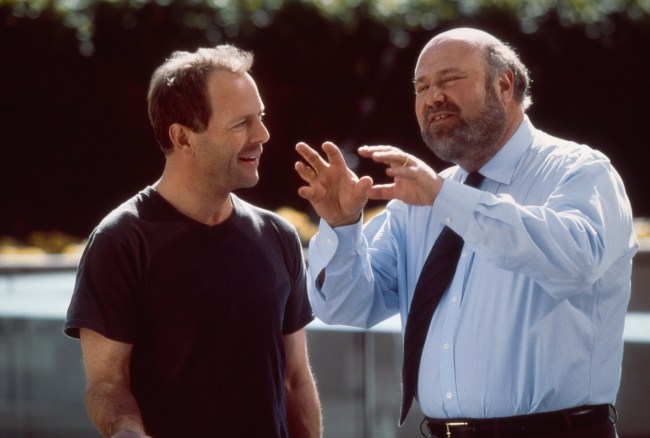


When Rob Reiner died at the age of 78, American movies lost not only an actor, producer, and director who was universally beloved by almost everyone in the industry and everyone who watched him (around 30-40 million people during the heyday of his hit series “All in the Family”), but one of the last practitioners of a certain kind of Hollywood filmmaking.
An unassuming craftsman who sublimated his ego to the demands of the subject matter and genre at hand, Reiner was nevertheless a deeply personal filmmaker. Like Howard Hawks, John Ford, and other masters of the classical studio era, his style was often invisible, but his modesty cloaked the intense engagement of a true artist.


Reiner was one of those filmmakers who was weirdly both widely celebrated and a bit underrated — he made what he did look too easy to be ranked with the greats when people who do such things were doing the ranking. Any number of his films taken in isolation would easily stand alongside the all-time classics of their genre: “Misery” is a perfect thriller, “When Harry Met Sally” one of the best rom-coms ever made, and has anyone ever made a better courtroom drama than “A Few Good Men” or a more enchanting fairy tale than “The Princess Bride”?
Looking back on that filmography now, the breadth and depth of Reiner’s body of work is obvious, but as he was making these movies, we tended to take them a little for granted. Part of that had to do with differences in the industry as a whole; during Reiner’s heyday in the ’80s and ’90s, the legacy studios were making a much wider range of films for theatrical release than they do today, and we didn’t know the steady stream of smart, accessible entertainment for adults that Reiner specialized in was ever going to go away.
Part of it had to do with Reiner’s old-fashioned service to his material; his directorial stamp was less obvious than that of many of his peers, because his constant genre-jumping required a different approach. A director specializing in thrillers like Brian De Palma or action like Walter Hill would work over the same preoccupations and motifs in film after film, deepening and perfecting them and making them obvious to their acolytes, but a teen comedy like “The Sure Thing” required a completely different cinematic grammar than a historical drama like “Ghosts of Mississippi.”
Neither form of directing is “better” than the other (I bow to no one in my adulation of De Palma and Hill), but Reiner’s approach risked giving the impression that he was a less personal filmmaker than someone with a more feverish, recognizable directorial personality. The fact that he was so prolific didn’t help; unlike his pal Albert Brooks, who would often go five or six years in between movies, Reiner cranked out one film after another (some of them masterpieces) every year or two. Even when he was no longer at his peak either artistically or commercially in the 2010s, he never let more than two years go without a new film.
 ‘This Is Spinal Tap’
That meant that Rob Reiner movies weren’t events for cinephiles the way a new Albert Brooks movie would be, or the way a new Stanley Kubrick film was. But how many directors can boast a run like Reiner had from 1984 to 1992, when he made “This is Spinal Tap,” “The Sure Thing,” “Stand by Me,” “The Princess Bride,” “When Harry Met Sally,” “Misery,” and “A Few Good Men” back to back?
All of these movies were hits to varying degrees, and certainly appreciated in their time, but I’d still argue that Reiner made what he did look so easy that we didn’t fully comprehend his greatness. He never seemed to be slowly building up to anything — he would make his first horror movie, with “Misery,” and it just came out perfectly right out of the gate. And then he never made another horror movie again!
The confidence that insured Reiner always had his camera in the right place for the emotional effect he was trying to achieve, and the confidence not to draw attention to that camera, are exactly what made him a great filmmaker at the same time that it made him easy to overlook. The fact that the movies were often so superficially different from one another was, again, both his strength and something that made him a little underrated — he always gave the impression that he was just an old-school director for hire, moving from assignment to assignment without the kind of intense personal commitment of a Cassavetes or a Scorsese.
In fact, nothing could be further from the truth, and Reiner acknowledged his personal connection to his material earlier this year when he was a guest on IndieWire’s Filmmaker Toolkit podcast.
“I have to be able to find a way in,” he told IndieWire. “For ‘Stand by Me,’ I could see myself in the Gordy character. I started thinking about his relationship with his father and how his father shut down after his brother died, and that got me thinking about how my father thought about me. My father loved me, no question, but when I was a kid I thought he was so busy that maybe he didn’t see me.”
“A Few Good Men” is another example of Reiner working through his relationship with his famous dad Carl (creator of “The Dick Van Dyke Show,” as well as director of comedy classics like “The Jerk” and “Summer School”). “It was about a kid whose father was a famous lawyer, and he’s scared that he’s never going to live up to that,” Reiner said on Toolkit. “When he puts Jessup [Jack Nicholson] on the stand, it’s like he’s saying, ‘I’m moving forward,’ which is the way I felt when I made ‘Stand by Me.'”
 ‘A Few Good Men’©Columbia Pictures/Courtesy Everett Collection
If “Stand by Me” and “A Few Good Men” were about Reiner’s relationship with his father, “Misery” was about his relationship with the industry that made him a success, yet limited him. Just as James Caan’s Paul Sheldon wants to leave his bestselling romance novels behind in favor of serious literature, Reiner wanted to transition from being seen as a TV sitcom actor to being taken seriously as a feature film director.
In the case of “When Harry Met Sally,” Reiner was working through his own relationship issues in a film that grew out of his conversations with screenwriter Nora Ephron about their experiences in dating and marriage. Ironically, that film that was inspired by Reiner’s own inability to sustain a successful romantic relationship gave him the love of his life when he met his eventual second wife Michele on it — a development that inspired him to give the film a happy ending that was never intended, and that made it the beloved classic we all revisit again and again now. (And that makes Michele’s death alongside her husband yesterday all the more tragic.)
Romantic comedy was the one genre the shapeshifting Reiner did return to repeatedly, and where he found some of his greatest successes — in addition to the movies already mentioned, there was the dazzling “The American President” (an Aaron Sorkin-scripted gem that married Reiner’s interests in love and politics) as well as the underrated “The Story of Us,” one of the few great rom-coms that doesn’t lead up to marriage but begins with it and explores the institution in all its complexity.
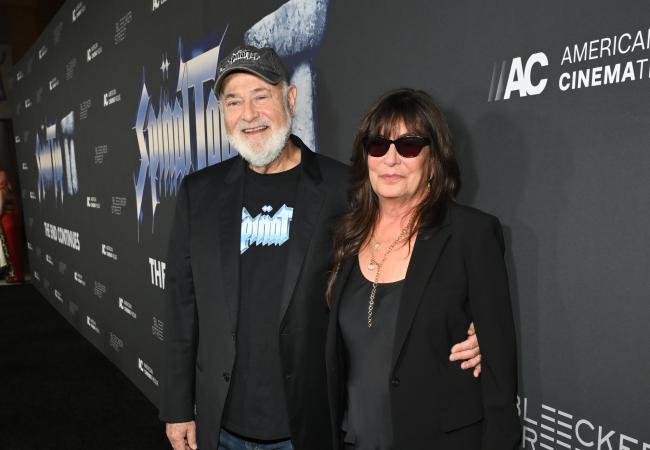
It’s in his rom-coms that one can see Reiner’s personality most transparently. He was a loving, exuberant, hilarious guy in life, and he was able to transmit those qualities directly to the screen in his rom-coms in a way that films like “Ghosts of Mississippi” and “Misery” didn’t permit. But every movie he made was personal, and they all mean more now that we know he won’t be making others. This year’s “Spinal Tap II: The End Continues,” for example, has a more deeper resonance in its exploration of aging and mortality than it did just 24 hours ago.
“Spinal Tap II” also plays like the last of Reiner’s great personal statements, as a movie about artists past their prime who still love what they do and can’t bring themselves to stop. Late Reiner movies like “LBJ” and “Shock and Awe” didn’t find the audiences or accolades that the films of his initial hot streak did, and maybe he related to the members of “Spinal Tap” feeling like they still had something to give whether the world was enthusiastic about it or not.
The beauty of “Spinal Tap II” is that, in making a movie about these insecurities, Reiner proved he did still have what he always did, the talent to merge the personal with the universal in a comedy that gives the audience so much more than it requires of them. (Reiner was never the kind of director who made you work for his movies’ pleasures.) In “Spinal Tap II” and so many of his films, Reiner fully realized the ambition instilled in him by his father.
“My dad used to say, ‘Do something on ground that nobody else stands on,'” Reiner told IndieWire. “And that’s the way I’ve always viewed things.”
Comments (0)