
Remember me


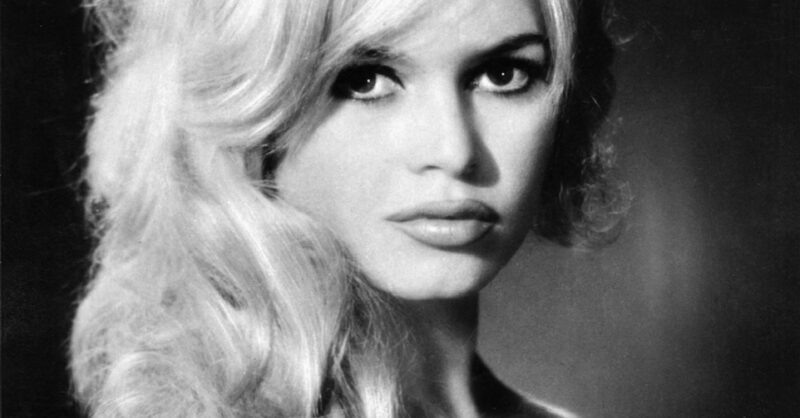






As the daughter of a Frenchman, I never encountered Bardot simply as a presence on screen. She was an idea. A measure. The shorthand for womanhood itself. She existed less through specific films than as a shared cultural understanding, absorbed rather than explained. Her femininity, her Frenchness, felt instinctive and complete, untroubled by self-consciousness or polish.
I was conscious of her early, not least because my mother had once won a Brigitte Bardot lookalike contest. It was mentioned lightly, without ceremony, but it fixed Bardot in my mind as something close and tangible. She was no longer just a face on a poster or a body on a beach in Saint-Tropez. She had briefly passed through our own family story. Beauty, in that context, felt neither oppressive nor aspirational. It was simply acknowledged, then allowed to recede.
Bardot’s significance was never confined to her acting. She mattered because she altered the image of womanhood at a moment when female beauty was expected to reassure. She unsettled instead. Her looseness, physical and emotional, her apparent boredom with approval, her refusal to perform refinement, all suggested a form of autonomy that was felt before it was articulated. She did not argue for freedom. She behaved as if it already belonged to her.
She never aligned herself with feminism in any organised or ideological sense, and she showed little interest in collective struggle. Yet her presence did feminist work all the same. Desire, in her case, did not feel offered up for permission. It seemed to reside with her first. She expanded what a woman could look like without claiming responsibility for what followed.

Treat yourself or a friend this Christmas to a New Statesman subscription for just £2
Part of Bardot’s authority came from her refusal to revise herself. She did not attempt to improve her face, correct her body, or negotiate with time. Nor did she soften her views to remain agreeable. She sat with herself, visibly and unapologetically, as if self-acceptance were not a project but a fact. Approval did not appear to interest her. Disapproval only confirmed her distance from it.
That refusal extended to motherhood. Bardot married four times and had one son, Nicolas, born in 1960. Motherhood did not soften her or anchor her in the way it was expected to. She later wrote openly about the depression that followed his birth and about attempting suicide. She was explicit in her belief that she was not made to be a mother, using language that shocked even those accustomed to her bluntness. She recoiled from the role and refused the sentimentality that usually surrounds it. As elsewhere, she would not perform feeling simply because it was required of her.
At the same time, her younger image refused to fade. Even after she gave up acting in 1973, at the age of 39, the Bardot of the late 1950s and early 60s continued to circulate. The hair, the mouth, the posture, the promise of sexual ease. She remained a beacon of femininity and sex appeal long after she herself had let go of any interest in embodying it. What endured was the image, not the beliefs that would later come to dominate her public life. The culture held on to a posture, a way of being, rather than the opinions that would eventually make her so divisive. The icon stayed intact while the woman moved on, ageing naturally, uninterested in maintaining the fantasy she had created.
Her retreat from cinema was not a retreat from conviction. She devoted the rest of her life to animal welfare, founding the Brigitte Bardot Foundation in 1986 and campaigning fiercely against cruelty. She lived surrounded by animals, focused, uncompromising, often solitary. That commitment was real, sustained and serious.
But the same absolutism hardened her public voice. Over the years Bardot was convicted on multiple occasions by French courts for inciting racial hatred, following remarks and writings about immigration and Islam that were widely condemned as racist and Islamophobic. She did not apologise. She did not recalibrate. She became, by any reasonable measure, deeply unlikeable.
I struggled with those views, and still do. They narrowed her moral imagination and made her difficult to defend. Yet something in her unapologetic insistence on being herself continued to exert a pull. Not the opinions, but the posture. The refusal to be reshaped by expectation. The comfort she appeared to have with her own presence, her own face, her own convictions. It is possible to reject what someone says while recognising the force of how they exist. Bardot makes that distinction unavoidable.
She did not seek redemption. She did not manage her legacy. She did not ask to be forgiven or softened with time. She altered the image of femininity, then declined responsibility for what the culture did with it. Others kept hold of her youth. She did not.
[Further reading: The wisdom of Home Alone]
Content from our partnersRelated
Comments (0)