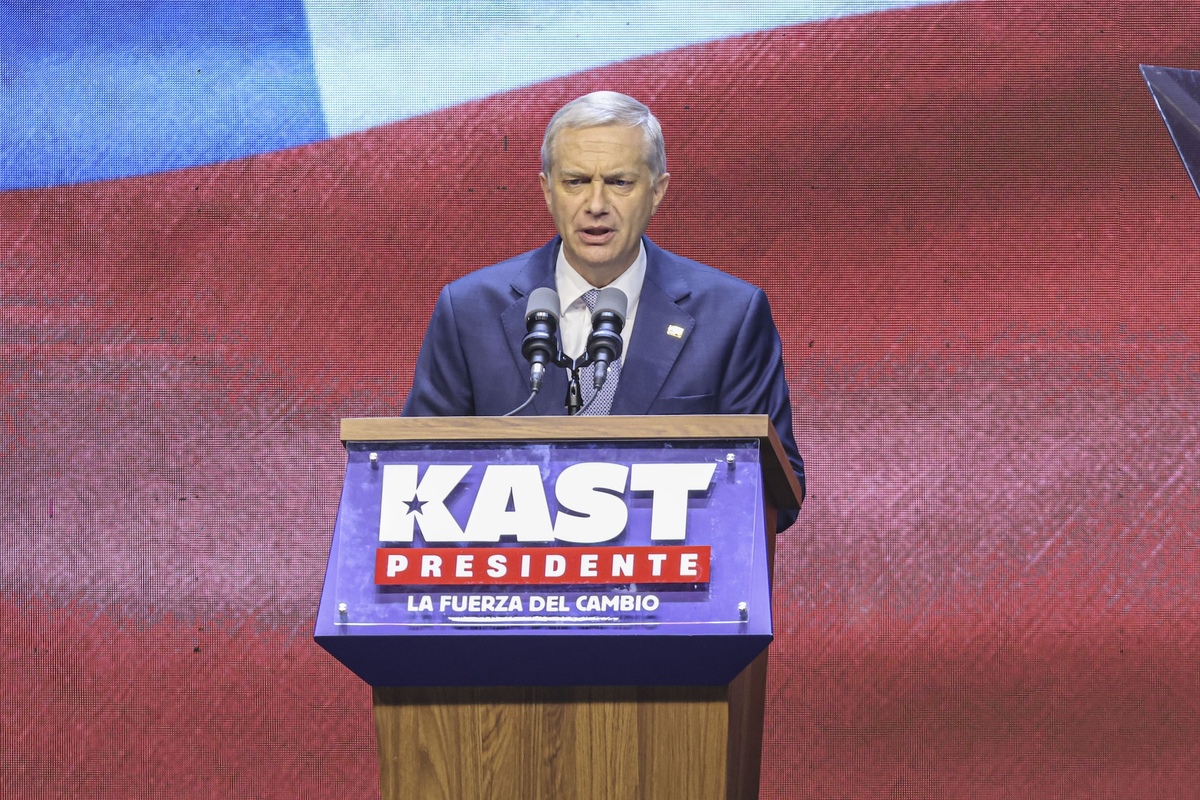
José Antonio Kast’s victory in Chile’s presidential election, with nearly 58 per cent of the vote against Carolina Jara’s 42 per cent, marks more than a routine change in leadership. For many Chileans, particularly within the country’s large Palestinian community, the result has been received with a mix of concern, caution, and unanswered questions about what lies ahead.
Kast is preparing to take office after a period in which outgoing President Gabriel Boric placed the Palestinian cause at the center of Chile’s ethical and diplomatic discourse. Under Boric, Chile’s support for Palestinian rights was not abstract or symbolic; it was voiced clearly in international forums and resonated deeply with Palestinian-Chileans who saw their history and identity reflected in state policy.
With the rise of a far-right president known for his close alignment with Israel and sharp criticism of that stance, many now wonder whether this support and visibility will endure or quietly recede under the new administration.
According to the Chilean former ambassador Nelson Hadad, the election result reflects a broader transformation in Latin American politics; “The outcome signals a structural rightward shift in Latin America, taking into account developments in Argentina, Bolivia, and the election of other new presidents. At the same time, Brazil and Colombia remain anchored in the left-wing camp. The traditional left–right dichotomy is no longer fully operative, as segments of the left voted for Kast, including the People’s Party, a centrist-left, middle-class-based formation that obtained more than two million votes, a substantial share of which likely transferred to Kast.”
Outgoing President Boric was one of the most outspoken critics of Israel among Western-aligned leaders. His administration suspended diplomatic engagement with Tel Aviv following the events of 7 October 2023, recalled Chile’s ambassador, and excluded Israel from the FIDA International Air Show—moves that generated sustained diplomatic friction.
Kast positioned himself in direct opposition to this approach. During the campaign, he labeled Boric’s Israel policy “ideological and irresponsible,” pledged to reverse what he described as diplomatic mismanagement, and issued a “complete and unconditional” condemnation of Hamas’ 7 October attack. He also publicly accused the Boric administration of anti-Semitism following Israel’s exclusion from FIDA.
OPINION: Chile honours Palestinian women and reaffirms support for Gaza people
Hadad noted, Boric’s stance was exceptional rather than institutionalized “by openly supporting the Palestinian cause in international forums, particularly during the last two UN General Assembly sessions, where he called for the establishment of an independent Palestinian state living peacefully alongside Israel within internationally recognized borders, consistent with the two-state solution.”
However, Hadad cautions against assuming a radical policy pivot: “Regarding the Palestinian issue, Kast has not articulated a clear position. International affairs were largely absent from the presidential debates, making it unlikely that his administration will replicate the level of explicit support shown by President Gabriel Boric.”
Chile’s Palestinian community, one of the largest outside the Middle East, has issued formal warnings following reports of a planned phone call between President-elect Kast and Israeli Prime Minister Benjamin Netanyahu. While officially described as a protocolary post-election contact, the call is widely interpreted as a symbolic reorientation of Chilean foreign policy.
The community confirmed it had congratulated Kast on his victory, while stressing that engagement with Netanyahu, who is sought by the International Criminal Court on war crimes charges, could be perceived as political cover for violations of international humanitarian law.
Hadad emphasized that “What is required at this stage is institutional dialogue with the elected president, not the pursuit of emotional or symbolic positions. Engagement should be grounded in international law, international criminal law, and international humanitarian law.”
He added that these principles are not discretionary: “These principles constitute state policy, remain constant across administrations, and are based on respect for human rights, adherence to United Nations resolutions, respect for international law, the peaceful settlement of disputes, the prohibition of the use of force, and international cooperation.”
READ: The press needs to call genocide by name, says Ahmed Alzoubi in Chile
Despite expectations of closer alignment with Israel, tangible outcomes remain limited. As Hadad noted: “As for relations with Israel, no concrete strengthening of Israeli support for the Chilean government has materialized as a result of Kast’s victory. While the Israeli prime minister and foreign minister, like many world leaders, extended congratulations, no substantive change in bilateral relations has occurred to date. The issue remains under development.”
“Kast’s presidency is likely to bring adjustment rather than an abrupt break with the past. While his language points to a clear shift away from Gabriel Boric’s confrontational approach to foreign policy, the reality of governing is shaped by institutions, legal obligations, and Chile’s established commitment to international law—factors that tend to outlast any single campaign or president”, Hadad added.
In the near term, symbolic gestures such as diplomatic outreach, official statements, and media-facing signals will set the narrative and attract scrutiny. But symbolism will not answer the central question. The real test will come in policy: how Chile votes in international forums, how it interprets its human rights commitments, and how it recalibrates trade, defense, and diplomatic relations. For Palestine, the transition period is not about words but about consistency. It will reveal whether Chile’s long-standing positions can withstand a change in leadership or whether they will quietly erode under President Kast.
OPINION: Argentine left-wing lawmakers swear allegiance to a “free Palestine” in Congress
The views expressed in this article belong to the author and do not necessarily reflect the editorial policy of Middle East Monitor.