
Remember me




It's the iconic Apple ad, the Ridley Scott-directed Macintosh spot that famously was shown first and once during the 1984 Super Bowl — except that's not quite true.
You know it well — and if you don't, Epic Games has been parodying it. The "1984" ad is the one that shows an athlete throwing her sledgehammer to break a screen playing a "Big Brother" kind of speech.
It's just that the ad was not shown first on January 22, 194, during the Super Bowl XVIII, and it was not only aired once. It's true that following the Super Bowl, Apple did not air the full version again — and didn't need to, since countless news programs aired it for them.
But late at night on December 31, 1983 when it genuinely hoped few or none would notice it, Apple had the ad aired on local TV stations around the US. According to Mental Floss, the man responsible with putting it to air on Idaho's KMVT was Tom Frank.
"I was the operator who aired it," he told the publication in 2012, "and it was the last possible break before midnight on Saturday December 31st 1983."
"I was under explicit orders to make sure it aired and aired correctly," he continued. "After airing, the 2-inch videotape was expressed back to the [ad] agency."
Reportedly, the ad ran at that same time on ten stations around the US. It was the 60-second long version, and it ran explicitly for one single reason — to make it eligible an award.
That's award, singular. Apple and its ad agency of the time, Chiat/Day, wanted "1984" to win the 1984 Clio Award — and it did.
It would also go on to win the Grand Prix at the 31st Cannes Lions International Advertising Festival. The ad was also awarded "Commercial of the Decade" for the 1980s by Advertising Age.
All of which happened because of when it was aired — and because of the strength of the ad. Director Ridley Scott said the script for it was "devastatingly effective" and "advertising as an art form."
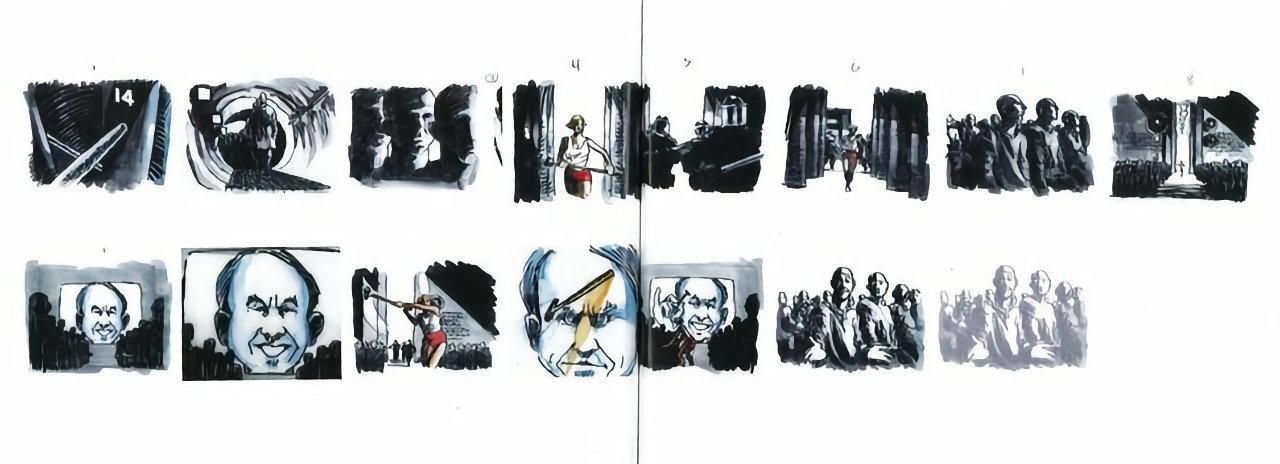
Part of the original "1984" pitch deck that sold Steve Jobs on the idea — image credit: Apple
"My god [I thought]. They're not saying what [the Mac] is, they're not showing what it is," said Scott in 2022. "They're not even saying what it does."
The script was written by Steve Hayden, who died in August 2025. Shortly before his death, he had reflected on how the "1984" message of technology setting us free has not come true.
"Yet the exact opposite happened," he said. "I don't think we've had weirder beliefs since the Salem witch trials or the Middle Ages."