
Remember me


It was late, late last Friday night; my little dog Rommel, shaggy and short-pawed, was desperate for a walk.
I sighed, and – abundantly layered, top-to-toe and in sturdy wellies – let him haul me forth.
Little more than a long turn round the block, as the white stuff continued to come down, settle, pile up and drift – backlit and indeed flood-lit by the brilliant full Moon.
And, for the first time ever in all my life, as it fell in flurries and eddies and came in billows and curtains, I found myself afraid of the snow.
Forced myself not to scold, nor drag, nor tighten the lead, even as my pet paused for a delirious, wriggly tummy-up roll in the mounting inches, till we were safely home by the soft log-fire and the normality of YouTube.
This was no longer the initial graupel of New Year’s Day – tiny, hard little things, like so much Hermesetas. Far less the pretty, hexagonal flakes of Bing Crosby and countless Christmas singles.
It was just… snow. Relentless. Implacable. It continued to fall through Saturday and Sabbath. Overnight, into Monday, the fall became epic.
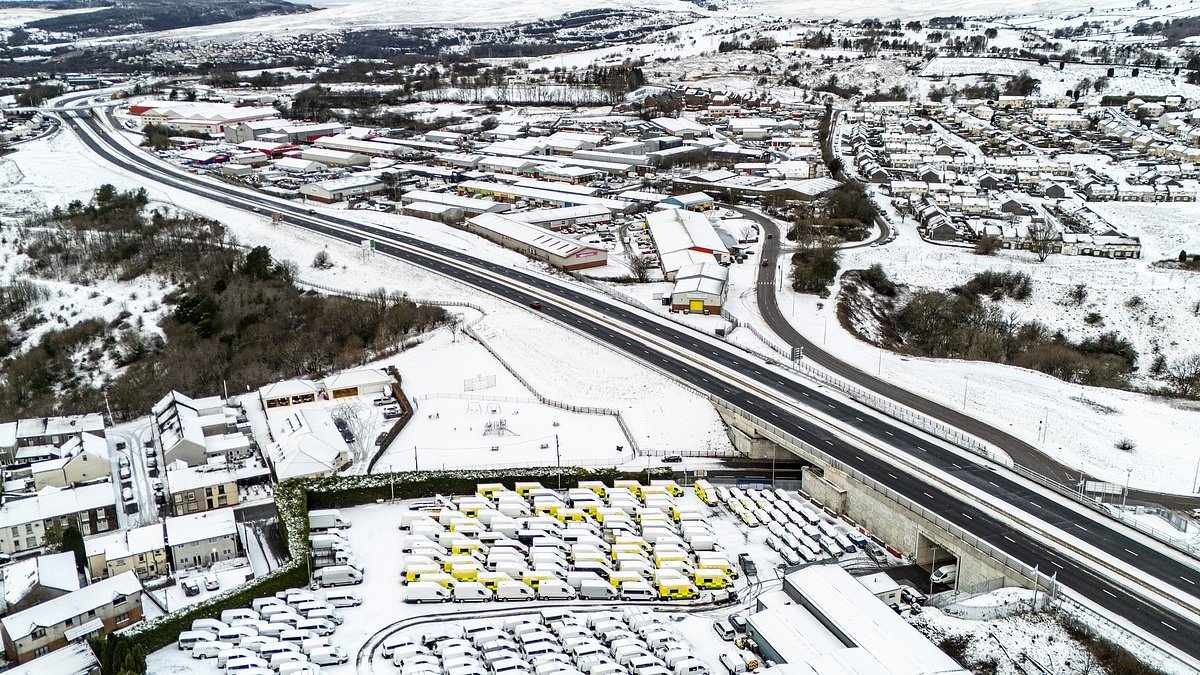
In parts of the village, it was now six inches deep. Then there was more than a hint of thaw. We scraped and shovelled – only to rise on Wednesday to find still more had fallen and that we were back in the deep-freeze, as one grew aware of a wider national emergency.

In 1978, Scotland endured one of its worst ever winters which included blizzards on Rannoch Moor near Pitlochry
It is the worst Hebridean snow I can recall in fifteen years; on Tuesday, Aberdeenshire Council declared a ‘major incident’.
Co-leader of Aberdeen City Countil Ian Yuill told BBC Scotland it had been ‘the most intense and sustained period of snow he could remember in more than 50 years.’
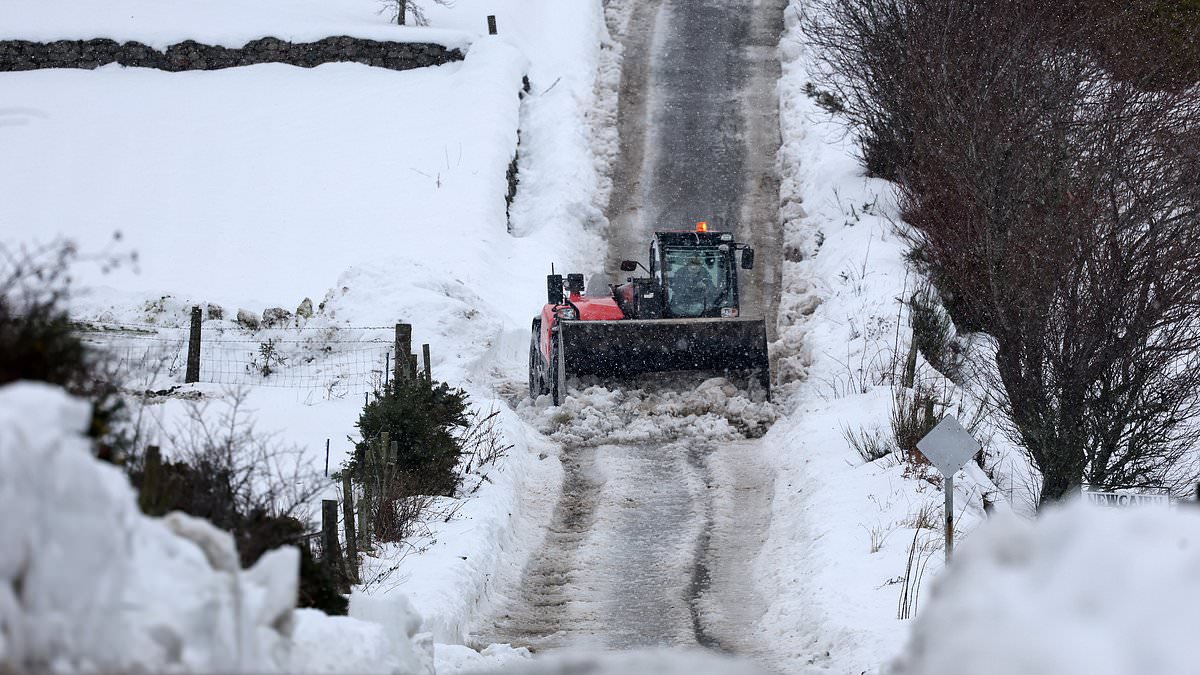
They had 15 snowploughs out to clear roads, 14 pavement ploughs trying to clear pathways – and had shelled out for another 24 diggers, even as snow continued hourly to fall and constantly undid their efforts.
Unbidden, farmers across Grampian – pretty well the same quiet folk who, in September 2022, lined the highway with bowed agricultural machinery as the remains of a great Queen were borne by and away for always – fired up their tractors and cleared as many roads, everywhere, as they could.
You knew things had become serious once the Scottish Government became noisily involved – and felt all confidence evaporate once you heard the latest Resilience Room meeting had been chaired by Angela Constance, of but fleeting acquaintance with coherence and still less with the truth.
Where was the First Minister and why, amidst what felt increasingly like The Day After Tomorrow, had we been abandoned to the shaky skills-set of the Justice Secretary?
Schools are still struggling to open, buses and trains can barely move in much of the North – LNER ‘cannot guarantee’ service on the East Coast Main Line till at least Friday – and, back on Lewis, we are still recovering from four days without ferries and several without bread.
That was compounded by the protracted New Year shut-down of Stornoway bakeries and other concerns, but it is hard not to feel so much of the wider emergency has been worsened by the tendency of white-collar public-sector leadership, these days, to take a straight fortnight off for the festive season, whatever crisis may arise.

During the winter of 1960, the A9 road at Thrumster, near Wick became almost impassable
What particularly infuriates anyone old enough to remember when Jon Pertwee was Doctor Who is that, not so long ago, what politicians, city fathers and quangocrats now declaim an unprecedented emergency that has caught them all on the hop was pretty well our normal, Scottish winter weather.
We had dreadful winters in the Seventies – one recalls footage of the aftermath of blizzards in January 1978; snowploughs in the A9 carving through drifts near ten feet high – and, somehow, coped.
It was partly generational – everyone near forty had lived through Hitler’s war – and partly cultural.
Most married women were full-time housewives, most of us lived within walking-distance of shops, schools and work, and most were of nonchalant, prepared resilience.
Between tins and packets and the freezer, we had enough stored food to last for days. We had good coats and boots and headgear and knew how to wield a sturdy shovel. Above all, we knew when to bide in and stay still.
Papers this week have been full of variants on how to drive safely in winter conditions. Topped-up antifreeze, low gears, a shovel in the boot, a fully charged phone, mind your stopping-distance and so on.
What few have emphasised enough is the quiet query: cannot you just simply stay at home? Is this heroic excursion really necessary? Might you not just make do for a bit and have a soothing mug of tea?
This lesson should have been absorbed permanently, in modern Western society, by the Great Blizzard that blasted east-coast America in March 1888, just weeks after the Children’s Blizzard on the Great Plains, when at least 235 people – including 213 school children – died in atrocious weather.
A generation earlier, loss of life would have been minimal: everyone would just have sighed, stayed indoors and brewed up some broth.
But, in a restless new social order, folk fought to carry on as normal – hit the office, the shops, and fulfil this and that social engagement. Some 200 people perished in New York City alone. Thousands were trapped in trains as general infrastructure collapsed and, as tends to happen after a massive white-out, the thaw brought ruinous floods.

An AA patrol car tows a lorry through a snowdrift on the Inverness to Carrbridge road in 1960
Abiding legacies included a sprint to build urban subway networks and re-routing as much cabling as possible underground. But the deeper lesson, absorbed belatedly by many, was – stay put, under cover; even if you have to burn some furniture or eat the pets.
That is not easy to grasp in an age of instant gratification, with all the amusements of the world at your keyboard fingertips and when, in scarce a minute, you can buy practically anything you want on Amazon.
But I was struck the other evening by ravings on a local, Isle of Lewis Facebook page.
Why were not all the roads already clear? Why were there so few snowploughs? Why did not the Council retain loads of people – presumably unwaged, and for the sheer love of it and regard for the common weal – to operate them?
It was hard not to feel – well, no one was forced to move here, it is the far North of Scotland, it is the bleak midwinter and, just now and then, over the ground lies a mantle of white…
Surely, now and then, folk can withstand two days without soy milk and fresh olives?