
Remember me








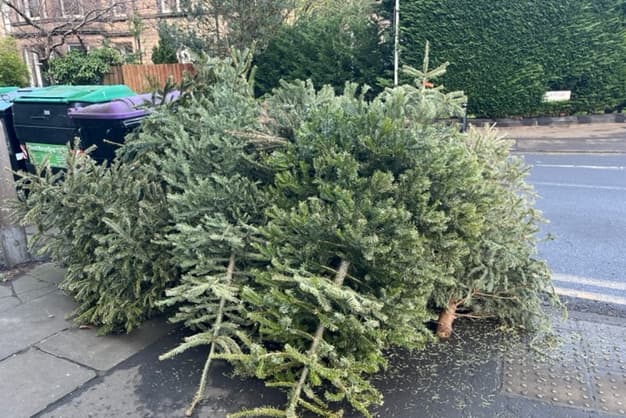
It is the saddest sight at this time of year – the forest of dead Christmas trees littering the streets. Having worked their magic in December in homes up and down the land, by January they are just another problem to be discarded and forgotten.
Up to eight million real Christmas trees are sold in the UK in a tradition started by Queen Charlotte back in 1800. More than two centuries on, the little firs, pines and spruces continue to bring sparkle and wonder into our homes every December.
To a visiting alien, it would seem very strange. We build our homes to keep the outside at bay but in the middle of winter, we open the door, drag a tree inside and cover it in tiny lights and decorations, kept specially for the occasion. Where is the sense in that?

 Old Christmas trees lie beside some bins. But they can go out in a blaze of glory, in one way or another | Stephen Jardine
An ignominious end?
There is no logic to it but there is something much more precious. Joy. You only have to watch the face of a child when the lights on the tree are switched on for the first time to appreciate the role the Christmas tree plays in our lives.
When you think of the pleasure they give, their end seems particularly ignominious. Propped against communal bins or strewn across pavements, they seem to symbolise the down-to-earth-with-a-bang feeling that January delivers.
In Edinburgh, trees are being collected by the council until January 21 or they can be deposited at a local recycling centre. All will be chipped and turned into compost for use throughout the city.
The end result is gold for council gardeners. Left to rot down it becomes a fertiliser as well as a weed suppressant. Some local authorities, such as Brighton and Hove, have taken things a step further, turning Christmas trees into soil conditioner that they then sell back to residents.
Light to lift the gloom
In Lossiemouth, there is another innovation this New Year. Old Christmas trees are being used to shore up sand dunes and protect the natural habitat against erosion in a brilliant project connecting sustainability with community engagement.
All that is very laudable but my favourite fate for a Christmas tree happens on Portobello Beach. After a friend’s funeral one January, we adjourned to a bar on the promenade to reminisce and toast their memory.
Outside on the beach, there were old Christmas trees planted in the sand and as the night wore on, someone set them alight. At the time, I thought it had been organised as part of the wake – a funeral party for the trees and a little light to lift the gloom.
However it turned out to be just a coincidence. The Grand Burning of the Christmas Trees is a local tradition that has been running for a few years now. Like everything else in life, it divides opinion.
Some are against it for environmental reasons as burning wood releases pollutants and particulates. But so do wood-burning stoves and the Hogmanay fireworks.
In the grand scheme of things, burning a few old Christmas trees is unlikely to make much impact on our already strained climate targets. But it will allow objects that have given so much pleasure to at least go out in a blaze of New Year glory. A final burst of joy at the darkest time of the year.