
Remember me
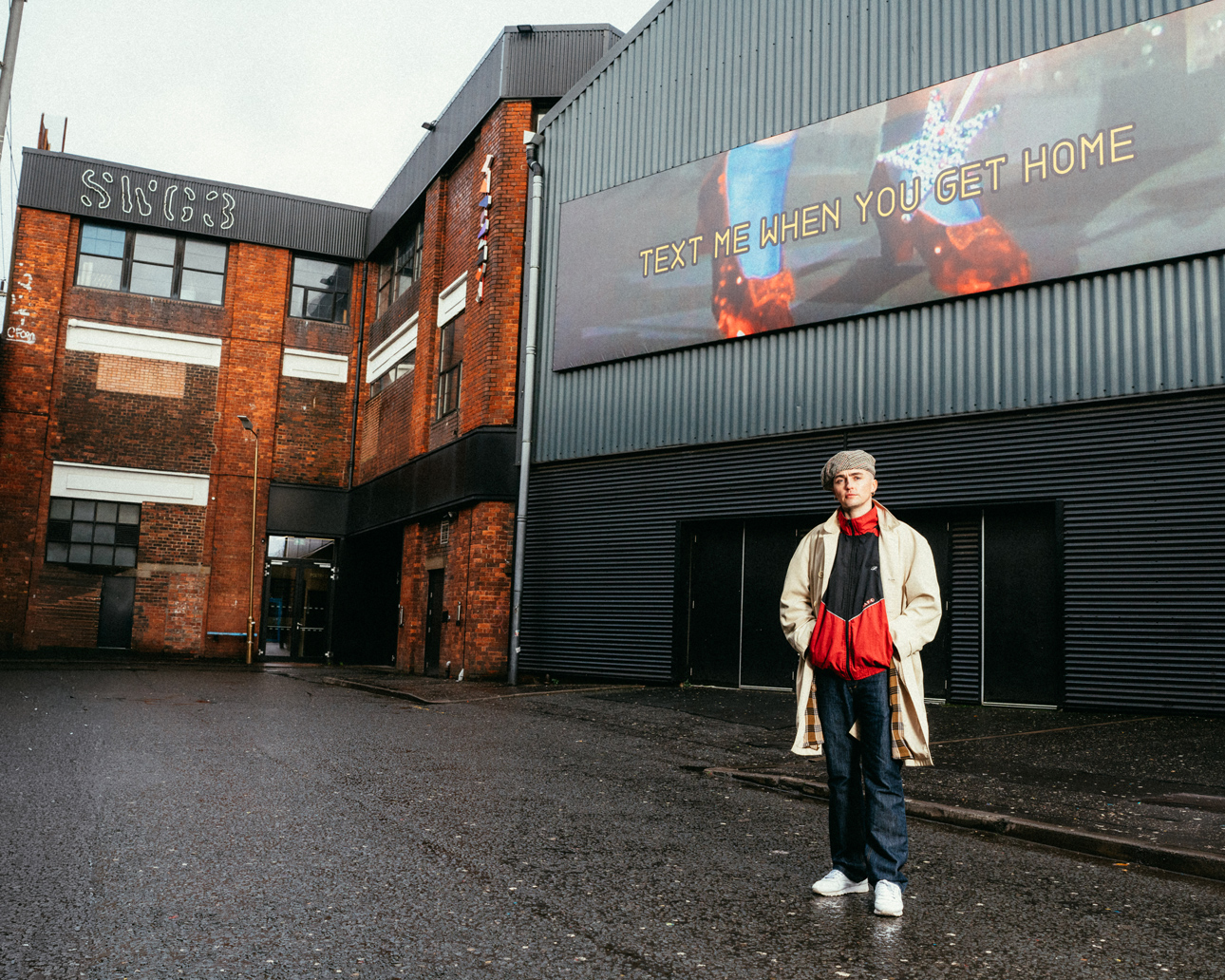
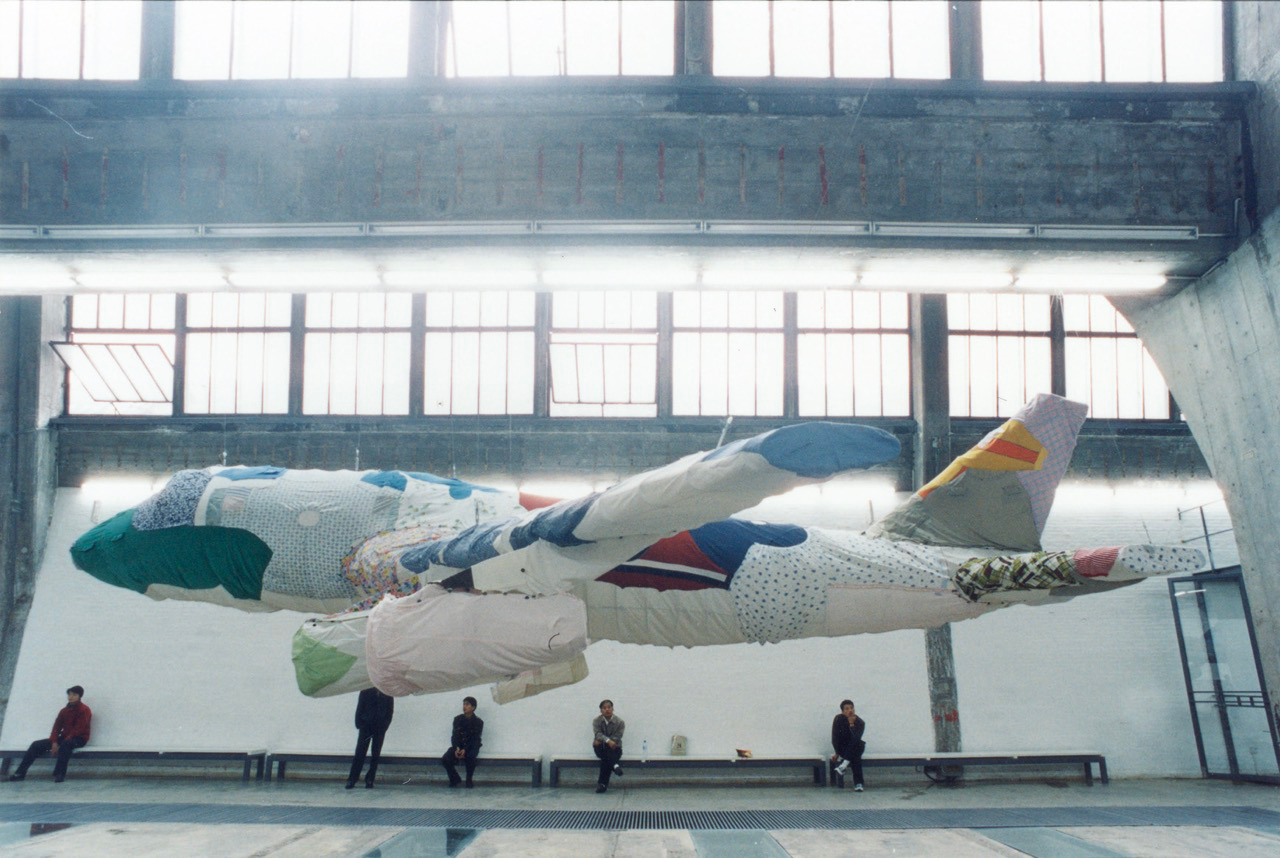
The Mills was built for output, and it still shows. The spaces run long, the surfaces hard, and the corridors feel designed to keep bodies moving. Once a cotton-spinning complex for Nan Fung Textiles, it now houses CHAT, Hong Kong’s first institution dedicated to preserving textile cultural heritage.
Here, Gulnur Mukazhanova works with the building’s industrial history rather than against it, bringing in felt and letting it do what it does best: hold warmth, pressure and time. In Mukazhanova’s hands, it doesn’t read as homely; it’s more deliberate. Dowry of the Soul is organised around inheritance, what gets passed on, and what you are expected to carry. Mukazhanova, Kazakh-born and Berlin-based, moves seamlessly across installation, sculpture, photography and performance, but her materials stay in the foreground. Wool, silk and rayon recur as a set of competing histories: what endures, adapts, and what pretends.
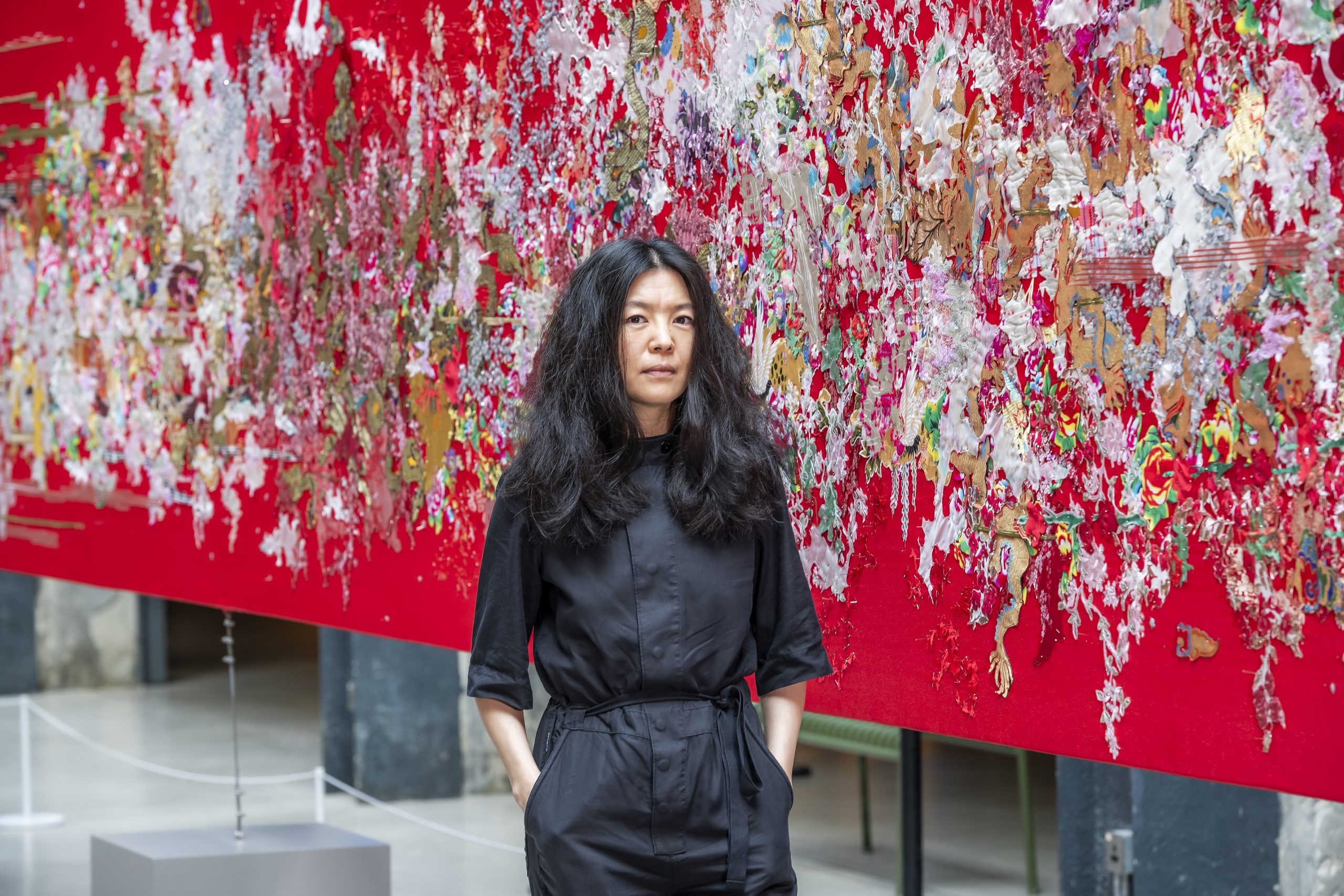
The show introduces itself in The Hall with False Hope or Moment of the Present. From a distance, it catches light and looks composed. Closer in, the details turn sharp. Needles sit alongside decorative motifs, and the work starts speaking less about ornament than about the stories we tell ourselves when something shines. It asks you to look again, and then keep looking.
 Gulnur Mukazhanova
I didn’t think about whether the exhibition was large or small. What concerned me most was whether I would be able to convey what I have been working on and truly engage people
Gulnur Mukazhanova
The word “dowry” does the heavy lifting in the title, bringing a whole social order with it: care sliding into obligation, obligation into control, control into status. Mukazhanova treats that structure as current, not historical, with roles handed down even when we insist we’re done with them. For the first time, Mukazhanova has included traditional rugs from her own collection. In a former mill, they stop being background. They read as lived objects with an economic life, with a cultural aura of trade, movement, continuity, and loss.
Mukazhanova’s practice has long followed the aftermath of the Soviet collapse and the pressures of global capitalism without turning identity into a fixed badge of virtue-signalling. She keeps testing what is claimed as “inherent” against what was imposed and what has been absorbed by institutions, the markets, and our so-called independent taste.
That is why she is wary of style. When colour and form start to drift into something merely pretty, she stops and returns to the first impulse. The work has to earn its surface.
The same ethic shapes how she handles inherited textiles: cutting, burning, dismantling. These are methods of attention, not provocation. Fire becomes a kind of clearing; dismantling makes room for a different meaning to emerge. Felt remains the anchor. Rooted in nomadic practice, it enters the contemporary frame carrying memory and tension in its texture. It communicates through density and warmth as much as image.
The exhibition also carries the shadow of the recent rupture in Kazakhstan, including the January 2022 events, without turning grief into a diagram. The mourning stays in the making. Mukazhanova’s international profile may be established, but this show does not play as a summary. It presses a simpler claim: textiles can witness. They can carry more than comfort.
What Mukazhanova wants is not agreement but engagement. Not the quick intake of the beautiful piece of art, then exit. It’s depth over size, a wider field of thought that pierces the senses, so the viewer can enter and experience the work rather than merely recognise it. If visitors leave with anything, it is a recalibrated sense of what textiles can do when they stop performing as comfort and start behaving as witnesses.
 Exhibition view: Gulnur Mukazhanova: Dowry of the Soul,
 Gulnur Mukazhanova: From the very beginning, the work has been conceived as a dialogue with the space—through sensation, and through attention to its history and character. For the first time, I decided to present traditional rugs from my collection, because their presence proved meaningful and precise within the historical context of this building. The decision about how and in what form they would be displayed emerged naturally, thanks to the collaborative work with the curator.
This is billed as your largest solo exhibition. What does “largest” mean to you: quantity, ambition, risk, or something else?Gulnur Mukazhanova: I didn’t think about whether the exhibition was large or small. What concerned me most was whether I would be able to convey what I have been working on and truly engage people. For me, “largest” is not about size, but about depth—about opening up the widest possible field of thought and ideas, so that the viewer can enter and genuinely experience the exhibition. It was important for me to communicate the meaning of the exhibition both as a whole and through each individual work presented within it.
 Gulnur Mukazhanova, False Hope or
Gulnur Mukazhanova: I think that a space chooses the work intended for it. The Hall is an open space, addressed to everyone. This installation is about global society—about our society. It speaks about the superficiality of society: everything that shines is an illusion we create ourselves. The needles symbolize both fragility and sharpness at the same time. It can be viewed from different perspectives. It can be perceived from a distance or approached very closely. The viewer has the opportunity to become part of the installation: to walk around it, spend time within it, and look closely at the motifs. In the installation, one can see local fabrics from Hong Kong as well as symbolically significant Chinese patterns, which are organically interwoven with the main motifs. These elements—fragments of history, pieces of the past—offer a reason for reflection.
The title Dowry of the Soul takes something intimate and makes it public. What does “dowry” allow you to say that a more neutral word would not?Gulnur Mukazhanova: The word “dowry” emerged sincerely, from the heart. For me, it became something more than personal. I felt a sense of responsibility toward my culture and toward my ancestors. This is a very complex question. I hear different tones and directions in it, and I also see a female silhouette. For me, it is primarily about a path—one that is connected to many layers, including philosophical questions. It is about movement through time, where care, obligation, control, and status do not exist separately but are tightly interwoven. Care leads to responsibility, responsibility to control, and control to status. This is how societies have been structured and reproduced over centuries. In my work, I question how justified this structure is. Dowry becomes a life script, a transmission of roles. And which role is being passed on ultimately depends on each of us.
 Exhibition view: Gulnur Mukazhanova: Dowry of the Soul, CHAT
 Gulnur Mukazhanova: While working with wool and creating felt, I experience very strong emotions. This sensation feels like a deep connection between the cells of the body and the brain. It is memory, tradition, refinement, lightness, and flexibility. For me, these are not just textiles—they are part of my life. These natural, ancient materials have organically woven into themselves the history created by our ancestors.
You often rework inherited garments and family textiles. What rules do you set yourself when you cut, burn, or dismantle something that once belonged to someone else?Gulnur Mukazhanova: These textiles are more than we usually imagine them to be. They carry history and its energy, which becomes tangible through contact. Working with them is a complex process—it is impossible to assign a fixed definition to every gesture. Cutting a piece of fabric or isolating a specific motif feels like working with a fragment of memory, trying to understand what emotions it holds and how deep they run. Burning functions as a ritual of purification. Fire is a powerful force—dangerous, yet cleansing. Dismantling is an act of transformation. When I hold embroidery woven by someone in the past, I see it as a form of collective heritage. Yet over time, it has lost the value that was originally embedded in it, and through this process I try to reengage with that meaning, questioning it as well.
 Exhibition view: Gulnur Mukazhanova: Dowry of the Soul,
 Gulnur Mukazhanova: This ancient Central Asian felting technique changes its context when it enters contemporary art. It no longer functions simply as a means of survival, but becomes a medium that carries memory, historical trauma, and reflections on the present. It allows me and the audience to engage with the past and present in a tangible, bodily way. For the viewer, the texture, density, and warmth of felt communicate presence and history beyond visual perception. I feel that felt is more than just felt. I’m still exploring this material—it is multifaceted. The technique keeps its ancestral roots while speaking to today’s social and emotional realities.
Globalisation can turn tradition into a “style”. How do you stop your own cultural references being flattened into pattern and mood?Gulnur Mukazhanova: In the world of textiles, it is indeed very easy to get lost. Colors and textures are extremely enticing and open to endless experimentation. But from the very beginning of my practice, it has been important for me that my works communicate not through external effect, but through inner meaning—through what I channel through myself, my body, and my emotions. For me, thought always comes first, followed by form and color. I can feel the moment when form and color start turning into empty patterns. This state exhausts me, and then I put everything aside and take a pause—for a day or two. Often, it is precisely at this moment that it becomes clear that I need to return to the original form. Usually, the very first reaction turns out to be the most accurate, the one worth developing further. In my case, felt and fabrics are not decoration—they carry memory, time, and experience, and for this reason remain the foundation and the central meaning of my work.
You’ve spoken through your work about rupture and recent trauma in Kazakhstan, including the “Bloody January” events of 2022. How do you decide when history should be explicit, and when it should remain embedded in form and process?Gulnur Mukazhanova: If we speak specifically about this series, I consciously chose to let the process of mourning pass through an inner experience. It is an inner voice that allows trauma and memory to speak silently. For me, it is therefore important to first understand the cause and its meaning through myself—through careful exploration of my own inner state.
After someone has spent time with this exhibition, what do you hope they carry with them and what do you hope they leave behind?Gulnur Mukazhanova: I am not the only one to experience such historical traumas and personal losses. It is important to me that viewers feel this experience as shared, that there is space for connection and understanding.
I sincerely hope that as many people as possible can feel the meaning of the entire exhibition—each experiencing in their own way pain and loss—yet leave with a sense of hope and a brighter, more grounded inner state. This is the power of art: to influence consciousness, to shift thinking. It is that moment when something clicks inside, the heart beats stronger, the whole body vibrates, and new impulses are awakened.
©2026 Gulnur Mukazhanova
Contributing writer at Art Plugged chronicling contemporary art’s beautiful mess, when he can get there. Now edging behind the camera, making insightful documentaries about artists and the work that haunts them. Survives on openings, opinions, one gallery, one artwork at a time. Considers espresso a meal.