
Remember me



Getty has published a new report on its inaugural PST ART Climate Impact Program, offering baseline measurements of carbon emissions, material waste, and related pressures drawn from 40 exhibitions connected to the latest edition of PST ART, the country’s largest recurring art initiative.
The numbers matter because they create something the sector has long lacked: dataset insights for exhibitions that go beyond anecdote and aspiration. Getty describes the project as the most expansive dataset yet assembled on the carbon impact of exhibition-making, designed to inform the next edition of PST ART in 2030. Just as consequential is what happened alongside the counting. Many participating organisations produced their first climate impact report and began adjusting everyday practices, from how work is shipped and fabricated to how people travel to do it.
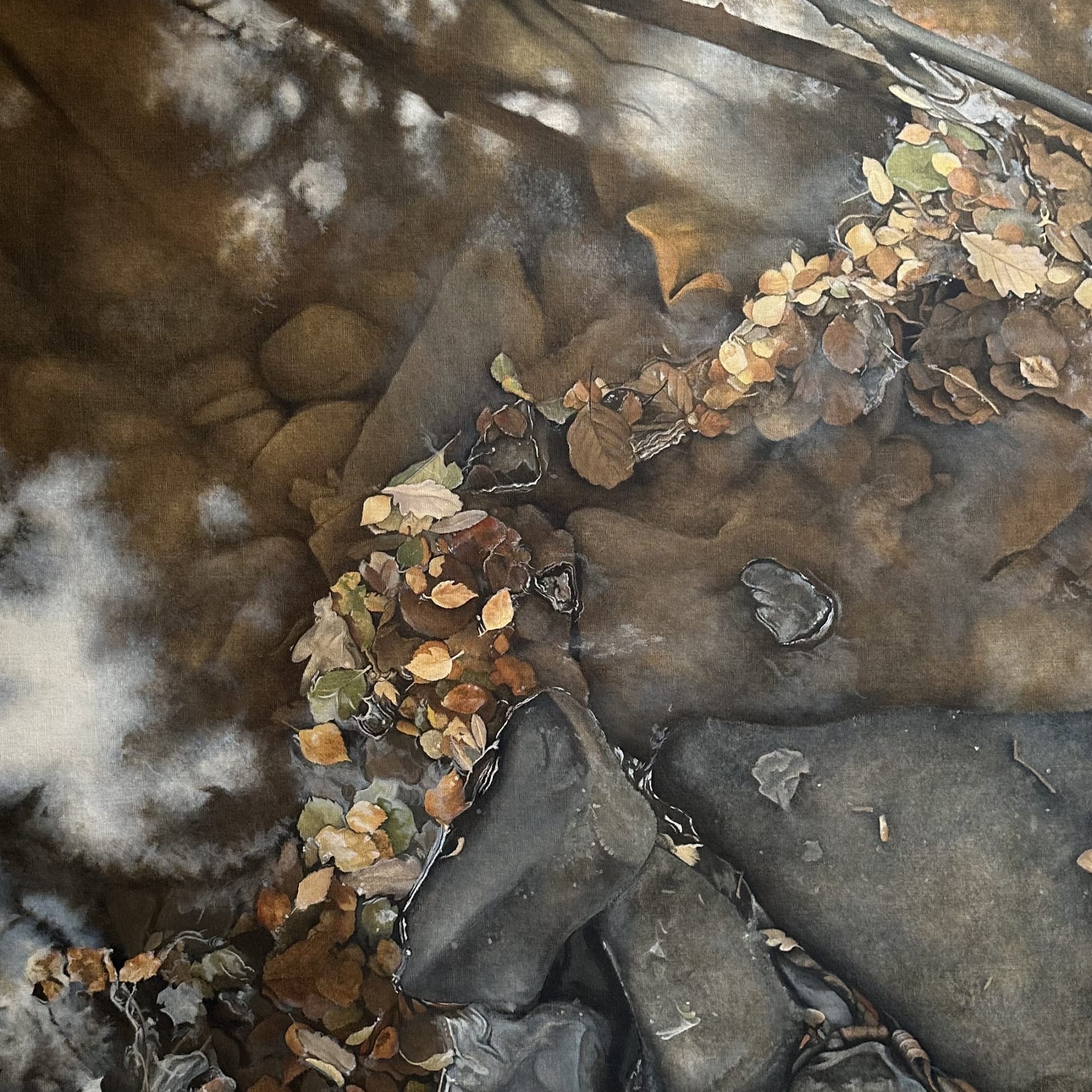
 Lan Tuazon, Over Your Head & Under the Weather, 2024 WaterBricks, metal, plexiglass, shredded plastics, Precious Plastics shredder. 96 x 234 x 279 in. (243.8 x 594.4 x 708.7 cm). Collection of the artist. Installation view, Breath(e): Toward Climate and Social Justice, Hammer Museum, Los Angeles, September 14, 2024–January 5, 2025. Photo: Jeff McLane
Museums sit at an awkward intersection of public mission and high resource demand. Art museums, in particular, have the highest average energy consumption among cultural institutions in the United States. Exhibition-making amplifies that load through travel, freight, temporary construction, printing, and the churn of materials that are built to last a season. Yet while museums broadly agree that tracking is a prerequisite for change, methods have been inconsistent and often incomparable.
PST ART’s regionwide structure offered an unusually practical framework: a network broad enough to align reporting, and specific enough to test what standardisation might look like in real conditions.
“Organizations of all sizes were eager to participate—from larger museums to university art galleries—and PST ART gave us all the chance to learn together and tackle these issues as a community,” said Joan Weinstein, director of the Getty Foundation. “You can’t reduce your carbon footprint if you don’t measure it, so data collection was a crucial first step. We were heartened to see how many partners across the region took this opportunity to try alternative methods and materials and commit to new eco-friendly exhibition practices right away.”
 Installation view of Material Acts: Experimentation in Architecture and Design (September 29, 2024—January 5, 2025) at Craft Contemporary. Photo courtesy of Craft Contemporary, Los Angeles. Exhibition Installation
The timing was not incidental. Many of the nearly 70 exhibitions in the most recent PST ART edition, PST ART: Art & Science Collide, took on climate change and environmental justice as subject matter. Getty responded by convening partners and building the Climate Impact Program with the climate strategy firm LHL Consulting and its founder Laura Lupton, alongside artist Debra Scacco.
Participation was voluntary, but engagement was extensive. Every PST ART partner attended at least one webinar led by LHL Consulting on climate impact reduction tactics, and nearly every institution met the LHL team one-to-one for tailored support. LHL also shared climate action tools and a standardised reporting framework across the full cohort. More than two-thirds of partners completed reports, creating a dataset large enough to show patterns rather than isolated case studies.
“One thing that is abundantly clear is that art institutions want to take climate action. Some previously lacked the resources to begin, while others simply did not have the bandwidth to take on this work,” said Laura Lupton at LHL Consulting. “There is no one-size-fits-all approach, so we worked with Getty to ensure a welcoming community and reinforce with our PST ART partners that just by making an effort—big or small—they are making an impact.”
Transport emerged as a decisive factor. According to the report, flights ranked among the highest emissions sources, followed by air freight. The dataset insights for exhibitions point to a concrete lever: shifting art transport from air to sea could have reduced total PST ART emissions by 18 percent. With just over half of all PST ART projects reporting, total emissions came to 2,167 tCO2, which the report equates to enough carbon dioxide to power the electricity of 452 homes in the U.S. for a year.
Although the programme was not established as an explicit carbon-cutting mandate, it prompted changes during exhibition development. Some institutions reduced travel and shipping by partnering with local artists, including the University of California, San Diego and Birch Aquarium at Scripps. At Getty, curators chose train travel in place of flying for research trips, a decision that reads as modest until it becomes habitual and measurable.
Materials and waste offered another set of practical tests. Eighty per cent of partners implemented waste reduction strategies. Five institutions reported zero waste to landfills, and three used entirely reused and recycled materials.
At The Huntington, the exhibition build itself became a site of revision: the museum eliminated drywall, opting instead for reusable plywood panels for temporary walls. Those panels have already been repurposed for at least five subsequent installations, with long-term savings as well as reduced waste.
“During the run of our PST ART exhibition, ‘Storm Cloud: Picturing the Origins of Our Climate Crisis,’ we found that our involvement in the Climate Impact Program sparked meaningful conversations both with our visitors and among our own colleagues,” said The Huntington’s Melinda McCurdy, curator of British art, and Karla Nielsen, senior curator of literary collections. “The program offered resources and structure to think collectively and intentionally about the environmental impact of our temporary exhibitions, and it has pushed us to set a higher bar for our future work.”
Smaller organisations also translated climate-conscious choices into tangible gains. At Craft Contemporary, the team switched from vinyl to paper wall labels, cutting expenditure by $10,000. They rethought packing to use less tape, and prioritised off-the-shelf, recyclable, and reusable materials, demonstrating how a climate lens can expose inefficiencies that budgets already feel.
“The sustainability decisions for our PST ART exhibition have inspired Craft Contemporary to commit to a goal of producing zero waste exhibitions within five years,” reported the museum’s director Rody Lopez. “The response from our team and peer institutions is truly energizing. We’ve already hosted visits to share our methods and help spread the word that climate action is possible.”

 Two visitors viewing the exhibition Blue Gold: The Art and Science of Indigo (September 14, 2024—March 16, 2025). Exhibition by Mingei International Museum, San Diego
Elsewhere, reductions arrived through reuse and quieter substitutions. Getty reused past exhibition seating and chose QR codes rather than buying new video display monitors.
The Lancaster Museum of Art and History and Self Help Graphics & Art reused exhibition walls from a prior display that had been slated for demolition, diverting material from landfill. The Wende Museum reused walls and display cases, consolidated shipments, and introduced a reusable art object label design, lowering costs compared with previous exhibitions.
Vendors and production partners also came under scrutiny. “Publications can generate harmful pollutants, so we chose Conti Tipocolor to produce our catalog because of their commitments to sustainable printing practices,” said Cassandra Coblentz, the independent curator behind the Oceanside Museum of Art’s “Transformative Currents” exhibition about art and environmental action in the Pacific Ocean.
For the Hammer Museum’s exhibition catalogue, sustainable production choices were made in collaboration with the graphic design studio Polymode. Fulcrum Arts, meanwhile, invited the fabricator for two major installations in its “Energy Fields” exhibition, co-presented with Chapman University, to join Climate Impact Program webinars. The result was a shift at Studio Sereno towards eco-friendly wood and sheep wool insulation, a commitment to complete reuse of all materials, and a retooled approach to fabrication going forward.
Getty positions the report as a baseline rather than a finish line, and situates it within a longer arc of sustainability work. The institution’s Managing Collection Environments initiative began in 2013, aiming to advance scientific research and fieldwork for sustainable management of collection environments across museums, libraries, and archives. Getty Global Art & Sustainability Fellows is supporting emerging leaders focused on arts and sustainability through research and professional development. In 2023, Getty appointed its first sustainability director, Camille Kirk, to help advance its sustainability goals. Read more news about sustainability at Getty.
Learn more about Getty’s PST ART dataset insights for exhibitions and the art world’s carbon cost via the link below
©2025 Getty
Art Plugged is a contemporary platform inspired by a relationship with the broader arts communities. We provide our audience with curated insight into the world of art, from exhibitions to artist interviews and more.