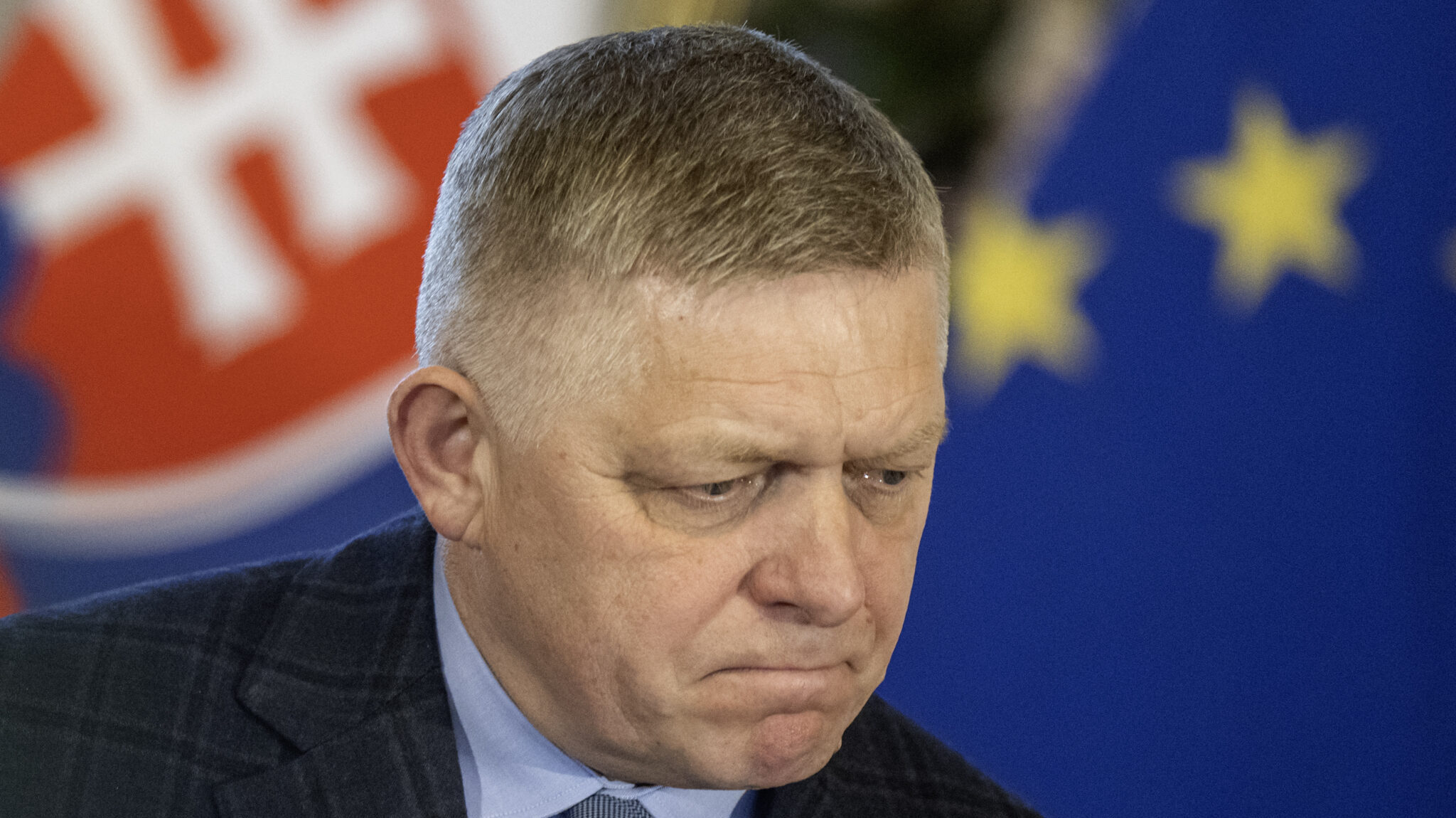
Fico’s New Year speech acknowledged rising social tensions and warned of attempts to move political confrontation “onto the streets”. His government faced a series of opposition-led and civic protests in 2025, reflecting growing public discontent with some of its policies – a trend also confirmed by opinion polls showing declining support for the governing parties.
He rejected calls for retaliation against political opponents over events from 2020 to 2023, insisting that justice must proceed within the law, while urging his supporters to remain patient despite what he described as persistent injustices.
Fico framed his response to political tension as one of “hard work”, pointing to regional government sessions, inspections of infrastructure projects, visits to housing agencies and hospitals, and an emphasis on visible delivery.
At the same time, Fico placed strong emphasis on foreign policy and peace. He criticised EU leaders over the war in Ukraine and reiterated his opposition to Slovakia’s participation in a joint EU war loan. Peace, he argued, must be the foundation of Slovakia’s efforts, saying that without it “everything is nothing”.
The opposition, meanwhile, has so far focused on criticising the governing coalition while seeking ways to cooperate more effectively. It has repeatedly emphasised the need for economic growth and for Slovakia to return to what it describes as a clear pro-European course. “We must politically return to Europe. We cannot allow Fico’s government to carry Slovakia eastwards,” said Michal Simecka, leader of the main opposition party Progressive Slovakia.
Political scientist Radoslav Stefancik warns that 2026 is unlikely to bring social reconciliation. Instead, he predicts deeper polarisation and a public debate increasingly split between fact-based discussion and what he describes as a growing post-factual world of misinformation and conspiracy theories.
“We will witness a situation in which there will be no space left for substantive issues, because the debate will be flooded with nonsense,” Stefancik says, particularly as the year becomes increasingly dominated by pre-election positioning.
Local and regional elections scheduled for late 2026 are expected to serve as an early test of public sentiment – and a trial run for political parties ahead of the following year’s parliamentary elections.


Comments (0)