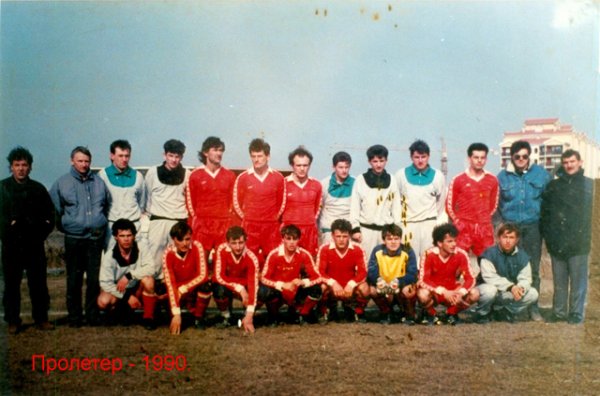
Before the Bosnian war, clubs like FK Proleter Teslic, especially in industrial towns, generally had players from all three major ethnic communities, Serbs, Croats and Muslims (later Bosniaks), as well as individuals who identified as Yugoslavs and others. In socialist Yugoslavia, ethnicity was seen as less important and often downplayed in public institutions, and sports were viewed as a shared civic activity.
Players were chosen for their talent and commitment to the team, not for their names or religion. Teslic, as an industrial town with a working-class population, reflected this development. FK Proleter had a reputation as a community club with civic pride at the local level.
With the outbreak of war in 1992 and the rise of ethno-nationalist politics in Bosnia and especially in Republika Srpska (the Serb-led territorial entity), almost everything changed. Institutions, including football clubs, were restructured along ethnic lines. Most of Teslic’s Bosniak and Croatian population, including the football players, were excluded or forced to leave. Teslic itself witnessed war crimes such as ethnic cleansing and killing campaigns, and sports were no exception to the climate of fear and division.
The name of the club changed from Proleter to FK Teslic, erasing its socialist, more inclusive heritage. Only years later was the old name restored. This story is not just about football, but rather about how identity, memory, and politics shape our everyday lives, personalities, and communities.
One of my worst memories dates back to the early 2000s, when our club participated in what was called the Danish Football School. It was a project aimed at bringing together children to play the game we all supposedly loved. I remember traveling to the nearby town Jelah, where children from Bosniak, Croat, Serb and other communities would meet.
But instead of friendship and reconciliation, I also witnessed anger, hate and fear. I remember how children barely older than ten cursed at each other with such strong fury and hostility, making angry comments about religion and what happened during the war. Back in Teslic, there were incidents involving children throwing stones at each other.
My worst memory was when, after playing one game, a boy provoked the guest players by running around them while wearing a T-shirt with the face of Radovan Karadzic, the wartime president of Republika Srpska later convicted of war crimes and genocide. For this boy, it felt like a lot of fun, but for me, it was traumatic. I remember the moment as if struck by an electric current, a feeling of fear and powerlessness going through my body.
That experience left a deep mark on me. It taught me that politics is not something abstract or only about ideas, but about what happens in our streets, our schools, and our games. It lives in how we name things and how we treat those who are “other.” It taught me how hate is learned early, and affects our social world, and how we choose to create our nearest environment and places. And also that politics can be about life and death.


Comments (0)