One morning last November, Bee Kyal’s phone pinged with a message about a fighter jet taking off from a military base in central Myanmar’s rural Sagaing region. Reacting quickly, the resistance fighter picked up a walkie-talkie and shouted into it, telling civilians to “stay alert!”
Bee Kyal’s words traveled through a network connected to speakers in a nearby village without internet. There was implicit urgency: The plane that was spotted was identified as a Russian-made Yak-130, which can reach its target in minutes.
One morning last November, Bee Kyal’s phone pinged with a message about a fighter jet taking off from a military base in central Myanmar’s rural Sagaing region. Reacting quickly, the resistance fighter picked up a walkie-talkie and shouted into it, telling civilians to “stay alert!”
Bee Kyal’s words traveled through a network connected to speakers in a nearby village without internet. There was implicit urgency: The plane that was spotted was identified as a Russian-made Yak-130, which can reach its target in minutes.
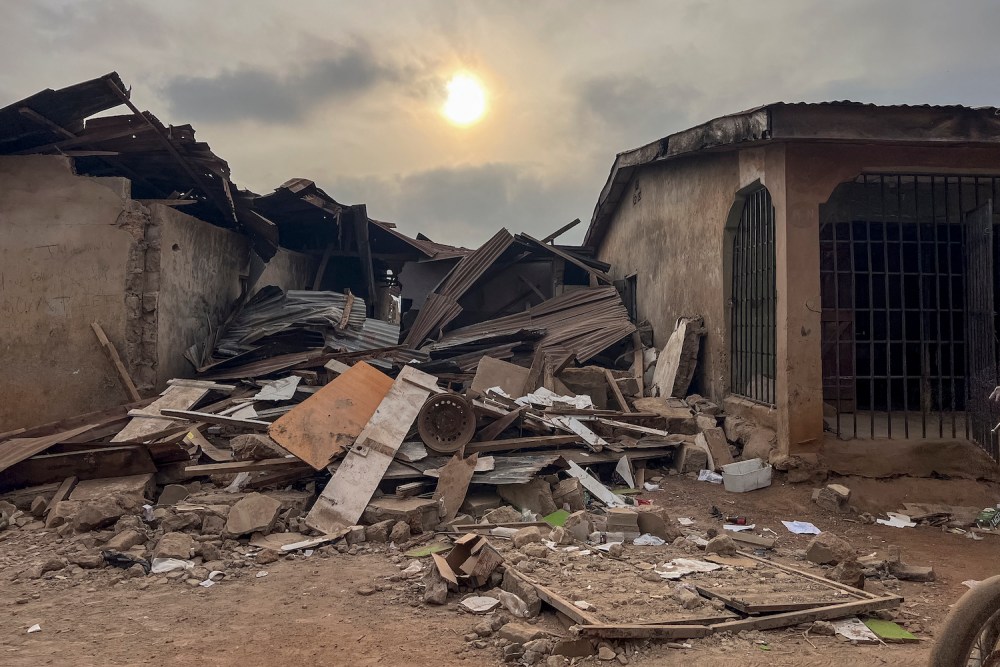
More than 7,000 civilians have been killed since the 2021 military coup in Myanmar, many of them in the heartland of Sagaing, where flat plains stretch for miles. In this realm of contested territories, conflict among the military and armed resistance groups continues unabated. The internet is a key part of the fight. Myanmar’s military has restricted internet access in conflict areas, with an estimated 131 townships either fully or partially blocked.
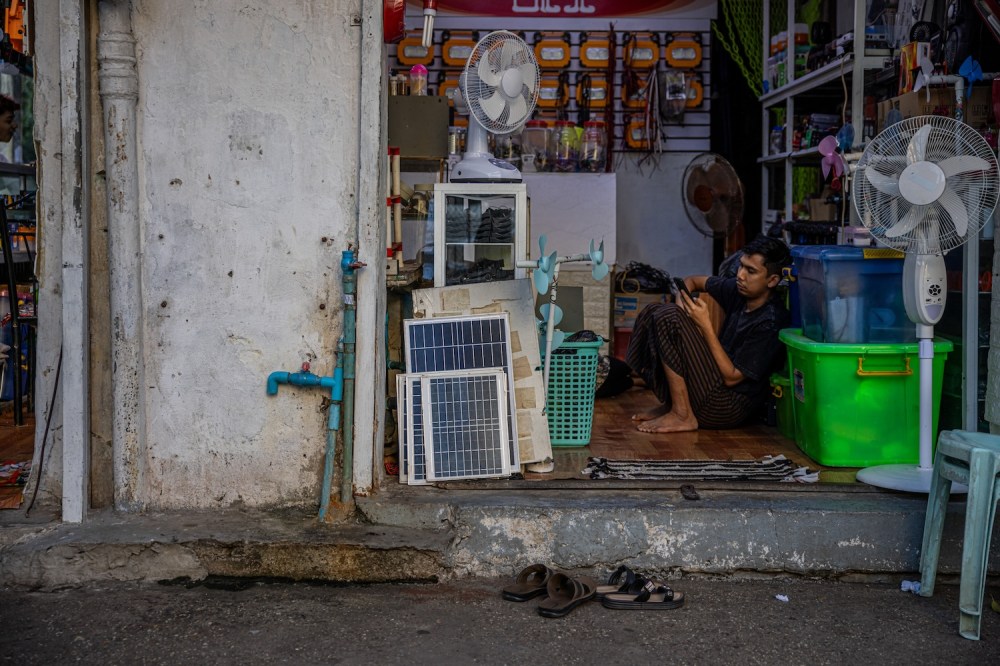
Such cuts to internet access are considered disproportionate under international human rights law, violating rights to freedom of expression and information. Some communities in Myanmar have experienced them for years. Many people now rely almost entirely on Starlink, the satellite internet provider owned by Elon Musk’s SpaceX, as a workaround. Schools, humanitarian groups, hospitals, media, human rights researchers, and resistance fighters have few other options.
According to the nonprofit Armed Conflict Location and Event Data, military air and drone strikes reached record levels in 2025, up about 30 percent in the first 11 months of the year compared with 2024. Many of these attacks occurred in Sagaing: At least 22 students and teachers were killed at a school in strikes last May, a manned paraglider attack killed more than 20 civilians taking part in a protest and Buddhist festival in October, and an airstrike reportedly killed 18 people, many gathered at a tea shop, in early December.
“We don’t have sophisticated technologies to halt their attacks targeting villagers,” said Bee Kyal, who uses Starlink to communicate with flight spotters before sending a walkie-talkie alert. A villager in the area—who like others interviewed by Foreign Policy asked not to be identified for fear of military retribution—said that without this early warning system, “more people would die.”
However, in another corner of Myanmar, the murkier side of Starlink’s use has become apparent, leading SpaceX to cut service to thousands of devices.
Online scam centers along Myanmar’s border with Thailand began transitioning to Starlink in 2023, after Thailand restricted internet access to places where the centers operate. These compounds—run by global criminal syndicates, often based in China—largely rely on human trafficking, forced labor, and even torture to run their scams. They make up a multibillion-dollar industry with operations in Cambodia, Laos, and the Philippines, too.
As the U.S. government looked to crack down on the scam industry in Southeast Asia, SpaceX responded last October, saying it “proactively identified and disabled over 2,500 Starlink Kits in the vicinity of suspected ‘scam centers’” in Myanmar. But it’s unclear whether the move was enough to ease pressure: In December, U.S. Sen. Maggie Hassan said the congressional Joint Economic Committee had contacted companies whose platforms were being used for fraud, naming Starlink.
Furthermore, questions are emerging about the impact of shutting down Starlink access on civilians in Myanmar, especially those in conflict areas—where many devices appear to have been swept up in the scam center targeting.
Spring Health Hospital in Myanmar’s Kayah state, near the Thai border, lost access to its Starlink connection, which it uses to consult with other providers for more specialized treatments. Kayah is a major battleground in Myanmar’s conflict, and it faces one of the longest-running internet blackouts in the country. Spring Health, founded in a remote area in the wake of the coup, offers free medical care for displaced people, as well as basic services, surgical procedures, and cancer treatment.
Ko Htoo, Spring Health’s founder, said the hospital’s internet access had saved lives and the blackout had pushed it toward a Starlink connection. “Starlink is a decentralized service, so the Myanmar military cannot interfere,” he said. After losing access, Ko Htoo said, the hospital’s team contacted Starlink and received a message saying that “Starlink has identified activity with this account” that violated its terms of service and acceptable use policy.
This is just one of likely many unintended consequences of the SpaceX decision. Internet service providers must carry out due diligence on the impact that their decisions to limit or deny service can have on civilians in conflict areas, even if the decision is effective in other contexts. For those who have had their devices switched off in Myanmar, Starlink could provide or announce a more accessible appeals process.
SpaceX did not respond to requests for clarifications about its device shutdowns in Myanmar.
Businesses have a responsibility to protect human rights, but responsible disengagement is much thornier than it appears at first glance. Sometimes, the rush to limit business operations or to withdraw completely from a country may have calamitous unforeseen consequences.
Though experts acknowledge the benefit of curbing scam syndicates’ access to the internet, some have questioned how effective cutting off Starlink will be. The financial, technical, and logistical resources of these criminal organizations dwarf those of armed groups in Myanmar, many of which operate in impoverished areas and feel a social responsibility to the community that cybercriminals do not have.
“They are so powerful,” said DD, a 25-year-old from Myanmar who worked in one of the scam compounds along the border. (DD agreed to be interviewed on the condition of anonymity, fearing retribution by former employers.) “They don’t care whether they get Starlink or not. They will find a way to continue scamming.”
Han Htoo Zaw, a journalist who has reported extensively on cyberscam compounds, believes that they can continue operating without Starlink—unlike displaced camps, schools, and hospitals in Myanmar’s resistance-controlled areas. “I sympathize with everyone, including American people, who lost their money in scam operations,” he said. “Cutting off [Starlink] access to scam centers is good, but it can harm people of Myanmar and support the Myanmar military’s agenda.”
The Myanmar military increased its repressive tactics ahead of a phased election that began on Dec. 28 and ends late this month. With only parties approved by the military allowed to run and voting not taking place in many townships due to conflict, the junta-backed Union Solidarity and Development Party is poised to win a comfortable majority in parliament. That could clear a path for junta ruler Min Aung Hlaing, who may soon face an International Criminal Court arrest warrant, to recast himself as a civilian leader.
Any broader restrictions on Starlink in Myanmar would almost certainly benefit the military and help it carry out abuses under the cover of darkness; it would be much harder to disseminate information about human rights violations. For now, that doesn’t seem to be the case, as Starlink is still accessible in central Myanmar and in many townships in Kayah, according to sources.
But many fear what would happen if Starlink disappeared. Hyper, a 25-year-old who started a Telegram channel that posts information about airstrikes that feeds into Bee Kyal’s network, said the junta would be pleased if their teams lost access to the internet. “Starlink is the only tool that can resist the internet shutdowns from the regime,” he said.