The United States spent decades condemning spheres of influence as archaic relics of a darker age. Now it’s claiming one.
The Trump administration has announced it will “run” Venezuela after capturing President Nicolás Maduro, following up on its pledge to add a “Trump Corollary” to the Monroe Doctrine. Unencumbered by international responses that are heavy on rhetoric and light on substance, Washington thus joins the very rivals it once lectured in claiming exclusivity in its own neighborhood. An international order based on spheres of influence may soon sit alongside or, according to some, replace the liberal “rules-based” one.
The United States spent decades condemning spheres of influence as archaic relics of a darker age. Now it’s claiming one.
The Trump administration has announced it will “run” Venezuela after capturing President Nicolás Maduro, following up on its pledge to add a “Trump Corollary” to the Monroe Doctrine. Unencumbered by international responses that are heavy on rhetoric and light on substance, Washington thus joins the very rivals it once lectured in claiming exclusivity in its own neighborhood. An international order based on spheres of influence may soon sit alongside or, according to some, replace the liberal “rules-based” one.
Some commentators have suggested that as unsavory as this whole business might be, embracing spheres of influence is a pragmatic way to reduce the dangers of great-power competition. But this conflates the stability provided by a spheres-of-influence system with the violence that attends competing spheres-of-influence claims.
Spheres of influence can indeed stabilize great-power relations—but only when they are mutually recognized. Without broad great-power buy-in, spheres instead become flash points for competing powers. What’s more, spheres of influence are widely criticized for the high costs they impose on smaller states caught within them. But today, those states have institutional tools to resist and disrupt such arrangements, tools their predecessors lacked. This makes any new spheres system both novel and dangerous: Without mutual recognition from peers and facing disruption from below, Washington’s pivot may exacerbate geopolitical competition more than tame it.
Spheres of influence are as old as the modern states system. Since at least the late 15th century, powerful states have sought them for territory, domestic advantage, and prestige. They are sometimes claimed by states that have little effective ability to enforce them—like the early days of the Monroe Doctrine—and other times justify brutal conquest—like imperial Japan’s “co-prosperity sphere.”
Whatever the motivations, spheres have had two major international functions across the centuries. They’ve allowed great powers to lay claim to regional hierarchies, and to stay out of each other’s hair—where entanglement might lead to great-power war.
In the 1815 Congress of Vienna and associated meetings thereafter, Europe’s great powers tasked one another with intervening in Europe’s smaller states if a rebellion in one of them threatened the post-Napoleonic settlement. By determining who could acceptably intervene where, this spheres-of-influence system allowed the great powers to maintain their hierarchies through violence without that violence being mistaken for a Napoleon-style revision of the overall balance of power. Austria soon intervened in Italy, Russia in Poland, and Britain in Portugal. (It was in this context that Austrian Chancellor Klemens von Metternich dismissed Italy as “a geographical expression.”) When the great powers intervened outside their spheres, they did so “in concert”—as they did when they created independent Belgian and Greek states.
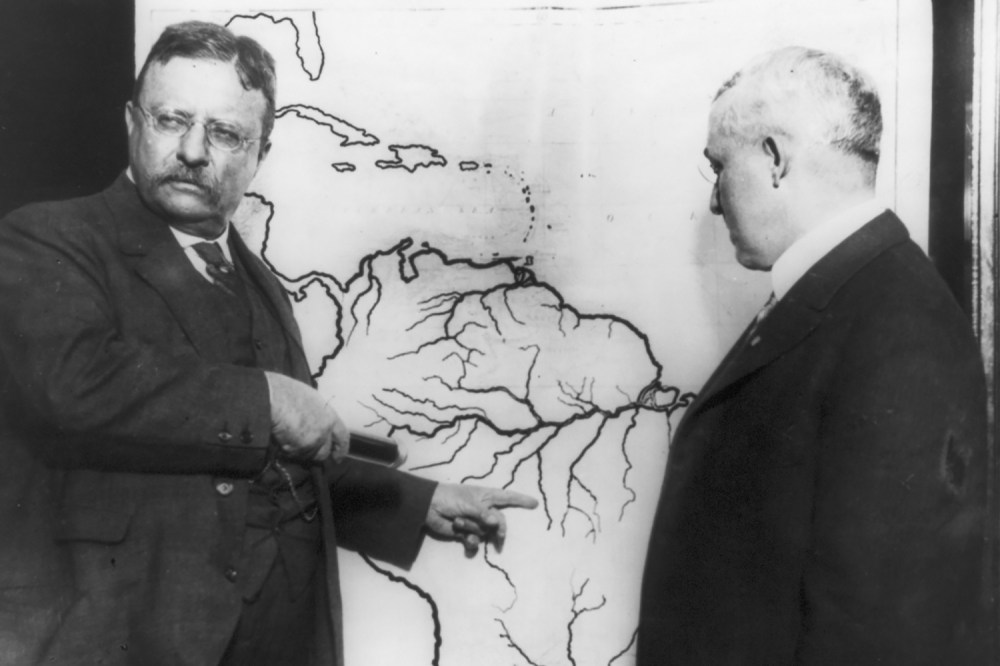
By the end of the 19th century, the Vienna blueprint had gone global. At the 1884-85 Berlin Conference, the great powers carved up Africa, establishing “spheres of influence” in international law for the first time. The great powers partitioned China, the Middle East, Southeast Asia, and Persia soon after. Indeed, it was in this context that the Monroe Doctrine emerged as an expression of American hegemony in the Western Hemisphere. As President Theodore Roosevelt put it in 1904, “If we intend to say ‘Hands off’ to the powers of Europe, then sooner or later we must keep order ourselves.”
In their 19th-century heyday, spheres of influence were not opposed to international institutions or a “rules-based” order. They were, in fact, the rules and institutions, codified into international law.
What made these arrangements work was mutual recognition, which transformed spheres claims into spheres systems. This transformation allowed great powers to dominate their regions without triggering open conflict with peers.
When recognition was lacking, however, spheres became sources of conflict. The Crimean War began when the other great powers refused to accept Russia’s claims to Ottoman territory. Competition between Austria-Hungary and Russia over the Balkans was once again at issue in 1914, setting the stage for World War I.
Following the catastrophe of this conflict, the League of Nations sought to replace spheres with collective security and self-determination. But it faltered out of the gate: The United States continued to intervene in Latin America, and by the 1930s, Japan pursued a “Greater East Asia Co-Prosperity Sphere,” Italy seized Ethiopia and Albania, while Moscow and Berlin partitioned Eastern Europe. When Germany invaded Poland as part of that arrangement, Britain and France declared war against it, formally beginning World War II.
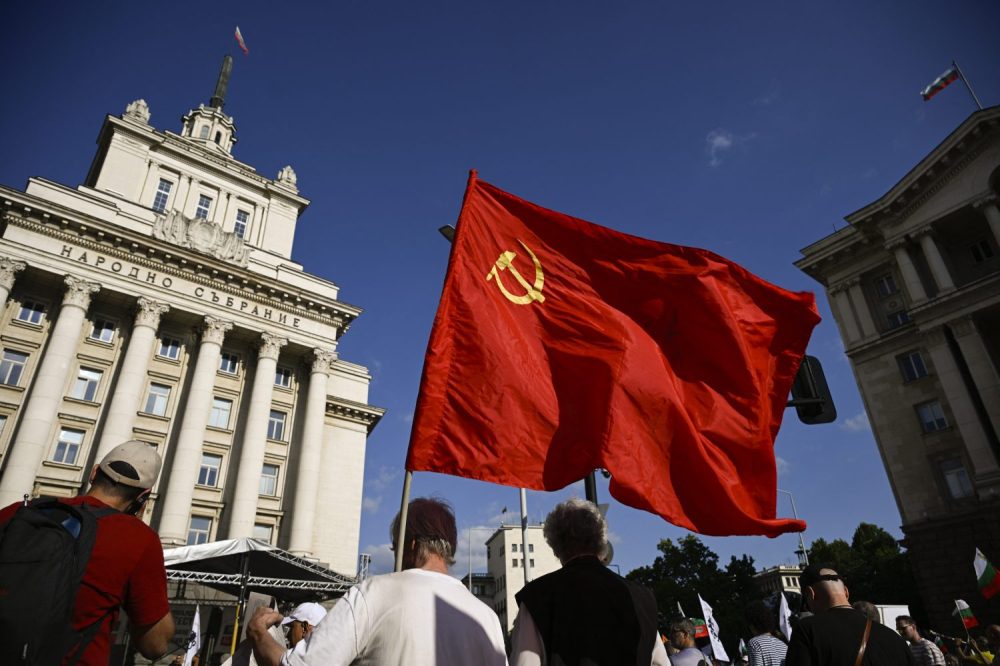
The devastation of that war brought a new round of declarations that spheres of influence were over. Yet a tacit spheres understanding soon emerged anyway. Moscow and Washington each overtly intervened in their respective neighborhoods—Hungary and Czechoslovakia, Grenada and the Dominican Republic—while avoiding direct confrontation with one another. Of course, establishing these tacit spheres was not without significant risk, as the Cuban missile crisis dramatically illustrated. And conflict continued in areas where these spheres were undefined. Superpower competition shifted to the developing world, leaving a ring of proxy-war killing fields from Angola to Afghanistan to Vietnam.
As this brief history suggests, stable spheres of influence often emerged at the cost of considerable violence. Once established, spheres systems also never proved quite as stable as they appeared. And that uneven stability was purchased at a high price by the states trapped within them. The Concert of Europe, a high-water mark for great-power cooperation, enabled those powers to coordinate their suppression of revolutions through Europe and colonial conquest across the globe.
But today’s smaller states have tools their predecessors lacked. Global supply chains, financial networks, and trade relationships now cross any conceivable sphere boundary, as do regional organizations such as the Association of Southeast Asian Nations and Asia-Pacific Economic Cooperation. Sovereignty and self-determination are more widely institutionalized than in previous centuries. Some areas of international cooperation—the nonproliferation regime, for example—still require wide global buy-in to work. Unless interdependence hardens into blocs, exclusive domination won’t be possible. Smaller states can exploit great-power reliance on interdependence to resist, forum-shop, and play great powers against one another.
Such a system may be more humane than those of the past. But it, too, comes at a cost. By wielding their leverage, small states may put themselves at risk—and simultaneously prevent the very mutual recognition that makes spheres stable. U.S. President Donald Trump may be happy to grant Russia a sphere of influence in Ukraine. But as long as Ukraine can successfully resist Russia’s efforts, and secure European support to do so, Russia’s claim will be a source of conflict. Washington will struggle to keep Chinese influence out of Latin America so long as governments there keep courting it.
It’s also not clear which countries might make spheres claims or have them recognized. Unlike 1815, no major war has selected clear winners. China, Russia, and now the United States are the usual suspects, but Brazil or India may soon join. Turkey, Saudi Arabia, and the United Arab Emirates are cultivating African proxies and sponsoring them in conflicts against one another.
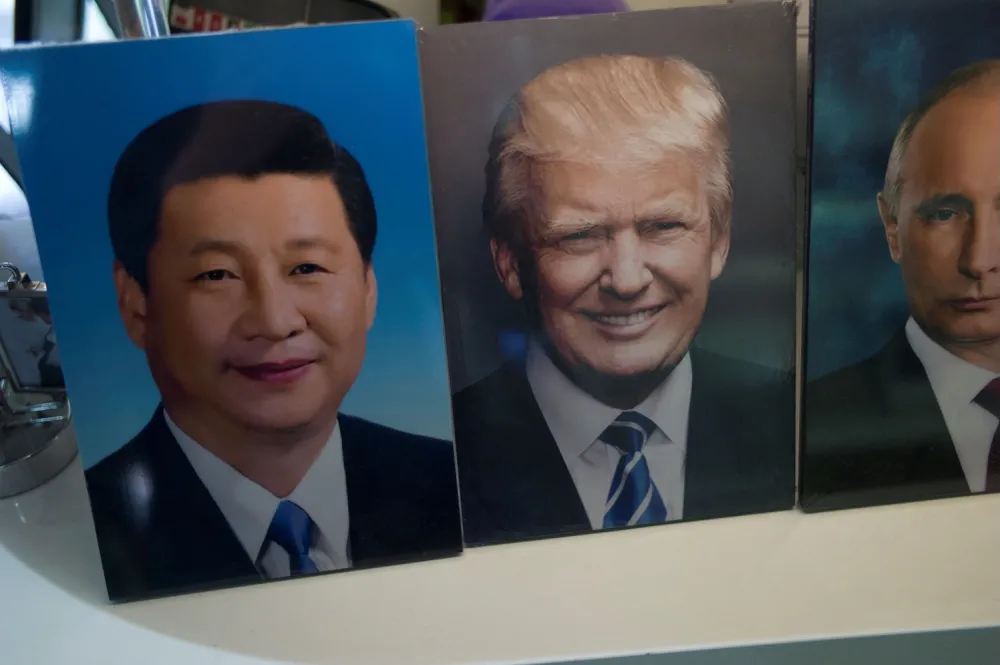
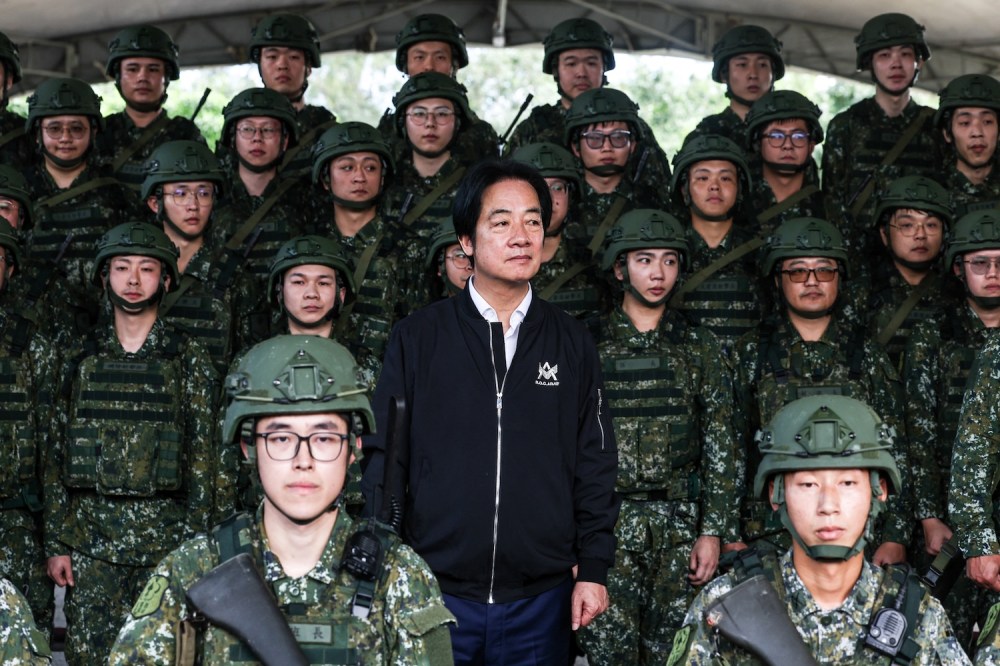
A spheres claim is a demand for license: like the Monroe Doctrine’s declaration against European intervention, one power asserts a free hand over an area while demanding others stay out. A spheres system, by contrast, is an architecture of constraint. Such architecture requires mutual recognition. If the United States reasserts the Monroe Doctrine (or “Donroe Doctrine”) while refusing a Chinese sphere in East Asia, there can be no system—just the danger of competing arrogation. Washington has just claimed Venezuela; Moscow claims a sphere in Ukraine; Beijing claims one in the South China Sea, including Taiwan. None recognizes the others. Today’s spheres claims look more like a collision than a concert.
Such a collision could be catastrophic. Prolonged proxy conflict among multiple nuclear-armed powers—in an era of hypersonic weapons and cyberwarfare—raises the risk of inadvertent escalation and nuclear war. Climate change, global pandemics, and artificial intelligence all need great-power cooperation to address. A world of contested spheres claims will be bad not only for those caught inside them, but the global commons, too.