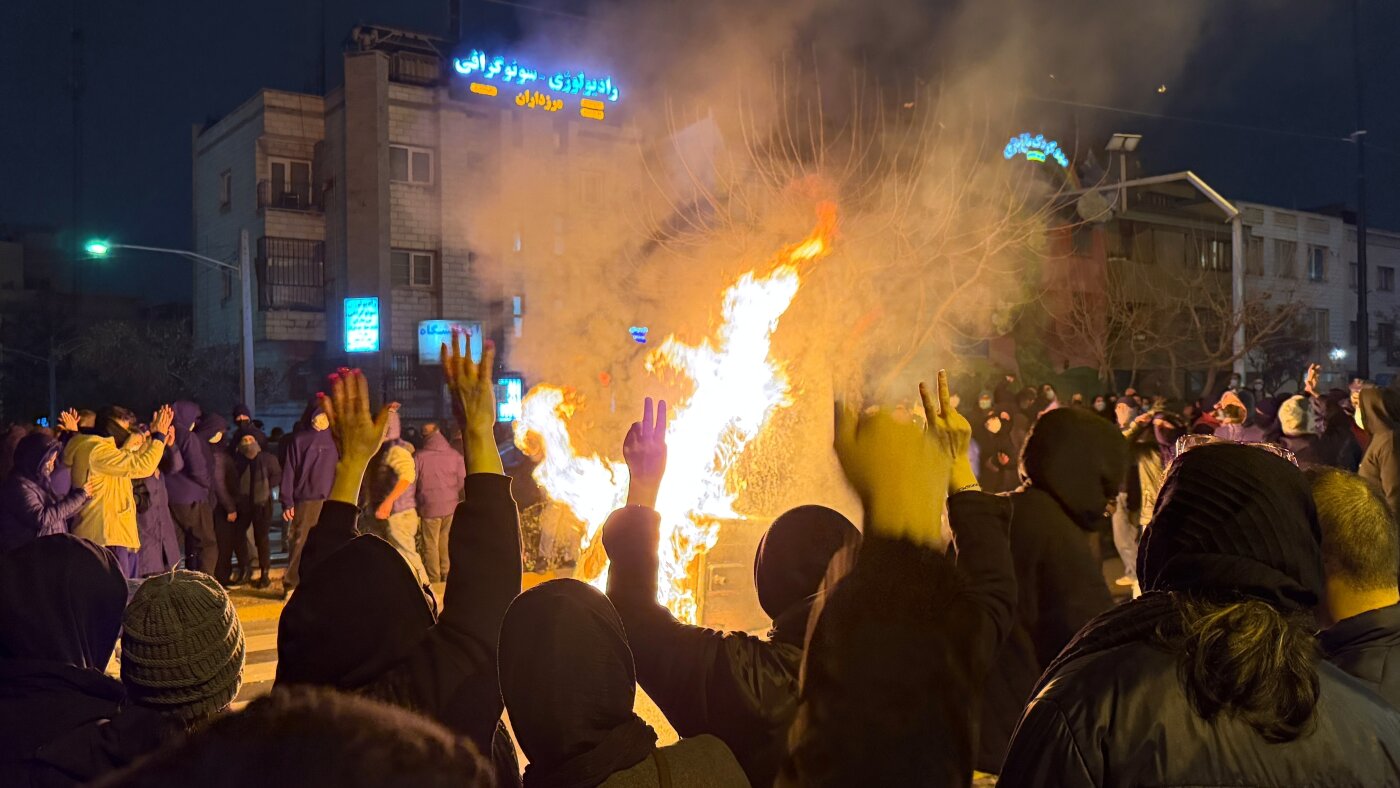
Iranians are using Starlink to get online during the government's near-total internet shutdown.
AILSA CHANG, HOST:
Authorities in Iran have implemented a near total shutdown of the internet in the country. It's part of a crackdown on large-scale anti-government protests there. But some people on the ground are getting around this by using a satellite internet system called Starlink. NPR tech correspondent John Ruwitch is here to tell us about it. Hi, John.
JOHN RUWITCH, BYLINE: Hi, Ailsa.
CHANG: OK. So first, explain to people, what is Starlink?
RUWITCH: Yeah, Starlink is essentially high-speed internet that you can access from anywhere on Earth. It's based on a constellation of some 9,500 space satellites in low Earth orbit. They're about the size of a pickup truck, with big solar panels. And they're arrayed in a grid kind of blanketing the Earth.
CHANG: OK, that sounds so high-tech. And how exactly do people on the ground get internet access from Starlink?
RUWITCH: Yeah, it's pretty straightforward. You buy a receiver, which is a small satellite dish. You get a subscription. You know, Starlink is part of Elon Musk's aerospace company, SpaceX. Then you plug it in, point it at the sky without obstructions and you've got internet, whether you're in a remote, rural area with no broadband or on board a ship at sea, for instance. Wherever.
CHANG: Wherever, even in places like Iran where the government has shut off the internet.
RUWITCH: Yeah.
CHANG: And cut off cell service, right?
RUWITCH: Yeah, and also in conflict zones. You might remember when Russia invaded Ukraine a few years ago, Starlink became an essential communication tool for people there, as well as the military. But it can be particularly useful in situations like what's happening in Iran. Here's Jonathan McDowell. He's a satellite expert with the Smithsonian Astrophysical Observatory.
JONATHAN MCDOWELL: The great thing about it is there's no wire for the government to cut. It's very hard to censor because the signal is coming from the sky. And so if you have one of these dishes, you don't have to go through a local telecom provider.
RUWITCH: So governments that want to control the internet or censor it, like Iran's, don't like this. In fact, Starlink is illegal to use in Iran.
CHANG: OK, but how widely used is Starlink in Iran?
RUWITCH: Yeah, I asked Ahmad Ahmadian about this. He runs a U.S. nonprofit called Holistic Resilience that helps Iranians get around internet censorship, including through Starlink. He estimates there are more than 50,000 Starlink devices in the country right now. They're all bought in other countries, smuggled in, then traded on a black market. He says they go for about $700. He's actually pretty hopeful about the power of this device in a place where the internet is, in normal circumstances, heavily censored.
AHMAD AHMADIAN: Once people get a glimpse of free internet, an uncensored internet, suddenly they realize what is the prison that they are living in.
RUWITCH: He says people on the ground are telling him that as of Tuesday, Starlink is actually free in Iran. There's no subscription needed. I reached out to SpaceX and the White House, but neither has confirmed that.
CHANG: You said 50,000 Starlink devices in the country. But Iran has, like, 90 million people, right?
RUWITCH: Yeah.
CHANG: So can such a small number of Starlink terminals make a difference, ultimately?
RUWITCH: Yeah, well, look, this isn't the first time that the government has curtailed internet access there. Farzaneh Badiei is an internet policy analyst who grew up in Iran, who now lives in New York. She says even a small window to the outside world is crucial.
FARZANEH BADIEI: Every time the government has shut down the internet, they have killed many more people than when people had access to internet and could report it and could livestream it.
RUWITCH: Activists say a lot of the images that we've seen from Iran since the internet blackout started last week have come via Starlink, including images that show violence and death. You know, more than 2,500 people have been killed so far in the crackdown, according to the U.S.-based human rights activist news agency. NPR has not independently confirmed that figure.
CHANG: But it just seems in this current climate in Iran, it could be very risky to use Starlink there, right?
RUWITCH: Yeah. I mean, as I mentioned, it's illegal. You know, rights groups tell us that the government has been hunting down people using these devices. And they're hearing from sources on the ground that the authorities have been jamming Starlink signals in parts of the country.
CHANG: That is NPR's John Ruwitch. Thank you, John.
RUWITCH: You're welcome.
Copyright © 2026 NPR. All rights reserved. Visit our website terms of use and permissions pages at www.npr.org for further information.
Accuracy and availability of NPR transcripts may vary. Transcript text may be revised to correct errors or match updates to audio. Audio on npr.org may be edited after its original broadcast or publication. The authoritative record of NPR’s programming is the audio record.