
Remember me



Britain needs to lose 70 per cent of its chief constables to make way for super forces funded by a new police tax, a senior officer has said.
Gavin Stephens, the Chair of the National Police Chiefs' Council (NPCC), has called for the most radical changes to policing in a century.
He said the number of forces needs to be cut from 43 to as little as 10, creating in addition a national super force which would be 'better than the FBI'.
The top officer, who represents all chief constables, believes there are 'too many cooks' and hundreds of millions of pounds could be pumped back into crime fighting by cutting duplication on matters like procurement.
Speaking ahead of a White Paper due to be published next week, Mr Stephens has called for a fundamental redesign of policing, creating a uniform tax would resolve the current postcode lottery in force funding and level of service.
He has been backed by Britain's most senior police officer, Sir Mark Rowley who believes the country only needs 'around 10-15 fully capable forces', adding: 'Policing in this country is at a once in a generation turning point.'
Mr Stephens wants to strip police costs out of council tax to produce a separate levy which would be the same rate for all householders.
Currently, police receive money from a combination of national grants and local council tax, with the funding formula calculated on local population data that is a decade old and deprivation figures from 2001.

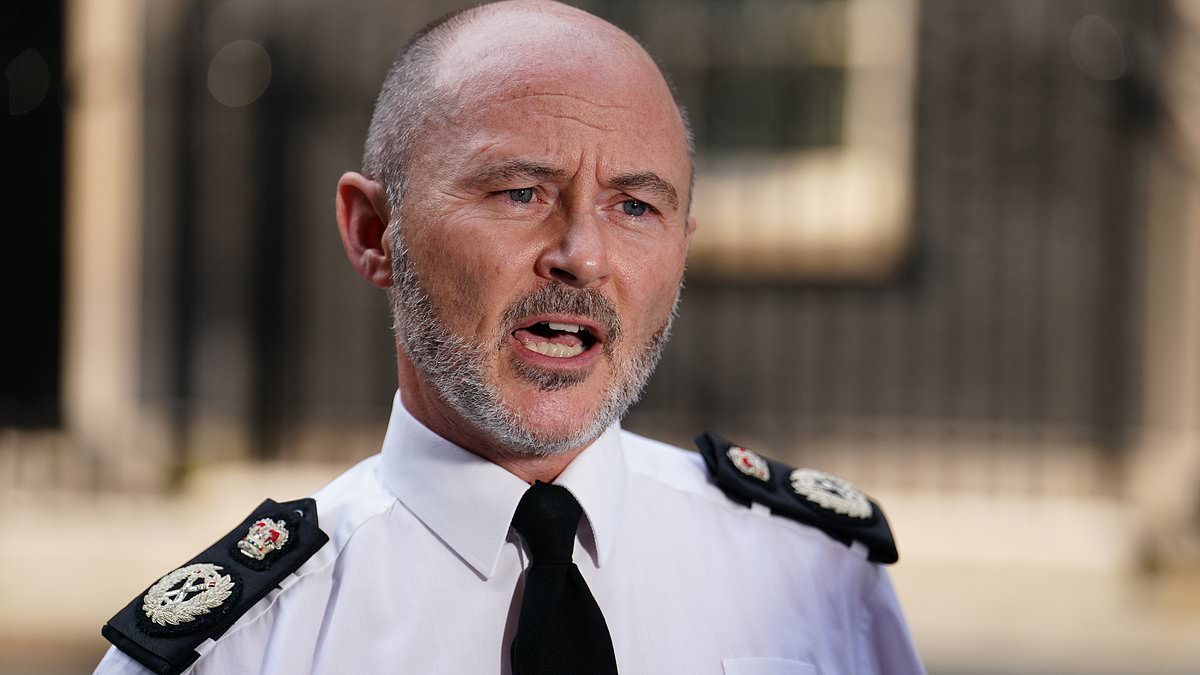
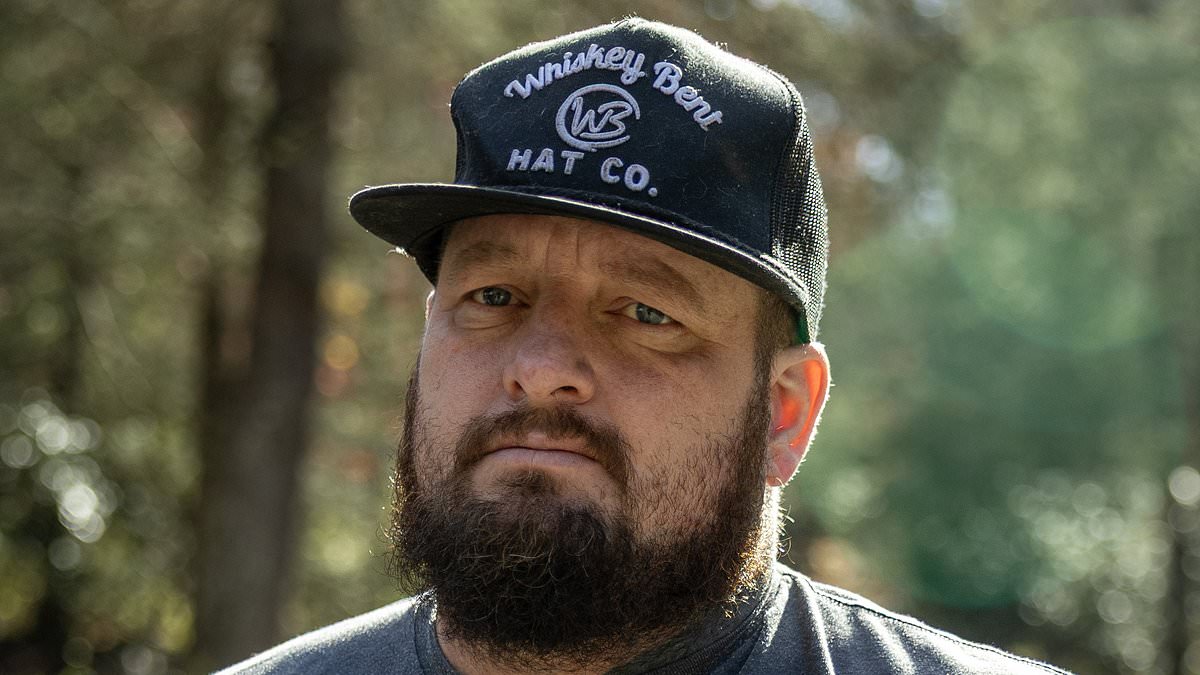
Gavin Stephens (pictured), the Chair of the National Police Chiefs' Council (NPCC), has called for the most radical changes to policing in a century
As a result, some pay almost three times more for their local police than others in different parts of the country.
Mr Stephens wants to make the system fairer which would pay for fewer regional forces and a new national police organisation combining the National Crime Agency, counter terrorism police, regional serious organised crime squads and the violence against women and girls centre.
The national force headed by a 'super chief' would also handle functions like procurement, IT and forensics, with Mr Stephens envisaging a 'national agency to rival the best in the world- better than the FBI.'
He said: 'We need the most significant change in policing in the last half a century to get policing ready to fight crime over the next half a century.
'Probably somewhere between 10 and 20 (forces) would be the optimum.'
The proposal comes more than decade after Scotland merged its eight police forces into one single force, Police Scotland.
But since it was created in 2013, Police Scotland has lurched from one crisis to another, enduring chaotic and incompetent mismanagement, chronic under-funding and plummeting detection rates.
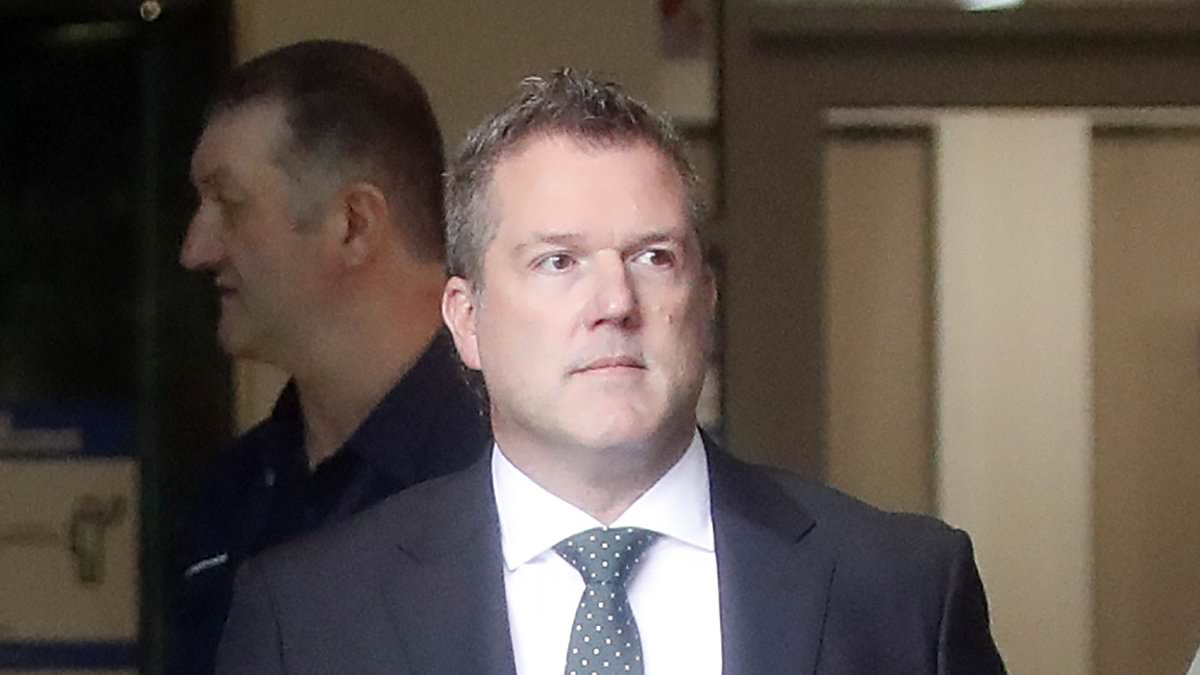
Speaking out just days after the West Midlands Chief Constable Craig Guildford was forced to retire following the Maccabi Tel Aviv scandal, Mr Stephens suggested as many as 76 per cent of police chiefs should lose their jobs.

Speaking out just days after the West Midlands Chief Constable Craig Guildford (pictured) was forced to retire following the Maccabi Tel Aviv scandal, Mr Stephens suggested as many as 76 per cent of police chiefs should lose their jobs
'There are too many decision makers.
'One of the reasons that we can't get consistency and we can't roll out technology quickly is because there are too many people who are allowed to decide on things. There are too many cooks.'
He went on: 'We don't need 43 people doing the same jobs. In our 43-plus force model there is lots of repetition and duplication
'We want to simplify that so that we can preserve local policing and make it more consistent, so it is less of a postcode lottery.
'Some people are paying more for their policing than others and some people are getting less service than others.'
He believes that it would free up hundreds of millions of pounds for fighting crime in staff and procurement savings by having fewer forces.
Instead of 43 forces separately ordering 'umpteen different types of police car', one national body could deliver tech capable of scanning days' worth of CCTV in minutes, so officers could 'process crime reports in seconds and submit case files in minutes'.
Mr Stephens claimed many chiefs supported the move, even though they may lose their jobs if the reforms went ahead.
The former Surrey chief constable stressed his plans did not mean cutting officer numbers and he promised that people would still have a local beat bobby.

Speaking ahead of a White Paper due to be published next week, Mr Stephens has called for a fundamental redesign of policing (File image)

Sir Mark Rowley (pictured) said: 'Policing in this country is at a once in a generation turning point'
He promised there would be more rapid adoption of technology and more consistent roll out.
He added: 'Then you can more quickly identify offenders, bring people to justice and charge more people.
'We absolutely need to do this for the decades ahead, because crime is changing and 90 per cent of stuff now has got a digital footprint.'
He stressed the current model of 43 police forces in England and Wales was ill-equipped to deal with today's criminality, with gangs coordinating phone theft and shoplifting nationwide.
He told the Mail: 'The cost of not doing this is twofold. It's that we continue to disappoint the public in the service we provide, and we hear loud and clear what the public expectation is.
'And it's also the cost on the good people of policing - the level of exhaustion and burnout is really high.'
His plans have been backed by the head of Britain's biggest force, even though it means Scotland Yard losing responsibility for counter terrorism.
Sir Mark said: 'Policing in this country is at a once in a generation turning point.
'Our current policing model was built for the 1960s and has been stretched beyond what it can support.'
But a spokesman for the Police Federation of England and Wales, which represents rank and file officers, said: 'The formula that funds policing needs to change but cutting the same size cake 10 or 20 ways rather than 43 isn't going to see the change the public or police officers deserve.'
Comments (0)