
Remember me





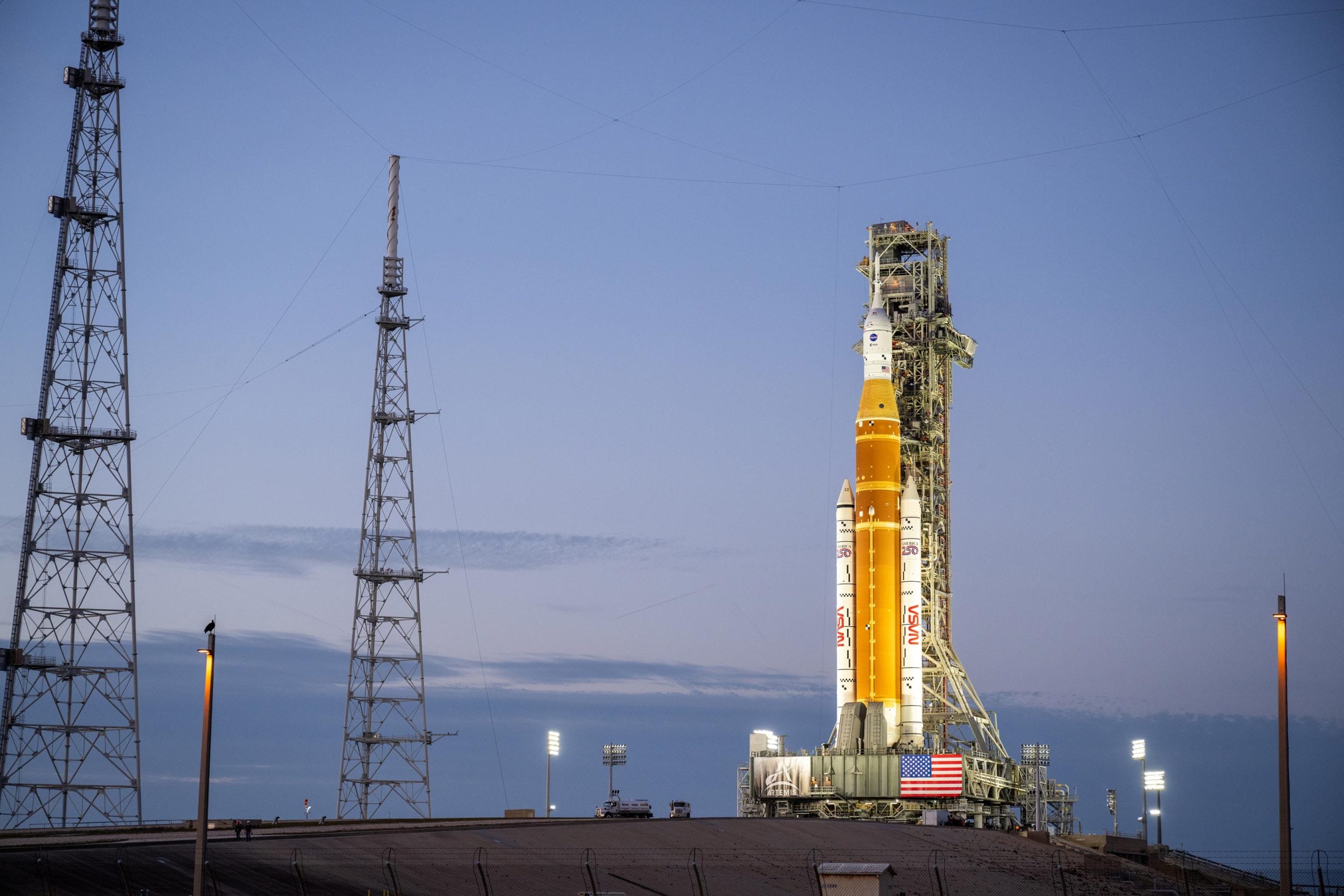
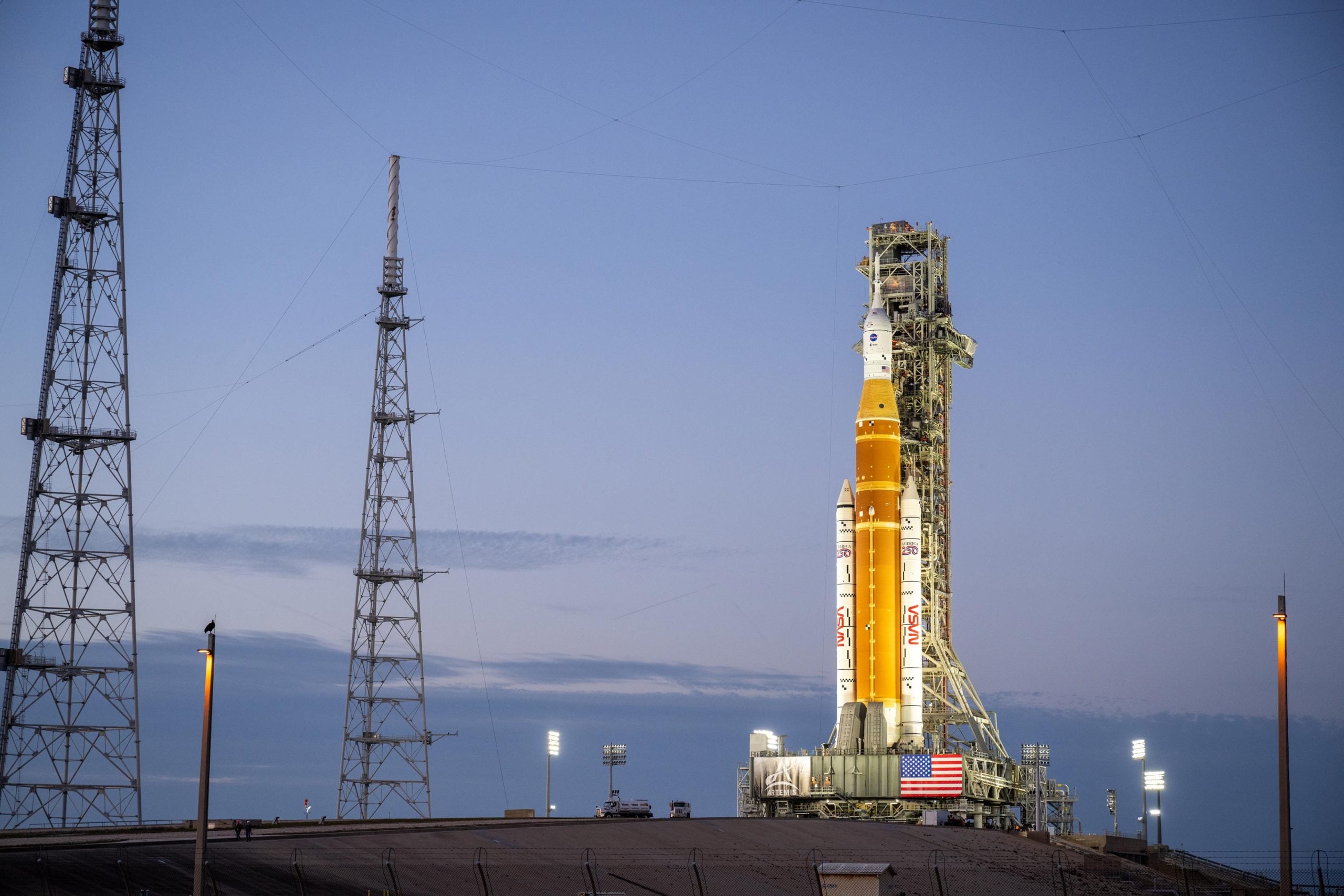 NASA’s Artemis II Space Launch System (SLS) rocket and Orion spacecraft are seen illuminated by lights at Launch Complex 39B, January 17, 2026, at NASA’s Kennedy Space Center in Florida. In the coming days, engineers will prepare for the wet dress rehearsal, a two-day test that simulates launch day. Credit: NASA/Keegan Barber
NASA’s Artemis II Moon rocket is now at the launch pad, setting the stage for final prelaunch tests. The mission will send astronauts around the Moon and help pave the way for future lunar and Mars exploration.
At 6:42 p.m. EST on Saturday, January 17, NASA’s Artemis II SLS (Space Launch System) rocket and Orion spacecraft completed their move to Launch Pad 39B at Kennedy Space Center in Florida. The rollout from the Vehicle Assembly Building (VAB) lasted nearly 12 hours from start to finish.
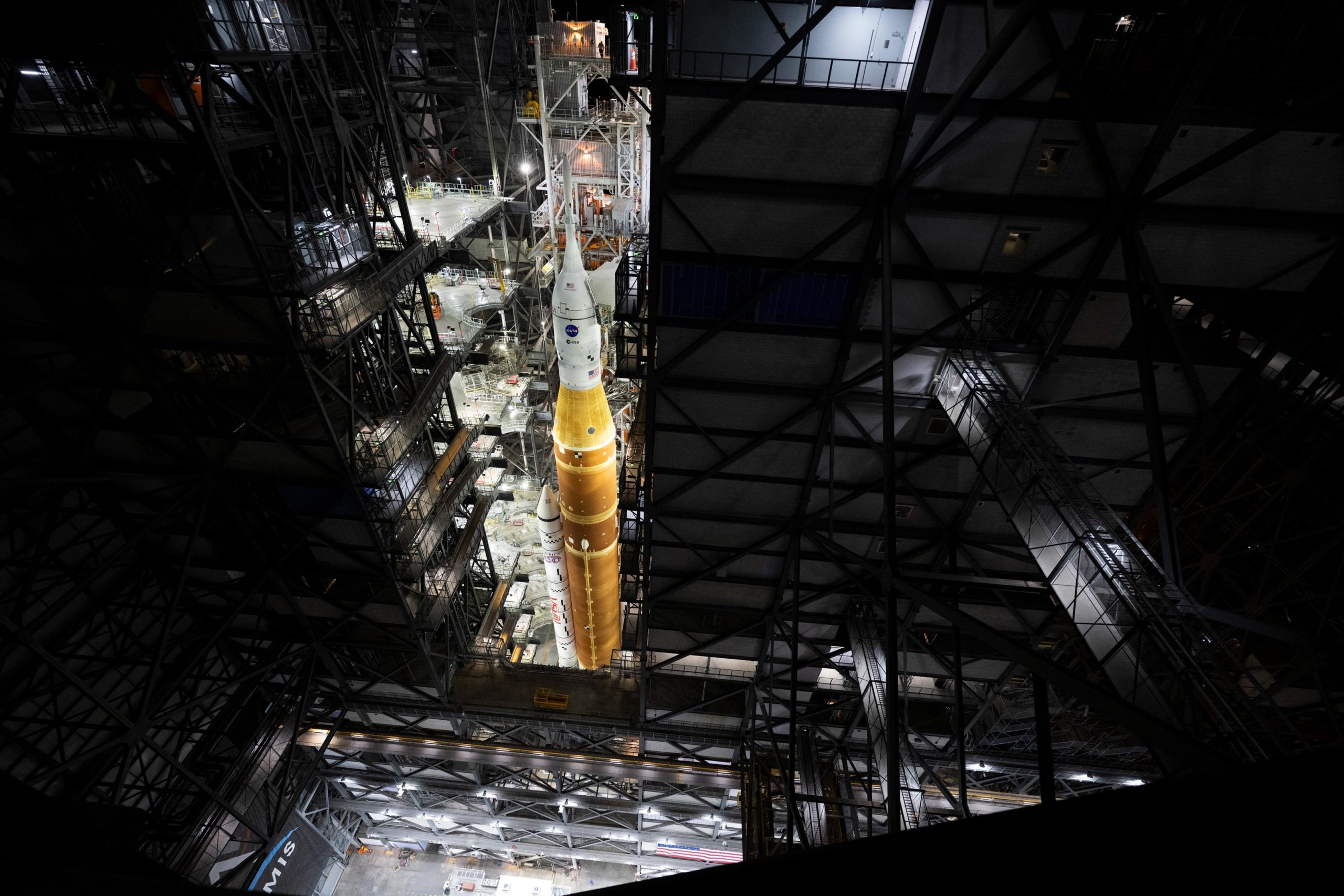 The mobile launcher with NASA’s Artemis II Space Launch System (SLS) rocket and Orion spacecraft secured to it is seen inside the Vehicle Assembly Building following the opening of the doors before rolling out to Launch Pad 39B, January 17, 2026, at NASA’s Kennedy Space Center in Florida. Credit: NASA/Joel Kowsky
A Carefully Timed Rollout Across Kennedy Space Center
The mobile launcher with NASA’s Artemis II Space Launch System (SLS) rocket and Orion spacecraft secured to it is seen inside the Vehicle Assembly Building following the opening of the doors before rolling out to Launch Pad 39B, January 17, 2026, at NASA’s Kennedy Space Center in Florida. Credit: NASA/Joel Kowsky
A Carefully Timed Rollout Across Kennedy Space Center
The journey began earlier in the day when NASA’s crawler-transporter 2 set out on a 4-mile route carrying the fully assembled SLS rocket and Orion spacecraft. With a top speed of just 0.82 mph, the massive crawler steadily transported the Moon rocket toward the launch pad.
After clearing the VAB’s high-bay doors, the rollout paused as planned so teams could reposition the crew access arm – a bridge that provides astronauts and a closeout crew access to Orion on launch day.
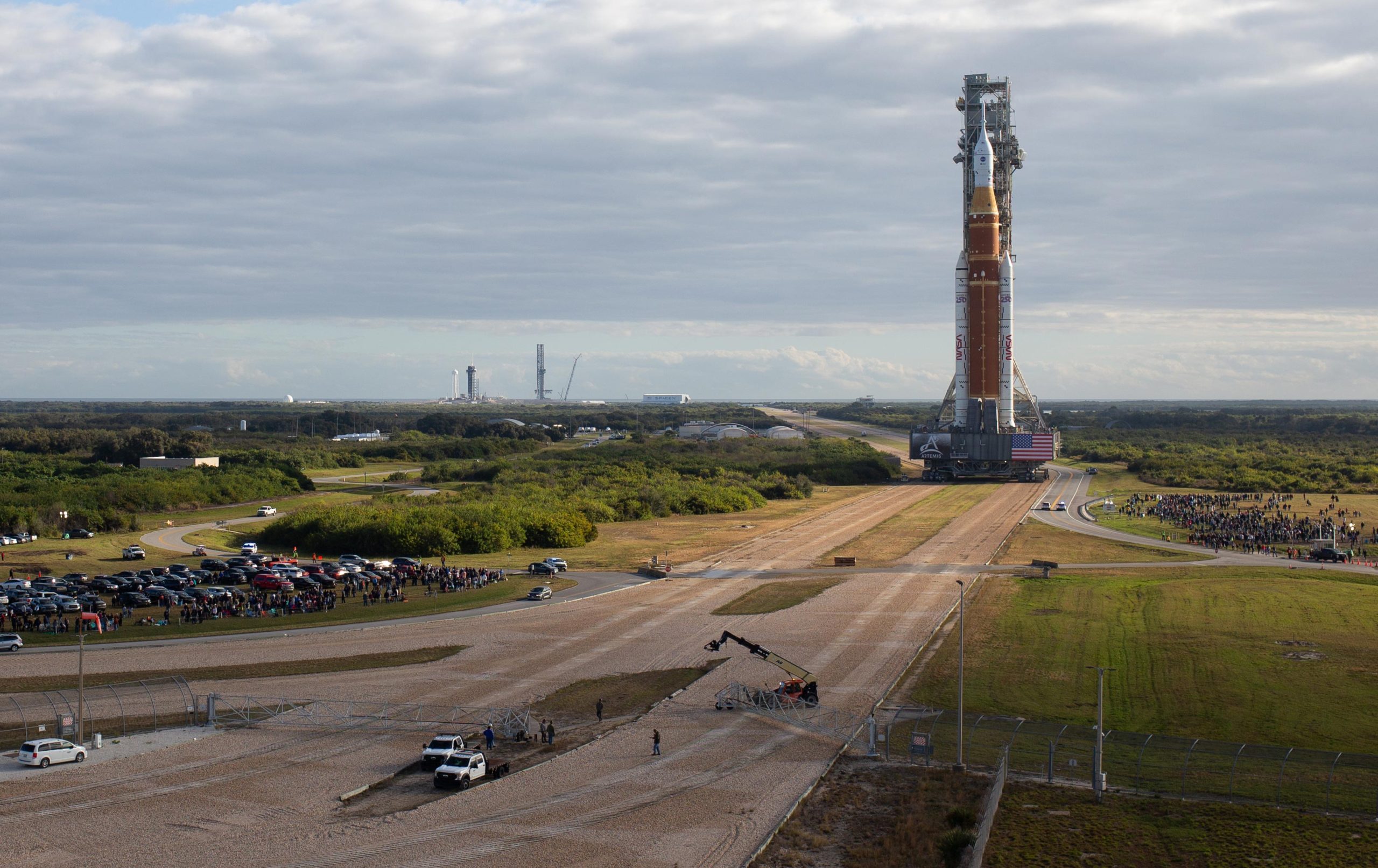 NASA’s Space Launch System (SLS) rocket and Orion spacecraft, secured to the mobile launcher, is seen as it rolls out of the Vehicle Assembly Building to Launch Pad 39B, January 17, 2026, at NASA’s Kennedy Space Center in Florida. Credit: NASA/Aubrey Gemignani
Preparing for the Wet Dress Rehearsal
NASA’s Space Launch System (SLS) rocket and Orion spacecraft, secured to the mobile launcher, is seen as it rolls out of the Vehicle Assembly Building to Launch Pad 39B, January 17, 2026, at NASA’s Kennedy Space Center in Florida. Credit: NASA/Aubrey Gemignani
Preparing for the Wet Dress Rehearsal
In the days ahead, engineers and technicians will begin preparing Artemis II for its wet dress rehearsal, a full-scale test of launch countdown and fueling procedures. Currently targeted for no later than Feb. 2, the test will involve loading the rocket with cryogenic, or super-cold, propellants and running through the entire countdown sequence.
Teams will also practice safely draining the propellants from the rocket, a critical step that must be mastered before NASA’s first crewed Artemis mission can proceed.
Additional Testing and Possible RollbackNASA may carry out more than one wet dress rehearsal to confirm the vehicle is fully ready for flight. If further work is required, the agency could roll SLS and Orion back to the Vehicle Assembly Building after the rehearsal for additional inspections and adjustments ahead of launch.
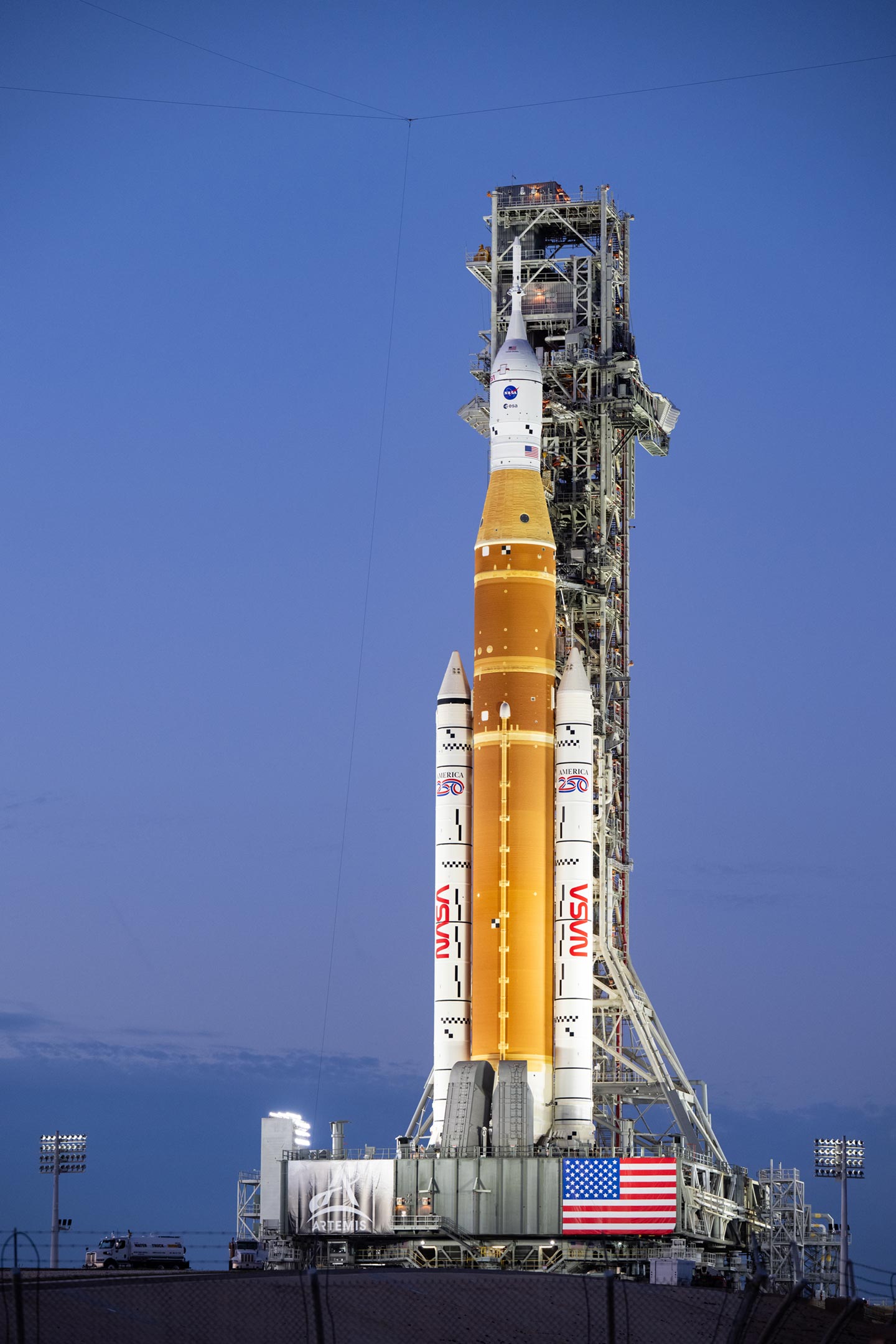 NASA’s Artemis II Space Launch System (SLS) rocket and Orion spacecraft are seen illuminated by lights at Launch Complex 39B, Saturday, January 17, 2026, at NASA’s Kennedy Space Center in Florida. Credit: NASA/Keegan Barber
Astronaut Crew and Mission Objectives
NASA’s Artemis II Space Launch System (SLS) rocket and Orion spacecraft are seen illuminated by lights at Launch Complex 39B, Saturday, January 17, 2026, at NASA’s Kennedy Space Center in Florida. Credit: NASA/Keegan Barber
Astronaut Crew and Mission Objectives
The Artemis II test flight will carry NASA astronauts Reid Wiseman, Victor Glover, and Christina Koch, along with CSA (Canadian Space Agency) astronaut Jeremy Hansen. The mission will send the crew on an approximately 10-day journey around the Moon before returning to Earth.
This flight represents another key milestone toward future U.S.-crewed missions to the Moon’s surface. Those efforts are intended to support a long-term human presence on the Moon and help NASA prepare to send the first astronauts – Americans – to Mars.
Never miss a breakthrough: Join the SciTechDaily newsletter.
Follow us on Google and Google News.