
Remember me

 F1 Grand Prix, GP Brazil, Autódromo José Carlos Pace, Interlagos
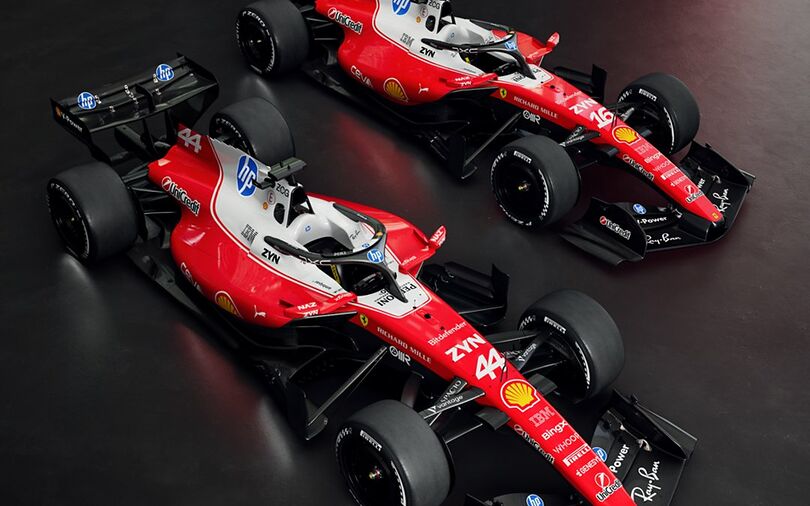
Ferrari’s presentation of its 2026 Formula One car on Friday offered more than a first look at Maranello’s machine for the new era. It also provided a rare, detailed insight into the technical philosophy guiding the Scuderia’s power unit department, articulated by Enrico Gualtieri, the Head of Power Unit.
Gualtieri made clear that the regulatory overhaul arriving in 2026 has forced Ferrari to rethink long‑established engineering assumptions. “Under the 2026 regulations, the power unit becomes a more integral part than ever in the overall car concept,” he said, emphasising that the hybrid system can no longer be treated as a standalone component but as a structural pillar of the car’s performance.
He highlighted the magnitude of the shift facing all manufacturers. “The significantly increased role of the electric component, the introduction of 99% sustainable fuel and the removal of the MGU‑H represent a clear shift in philosophy, rather than a simple evolution compared with the 2014 to 2025 era,” Gualtieri explained.
His words underscored that the next generation of power units will demand a fundamentally different approach to energy flow, packaging and thermal behaviour.
According to Gualtieri, Ferrari’s engineers responded by returning to first principles. “This required us to rethink the architecture of the power unit from the very beginning, focusing on efficiency, integration and energy management, always in close collaboration with our colleagues in the chassis department,” he said.
The comment reflects a broader trend across the grid: the blurring of boundaries between engine and chassis groups as teams chase ever‑tighter integration.
Gualtieri also acknowledged the scale of the challenge, but he framed it as an opportunity for Ferrari to refine its processes. “It is a complex technical challenge, which we have approached with great respect and discipline, with the objective of optimising the entire car system as the season progresses,” he noted.
His emphasis on continuous optimisation hints at a development model built around iterative gains rather than early‑season peaks.
Ferrari’s 2026 car remains, for now, a symbol of potential rather than proof of performance. Yet Gualtieri’s remarks suggest a team fully aware of the demands of the new era—and determined to meet them with a more integrated, energy‑centric philosophy.
Comments (0)