
Remember me


The Six Nations circus rolled into town and Scottish Rugby duly jumped through hoops to make sure the official launch went with a bang.
It’s the first time Edinburgh has hosted the event which used to be held annually at the Hurlingham Club in London, a private members’ institution in leafy Fulham which borders the River Thames and is set in “42 acres of magnificent grounds”.
Perhaps the Six Nations organisers felt this wasn’t right for rugby’s image, and perhaps they were right. Recent years have seen the media launch taken on the road, with Dublin hosting in 2024 and Rome stepping up last year.

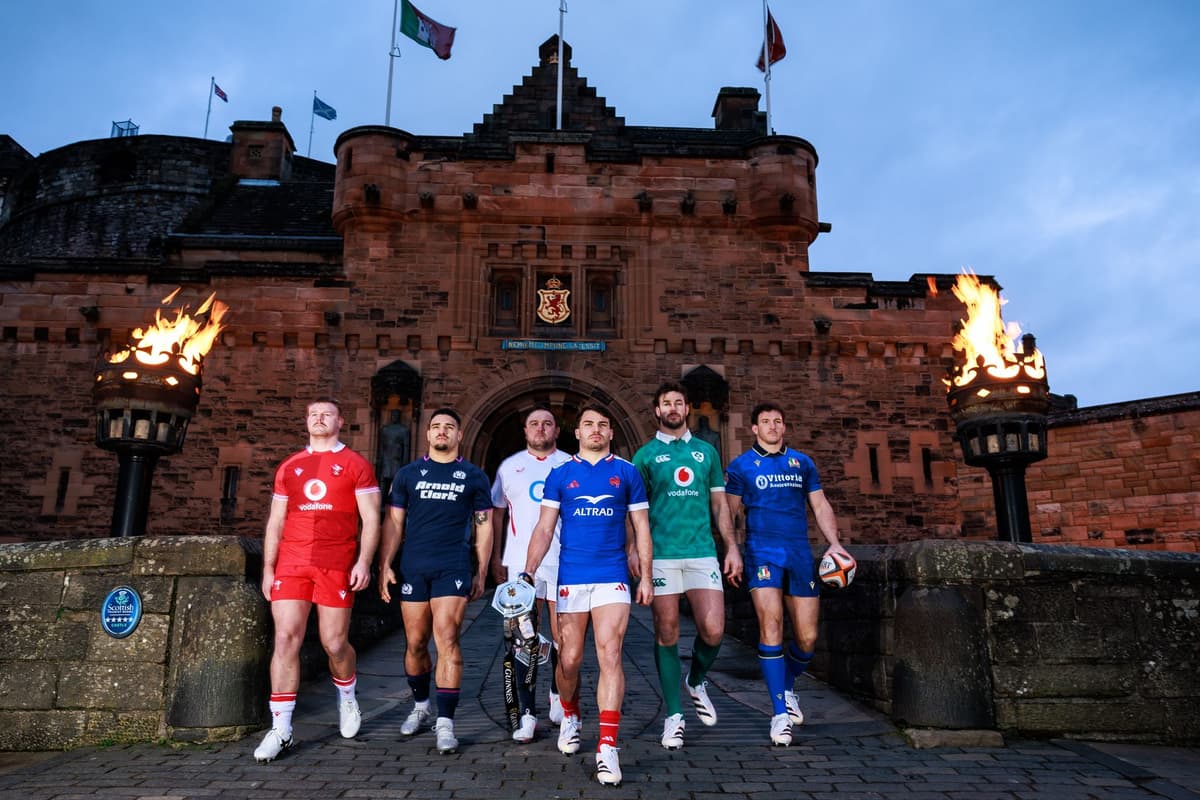
 Wales' Dewi Lake, Scotland's Sione Tuipulotu, England's Jamie George, France's Antoine Dupont, Ireland's Caelan Doris and Italy's Michele Lamaro at Edinburgh Castle, to celebrate the launch of the Six Nations Championship, in the city that gave birth to international rugby.
Picture: INPHO/Billy Stickland | INPHO/Billy Stickland
Wales' Dewi Lake, Scotland's Sione Tuipulotu, England's Jamie George, France's Antoine Dupont, Ireland's Caelan Doris and Italy's Michele Lamaro at Edinburgh Castle, to celebrate the launch of the Six Nations Championship, in the city that gave birth to international rugby.
Picture: INPHO/Billy Stickland | INPHO/Billy Stickland In terms of photo opportunities, the Colosseum is a tough act to follow but Scotland’s capital has its own obvious attractions and captains and coaches were herded up to Edinburgh Castle at the crack of dawn to pose on the ramparts.
Pictures duly snapped, they repaired to the Hub, an arts venue and home to the Edinburgh International Festival situated a few yards down the slope on Castlehill, at the top of the Royal Mile.
Here, the likes of Antoine Dupont, Sione Tuipulotu, Gregor Townsend, Andy Farrell and Caelan Doris were subjected to a round of media interviews that would have exhausted the most seasoned Hollywood A-lister.
In days of old, inquisitors would be divided into three rough groups (and I use the word ‘rough’ advisedly): daily papers, Sunday papers and broadcast. In the ever-changing media landscape the old order has become fragmented, sliced and diced. Influencers and content creators now outnumber journalists, and the Six Nations captains and coaches were thus placed on an interview treadmill which began at 9.45am with an on-stage Q&A and ended four hours later with quizzes and posed pictures by the Guinness pumps.
 Ireland's Caelan Doris speaks to the media at the Six Nations media launch at the Hub in Edinburgh. | INPHO/Dan Sheridan
By which point the (old school) journalists were feeling thirsty and the free pints of stout supplied by the tournament’s title sponsor went down very well indeed.
Lunchtime drinking is a dying art, of course, but it’s nice to indulge in an old pastime. And why not? The Six Nations tends to stir fond memories of past endeavours, a chance to wallow in nostalgia, helped at the launch by banks of screens showing great moments from tournaments past.
Alex Williamson, Scottish Rugby’s heid man, mined the nostalgia theme even deeper when he welcomed the assembled press and guests to Edinburgh. The Murrayfield chief exec was rightly proud of being the host union and said it was particularly apt given the world’s first international was played down the road at Raeburn Place 155 years ago.
 A piper leads the Six Nations captains from Edinburgh Castle to the Hub, including a hooded Antoine Dupont of France and Scotland's Sione Tuipulotu. | INPHO/Dan Sheridan
 “We’re one kilometre from where it all started,” said Williamson, using a bit of geographical licence. “Edinburgh comes alive for rugby,” he added, before reverting to CEO type by pointing out that Scotland international matches deliver £100m of economic value every year.
Having seen the ticket prices at Murrayfield, that’s perhaps not surprising.
Williamson is a year into the job and admitted it now feels more personal. The Six Nations is all about rivals who “love and hate” each other, he said. Would it be fitting for Scotland to claim the title this year, he was asked. “It would be fitting every year!” he replied. Twenty-seven years on from our last success, it feels overdue.
He described Scotland as “a very capable team” and right on cue, the Inveraray & District Pipe Band appeared in the balcony of the historic venue, playing Scotland the Brave. It was a stirring moment and added a local flavour.
The sound of the pipes and drums echoed around the Hub, a beautiful gothic building which was opened in 1845 as the Assembly Hall for the Church of Scotland. It boasts the highest spire in the city.
It wasn’t just the bagpipes that put a Scottish stamp on things, there was also the cuisine. Last year in Rome the breakfast was all about espresso and small yoghurt pots. This time around there was more of a roll and sausage vibe, and it was none the poorer for that.
After the band left the stage, it was the turn of coach and captain from each competing nation. Townsend and Tuipulotu were up first. What it would mean for Scotland to win the Six Nations, Townsend was asked by host Sandy Heribert. “It would mean a huge amount,” said Townsend.
 France's Antoine Dupont at the Six Nations launch at the Hub in Edinburgh. | INPHO/Dan Sheridan
Heribert is a French-English presenter who works mainly on French TV. Her previous gigs include hosting the Ballon d'Or ceremony and while it wasn’t quite Frost-Nixon she kept things moving along at pace.
Ireland captain Doris said the first-ever opening game on a Thursday night (against France in 10 days’ time in Paris) would “sharpen the mind”. French skipper Dupont, just back from an ACL, said he was looking forward to pulling on the jersey he “hasn't worn for a year”.
Tuipulotu said the Six Nations was the “pinnacle of Test rugby outside of the World Cup” while England vice-captain Jamie George went slightly off script to big up the new Nations Championship, saying it was a tournament rugby had been “crying out for”.
Townsend later reflected that having the launch in Edinburgh was a good thing, cutting out the need to travel and giving him more time to work with his squad. It’s his ninth Six Nations as Scotland’s head coach and he said he felt more relaxed. “I think I understand the flow of the tournament,” he said.
First up for Scotland is Italy in Rome, a fixture they lost two years ago. They did win at Murrayfield last year but only after the Italians recovered from 19-6 down to draw level at one point before the Scots went on to win 31-19 thanks largely to a Huw Jones hat-trick.
Tuipulotu admitted it had been “a problematical game” for Scotland over the last couple of years but ended his on-stage grilling on a positive note.
Will the trophy be coming back to Edinburgh, he was asked? “Jeez, I wouldn't be a captain if I stood up here and said no.”