
Remember me
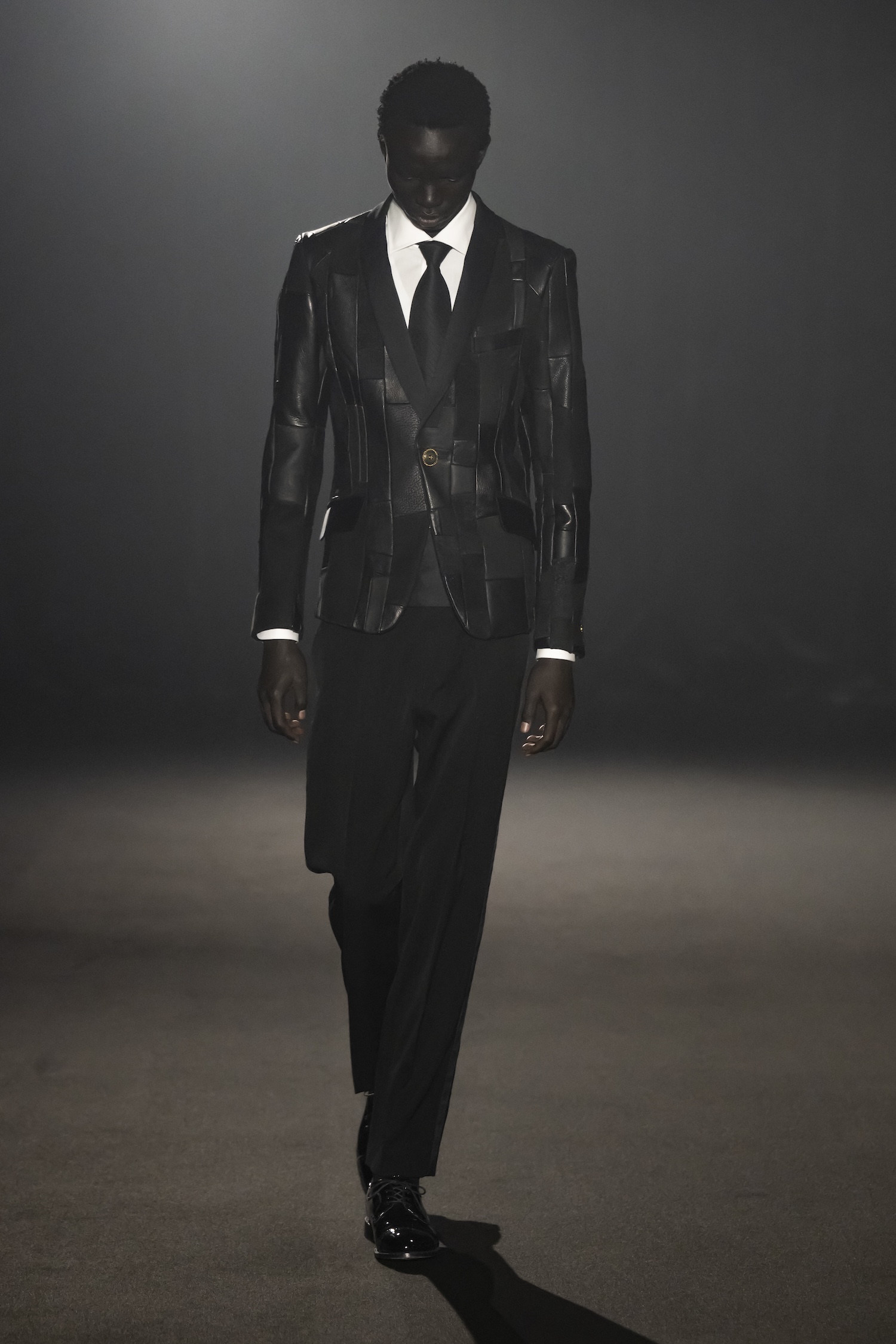
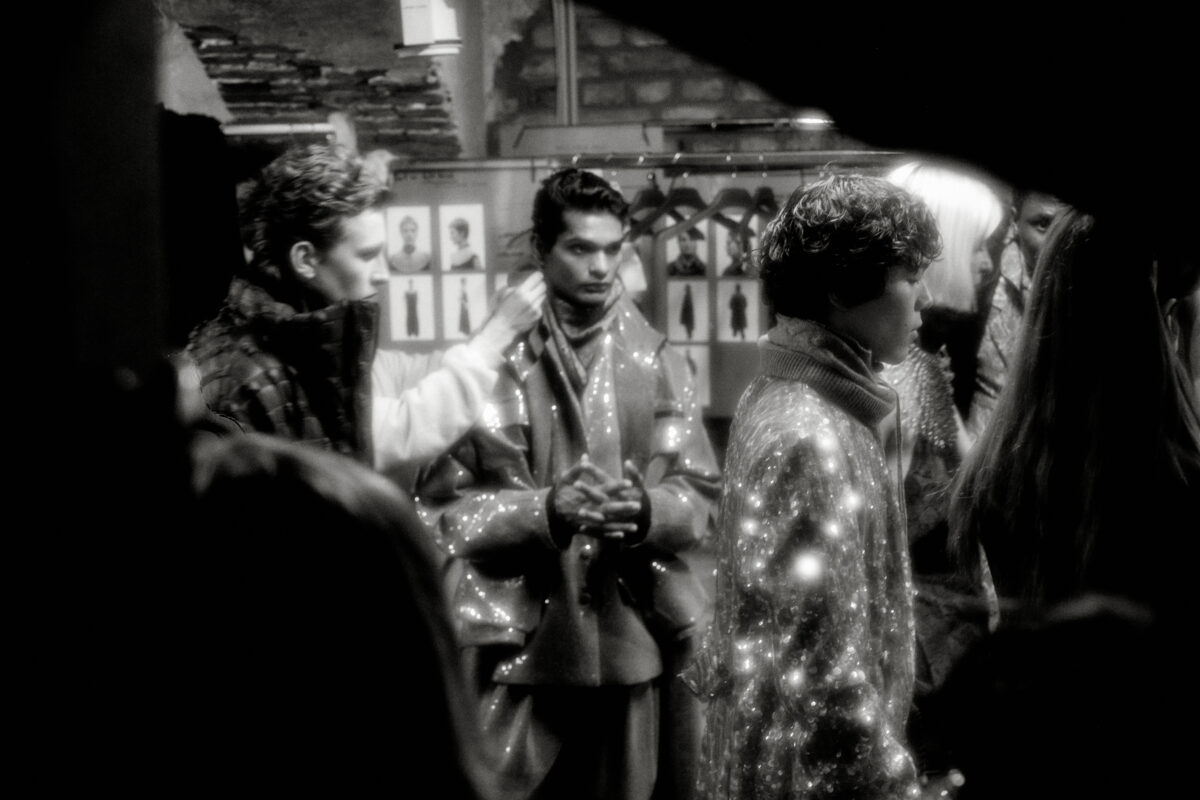
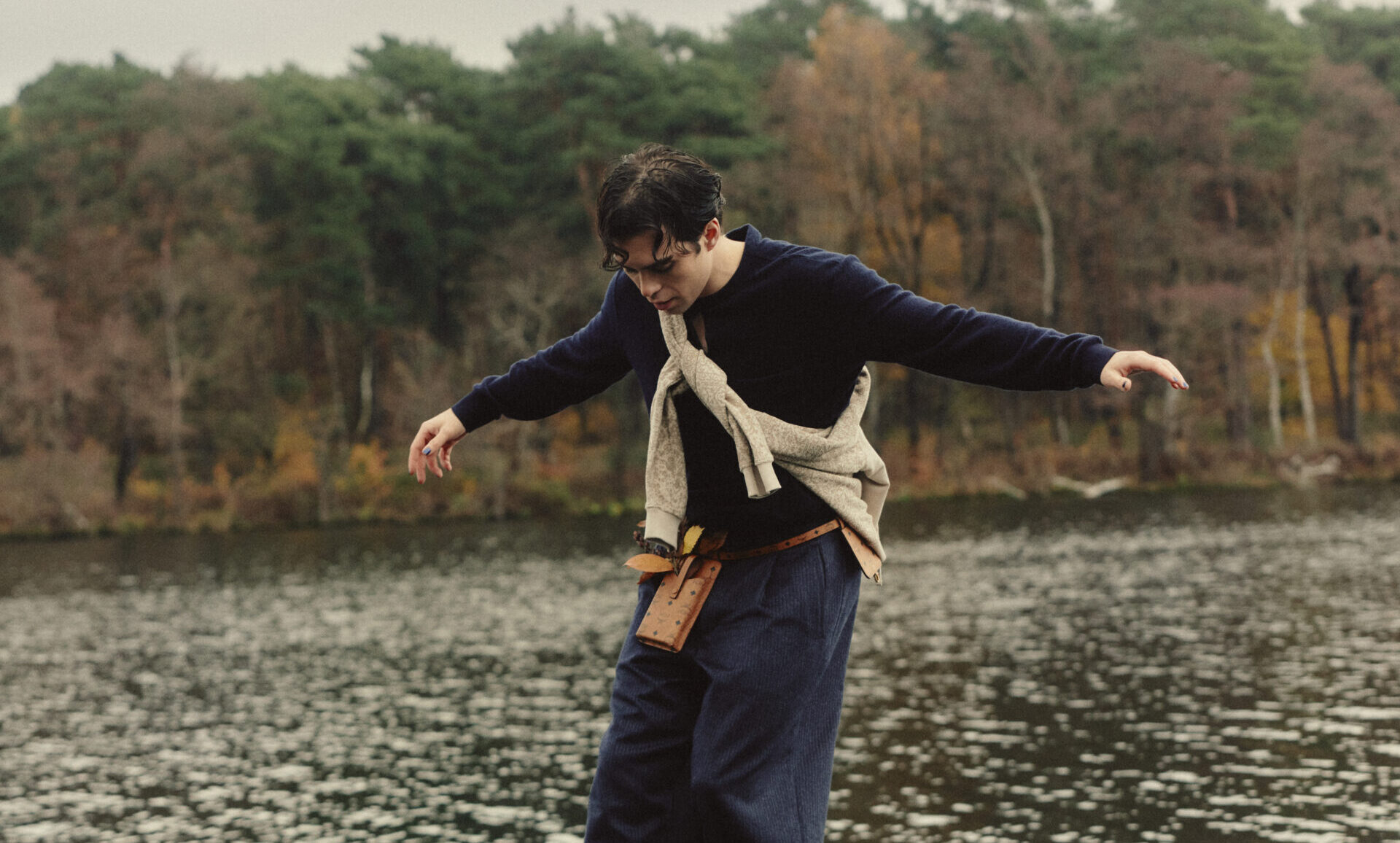
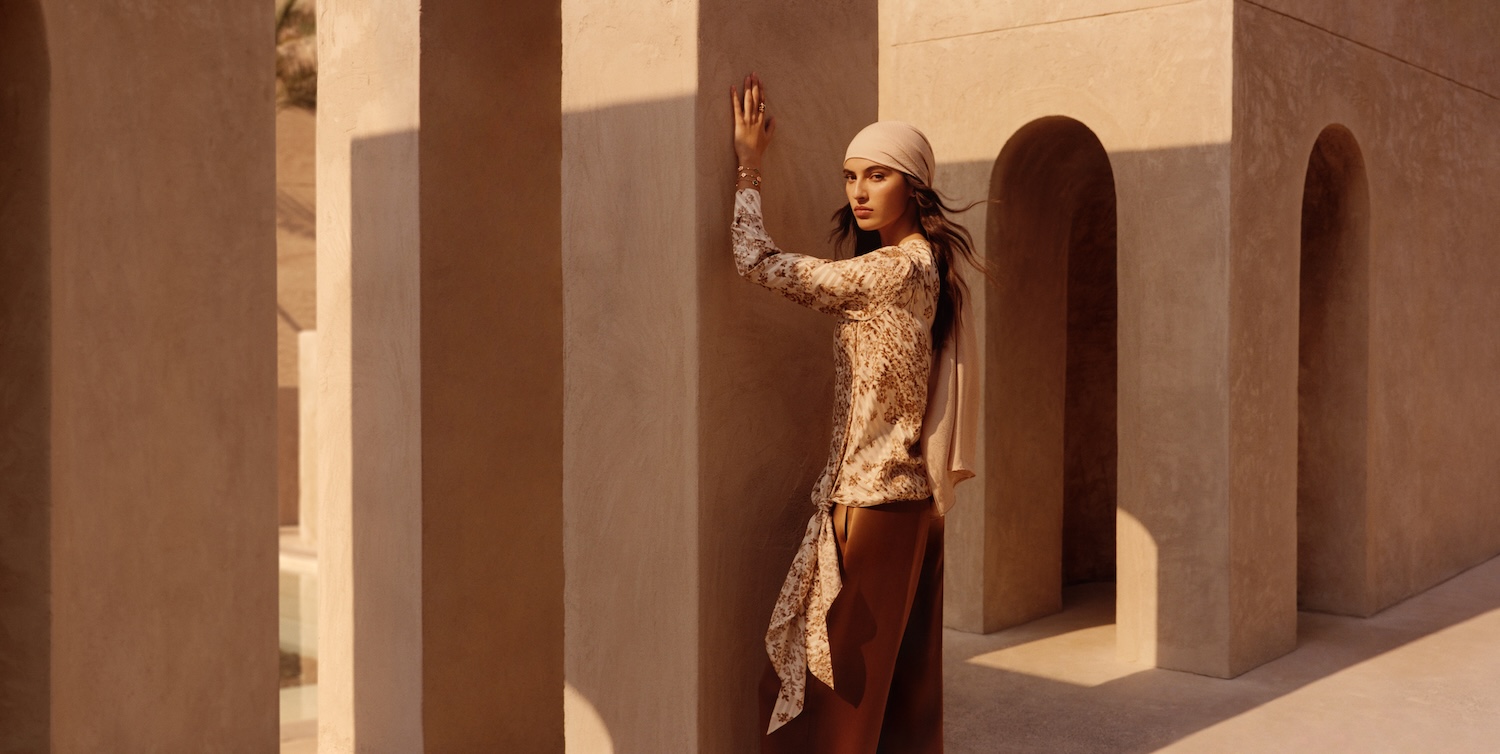
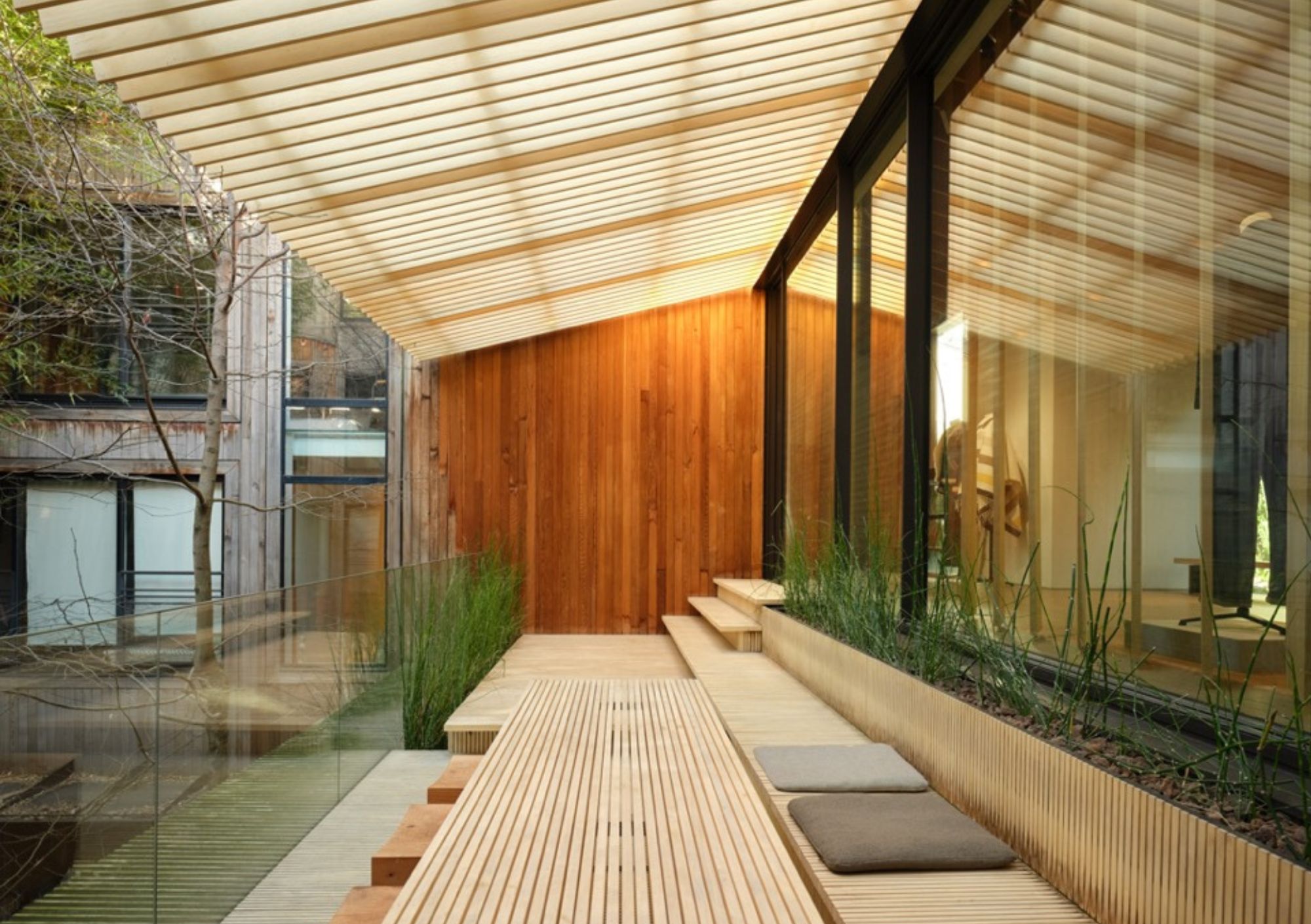
Walking into the Picasso Museum for the Junya Watanabe Men show felt like stumbling into a sombre jazz café from another era. The Japanese designer turned the space into a bistro scene to present his collection titled ‘The Best, Dressed,’ where models moved slowly between tables to the sounds of Miles Davis. This theme goes beyond the idea of simply dressing up and acts as a significant update to Junya Watanabe Man’s established style. It feels more formal and polished than previous seasons, yet it maintains that fragmented, technical edge that fans have come to expect.
The show leaned heavily into a fin-de-siècle fantasy, blending late 19th-century silhouettes with mid-century Ivy League staples. Models moved at a funeral pace, heads bowed under an array of trilbies, bowlers, and top hats provided by ‘47, giving the whole affair a sense of reverence.
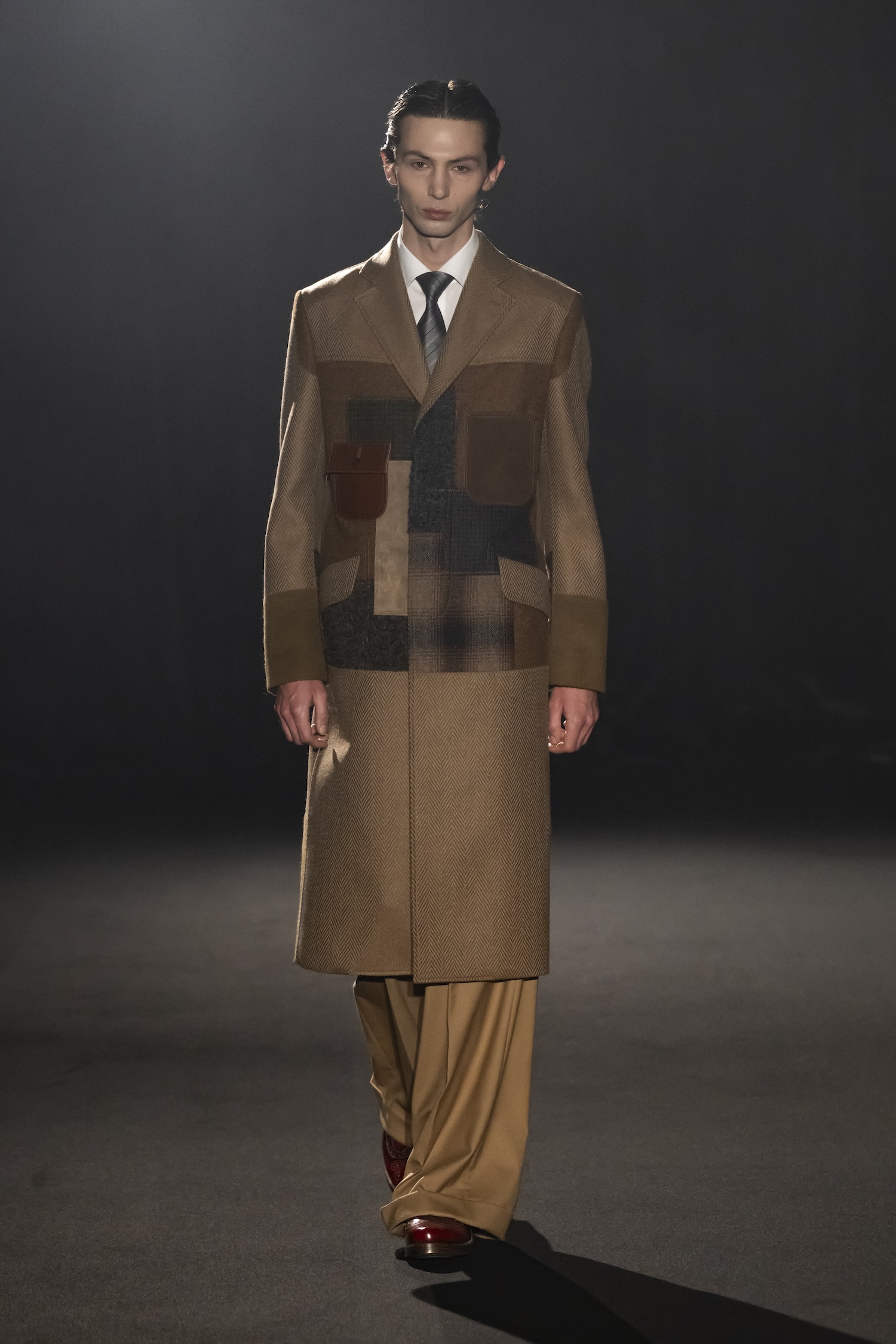
Tailoring dominated the silhouette, but the construction was anything but traditional. Watanabe referenced past collections from 2011 to 2013, recreating familiar shapes and silhouettes. The core of the collection was the overcoat – massive, expertly cut wool pieces in camel and navy that were frequently deconstructed to reveal technical linings or leather panels.
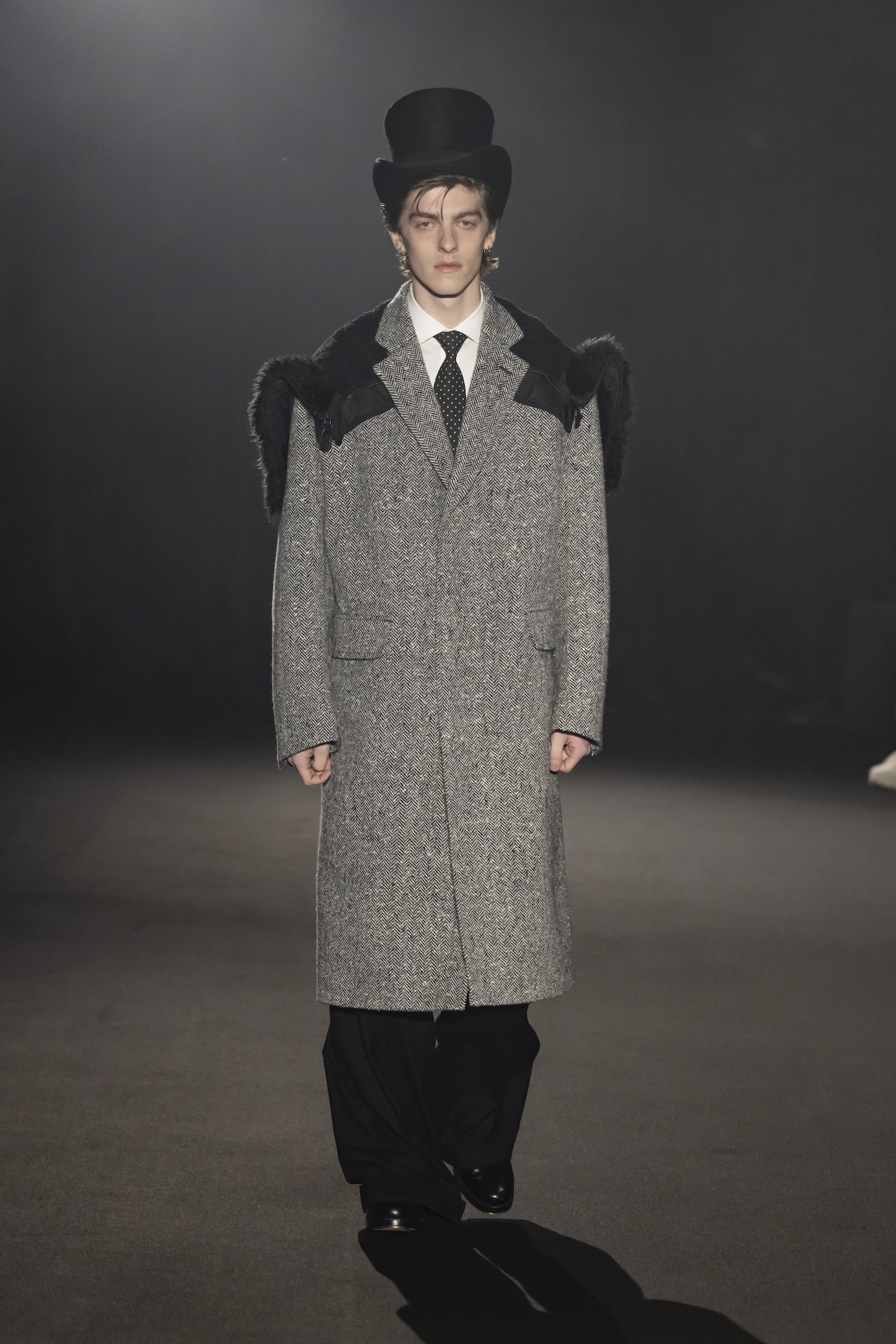
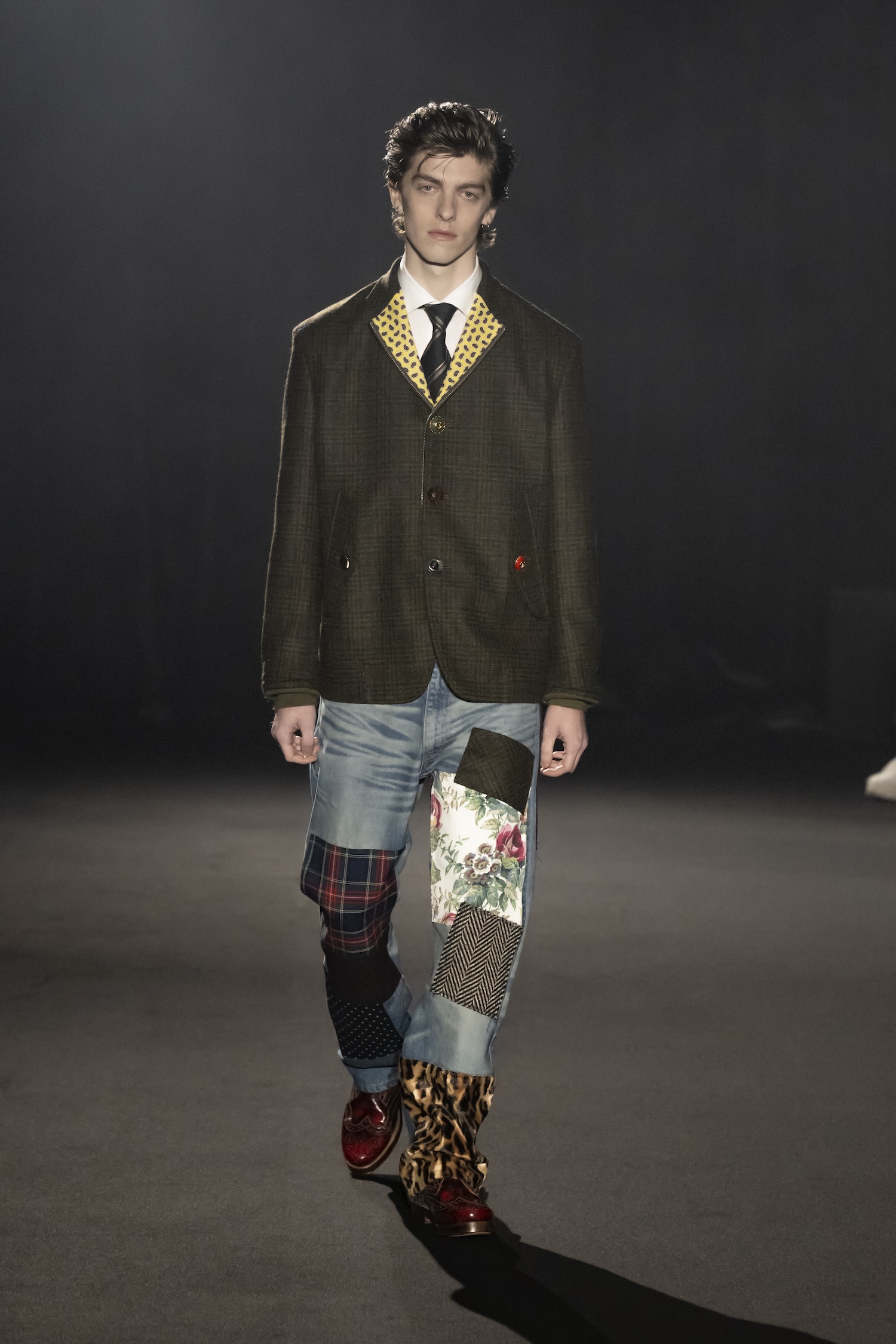
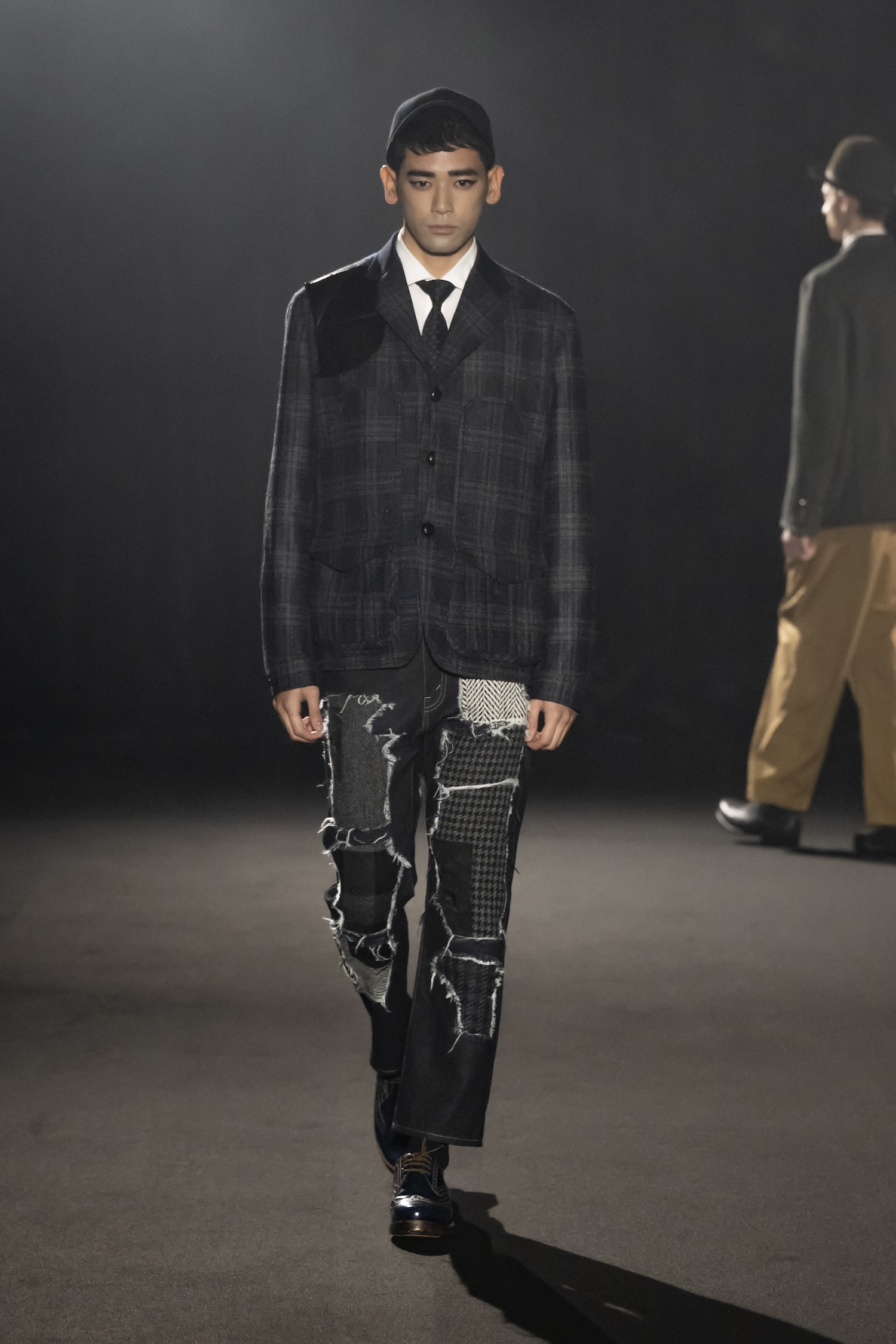
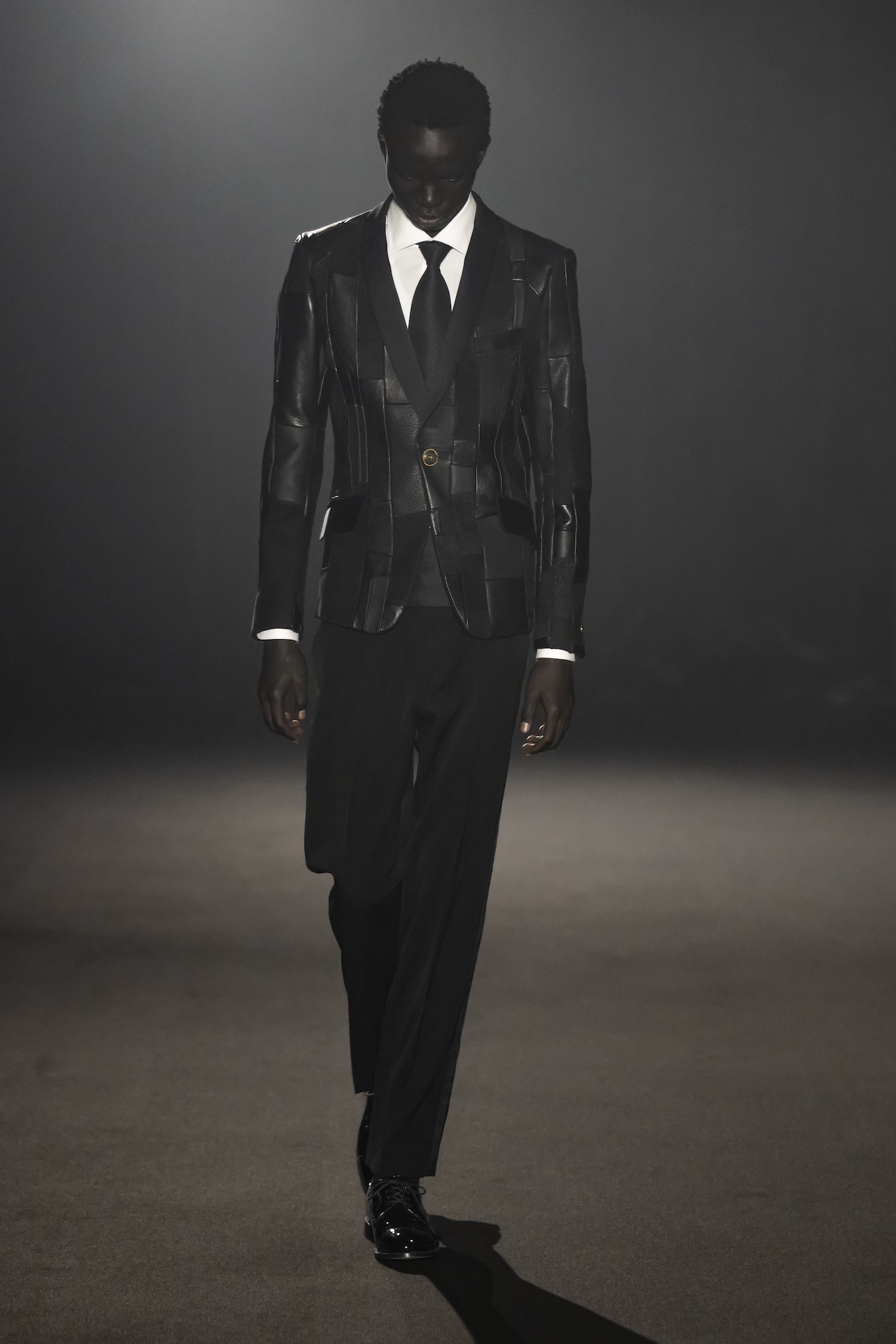
Patchwork blazers, a Watanabe staple, were polished up with glossy shawl lapels and worn with crisp white shirts and slim black ties, proving that the designer’s ‘Frankenstein’ method can be just as elegant as a traditional tuxedo. The palette was kept consistently black with sudden accents of colours like camel, military green and blood red.
The runway functioned as a curated exhibition of partnerships with each brand bringing a specific piece of history to the table. Stüssy appeared through an American traditional wear project, which saw iconic graphics like the 8-ball and crown embroidered onto classic club blazers and khakis. This was joined by a Levi’s formal wear project that stripped away the casual nature of denim in favour of sharp, tailored trousers and structured coats.
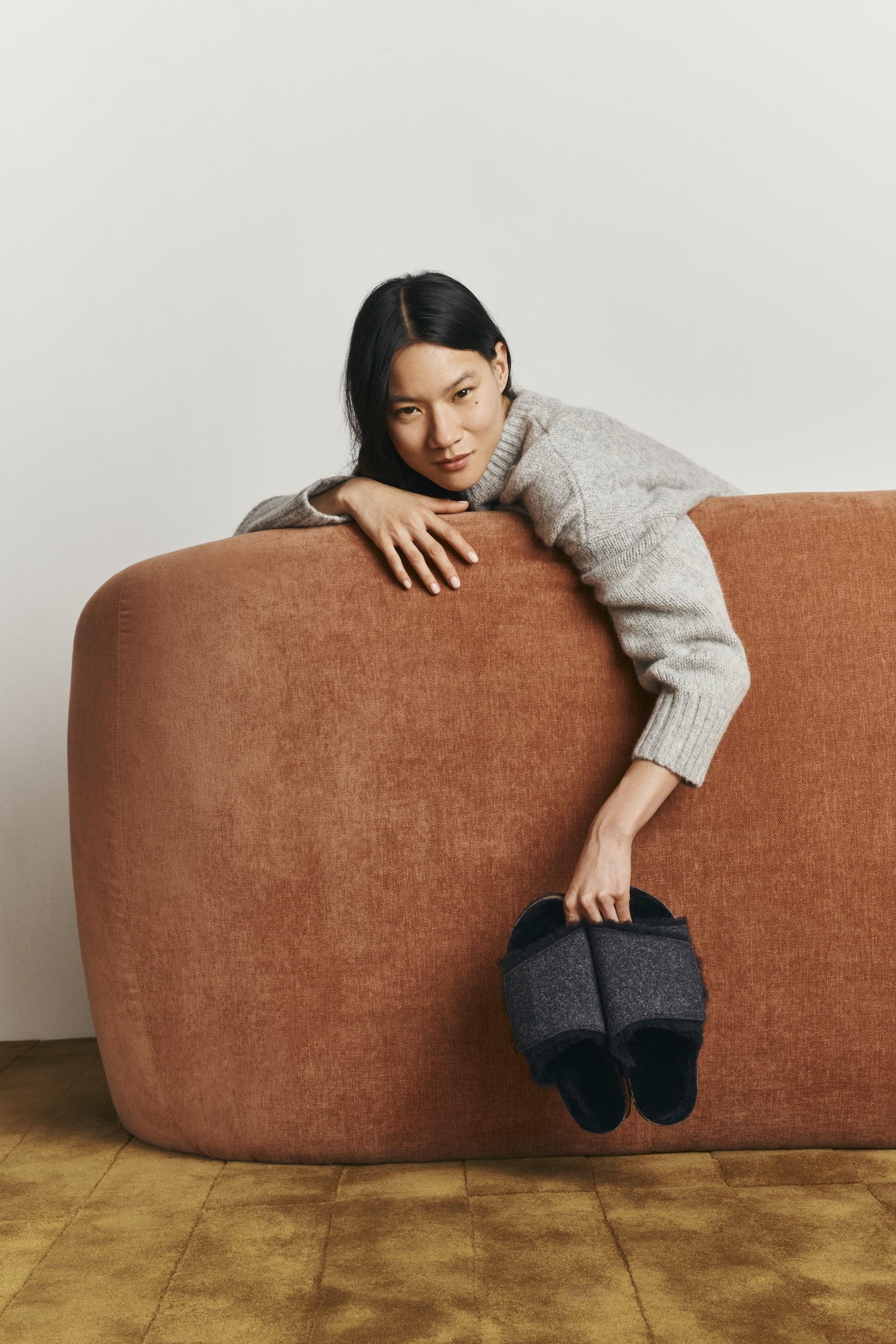
Outerwear took on a protective presence with contributions from brands like Spiewak and Mammut. A Spiewak safety jacket was reimagined as a piece of formal gear, while Mammut premium down was integrated directly into heavy wool coats for a tough, industrial look. Rebuild by Needles added a military wear project into the mix and Rocky Mountain provided rugged vests that sat comfortably under oversized trilbies. The footwear range was equally diverse, ranging from traditional leather shoes by Heinrich Dinkelacker and Tricker’s to a new hybrid sneaker from New Balance that looked like a dress shoe from the top.
Discover the collection here.
photography. courtesy of Junya Watanabe Men
words. Gennaro Costanzo