
Remember me




Scotland has missed out on 5,000 jobs because of the SNP’s ban on new nuclear, the industry has said.
According to figures from the Nuclear Industry Association (NIA), England has seen 43,000 new nuclear jobs over the past decade, compared with just 490 in Scotland.
The trade association said that if Scotland’s civil nuclear industry grown at the same rate, it would now support more than 10,000 jobs, instead of the 5,400 that exist today.

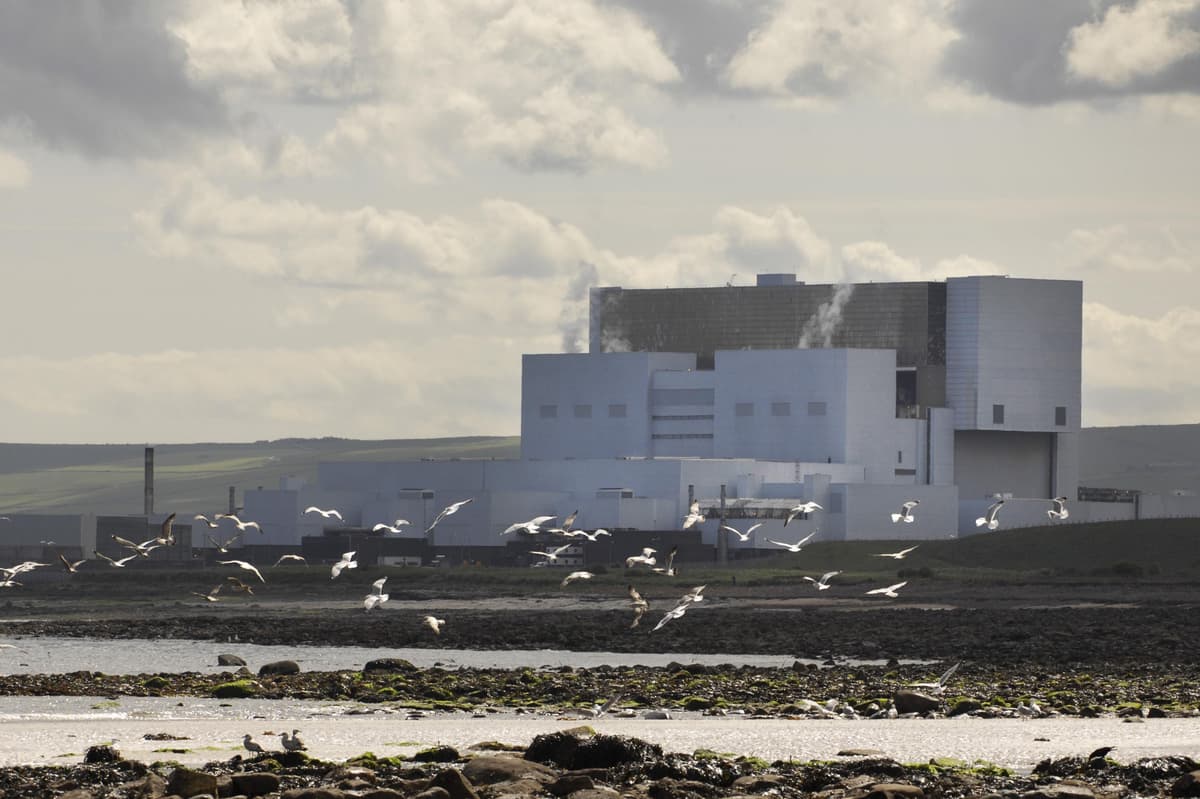
 The UK Government wants a small modular reactor on the Torness site. Picture: Jeff J Mitchell/Getty Images
The Labour UK government has said that it would like new small nuclear reactors at Hunterston in Ayrshire and Torness in East Lothian.
But the SNP opposes nuclear energy. No new reactors can be built because the Scottish Government holds planning powers.
Tom Greatrex, Chief Executive of the Nuclear Industry Association, said: “Scotland is turning its back on its industrial workers. Around 5,000 nuclear jobs that Scotland should have simply do not exist because the SNP has chosen ideology over opportunity. While England and Wales build new nuclear and create skilled jobs for the future, the Scottish Government is content to export Scottish workers and deny Scottish companies the support they need.
“Excluding nuclear from the Energy Skills Passport and refusing to help firms win work is a deliberate choice that is accelerating industrial decline and sacrificing thousands of skilled nuclear jobs on the altar of ideology.”
 Tom Greatrex, Chief Executive of the Nuclear Industry Association and former Labour MP for Rutherglen
The NIA says consequences are already visible with over 1,200 Scots working on Hinkley Point C in Somerset, with more expected to work on Sizewell C and potentially Wylfa in North Wales.
Trade union GMB says that since 2010 Scotland has lost 15 per cent of its industrial jobs, underlining the wider pattern of industrial decline.
Andrew McKendry, who is a former Torness nuclear apprentice, moved to work as a now a mechanical engineer at the Sizewell B nuclear power station in Suffolk, England because he worried about his job prospects in Scotland.
But the Unite member said he would move back north of the Border if there was new nuclear.
He said: “I left Scotland because of the uncertainty around my future. With nuclear effectively off the table, I faced the real prospect of being moved from contract to contract or made redundant in my forties, a risk I wasn’t prepared to take. That’s why I moved to England. If new nuclear were developed in Scotland, I’d return in a heartbeat.
“Scotland’s blanket ban on commercial nuclear means we are missing a huge opportunity to train the next generation to world-leading standards, with serious social and economic consequences. From an energy security perspective, we are also needlessly limiting ourselves.”
.jpeg?trim=544,0,2077,0&width=640&quality=65) Andrew McKendry | Andrew McKendry
Andrew McKendry | Andrew McKendryAaron Turnbull, third year electrical apprentice for Dalkia at Torness Nuclear Power Station, said: “Working on the Nuclear Fleet has given me a strong start to my career in the Electrical Contracting Industry, with a high-quality apprenticeship close to home in a community that’s proud of its nuclear and industrial heritage.
“The skills and knowledge I develop at Torness will shape my career for life, and new projects in Scotland would help secure those same long-term opportunities for people like me.”
.jpeg?trim=972,0,1548,0&width=640&quality=65) Aaron Turnbull | NIA
Aaron Turnbull | NIATorness in East Lothian is Scotland’s last remaining active nuclear power plant. The facility is scheduled to close by 2030.
Hunterston A in North Ayrshire shut down in 1990, while Hunterston B shut down in 2022.
Jim Mowatt, chairman of Trade Unionists for Safe Nuclear Energy (TUSNE), said: “The Scottish Government is exporting skilled Scottish workers and killing off secure, unionised jobs because of political dogma on nuclear.
“This is not a just transition - it is an industrial sell-out that sacrifices apprenticeships, long-term employment and energy security, and leaves working people, specifically young Scottish men and women, paying the price.”
A separate report yesterdaty warned Scotland risks the loss of industry and access to its own secure energy if political parties do not unite behind the country’s offshore energy sector.
Offshore Energies UK (OEUK) made the warning ahead of the launch of its own Scottish election manifesto.
Its key ask is that the Scottish Government takes an “all-energy” approach to fossil fuels and renewables, while urging against dividing the sector’s workforce into “clean” and “dirty” industries.
It is also urging political leaders to back continued oil and gas extraction in Scotland including in the Rosebank and Jackdaw oil fields.
OEUK said, in 2024, the UK’s offshore energy industry contributed more than £36 billion to the economy and supported more than 240,000 jobs nationwide.
More than half of those jobs – 128,400 (53 per cent) – are based in Scotland, adding £24 billion to the economy.
OEUK said the figures were not just numbers but “livelihoods, families, and the lifeblood of towns and cities across the country”.
The group said that despite Scotland’s “world-class” resources, the UK imported more than 40 per cent of its energy in 2024 – the highest level in more than a decade.
It added that the trend was being “driven by policy choices, not geology, and risks industrial collapse”.
David Whitehouse, chief executive of the group, said: “These are not just statistics; they represent livelihoods, families and the lifeblood of towns and cities across our country.”
Responding to the NIA findings, Scottish Labour leader Anas Sarwar said: “These stark figures lay bare the high price Scotland is paying for the SNP’s stubborn ideological opposition to clean nuclear power.
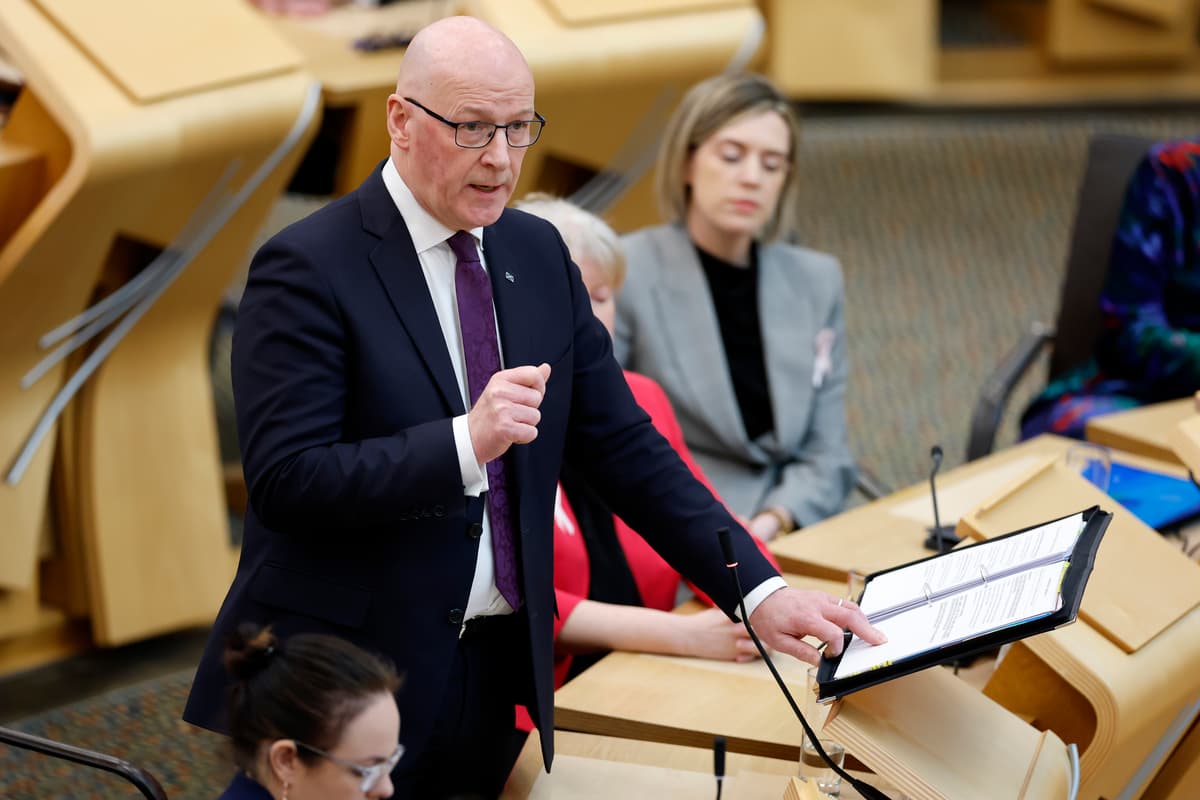
“John Swinney and the SNP claim to stand up for Scotland, but they are sending thousands of jobs and millions of pounds of investment elsewhere.”
UK energy minister Michael Shanks said: “The SNP’s continued ideological block on nuclear power risks Scotland’s future energy security and abandons the opportunity for thousands of good, well paid jobs across the country.
“The UK government stands ready to consider sites in Scotland for new small modular reactors, and the jobs that go with them, but only if a new Scottish Labour government led by Anas Sarwar is elected in May that changes course to capitalise on the opportunity Scotland is currently missing out on”
Scottish Conservative shadow energy secretary Douglas Lumsden MSP said: “SNP ministers’ reckless opposition to new nuclear is an act of sabotage against Scotland’s economy.
“Their ideological stance is costing us jobs compared to south of the border and putting our future energy security at risk. “Nationalist ministers must finally recognise that putting all their eggs in the renewables basket won’t meet our energy needs alone or keep bills down for hard-pressed Scots.”
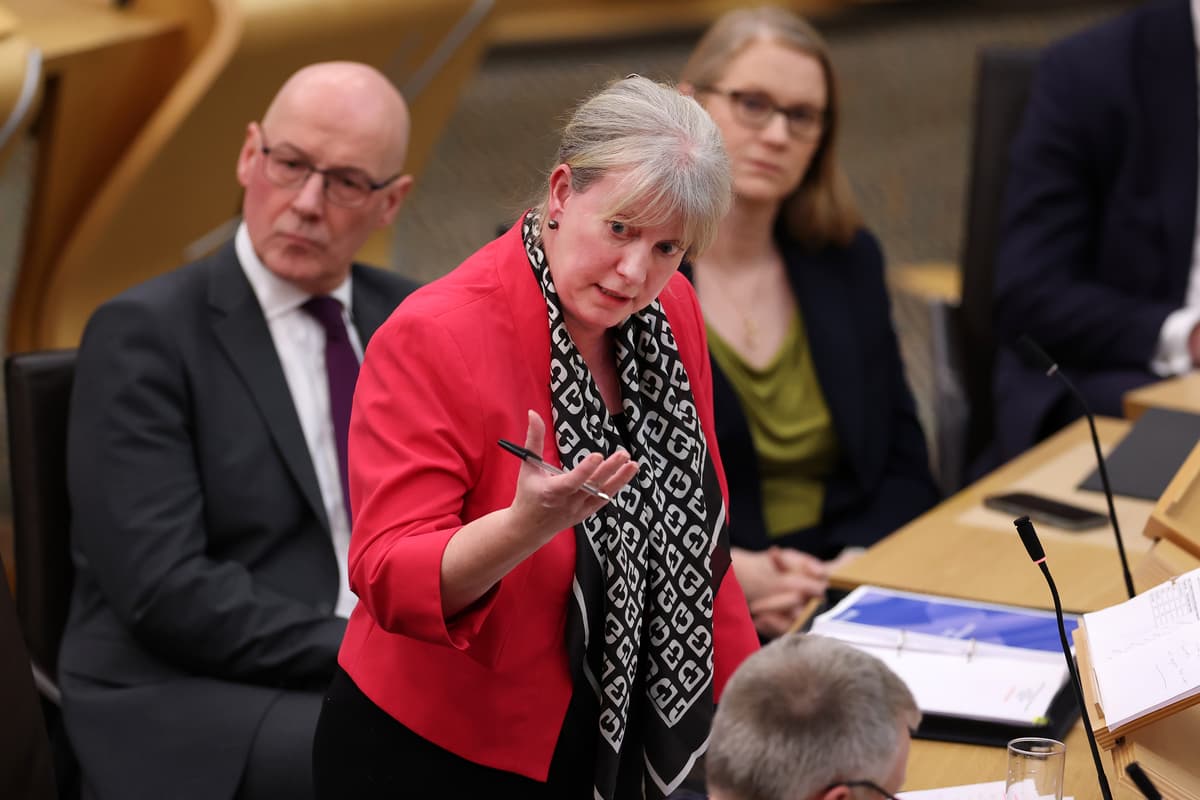
Energy Secretary Gillian Martin said: “The Scottish Government does not support the creation of new nuclear reactors under current technologies in Scotland.
“Instead, we are focused on supporting the development of Scotland’s immense renewable energy potential – which provide more jobs, are faster to deliver, are safer, and more cost effective than the creation of new nuclear reactors.
“Significant growth in renewables, are providing key opportunities for our future energy workforce in Scotland with independent scenarios from Ernst and Young (EY) showing that with the right support, Scotland's low carbon and renewable energy sector could support nearly 80,000 jobs by 2050.”