
Remember me

The SNP has got its budget bill passed stage one - but economists are warning it is not fully funded.
SNP ministers have not got the money to pay for doctor’s pay deals with next year’s budget looking ‘increasingly detached from reality,” a top economist has warned.
The Scottish Government’s budget passed at stage one on Thursday afternoon after Scottish Labour abstained from voting on the SNP’s spending plans for the next financial year.
However, the Institute for Fiscal Studies (IFS) has warned that whoever forms the next government after the Holyrood election in May will be left with “some very difficult decisions” because health and social care pay rises have not been fully funded.

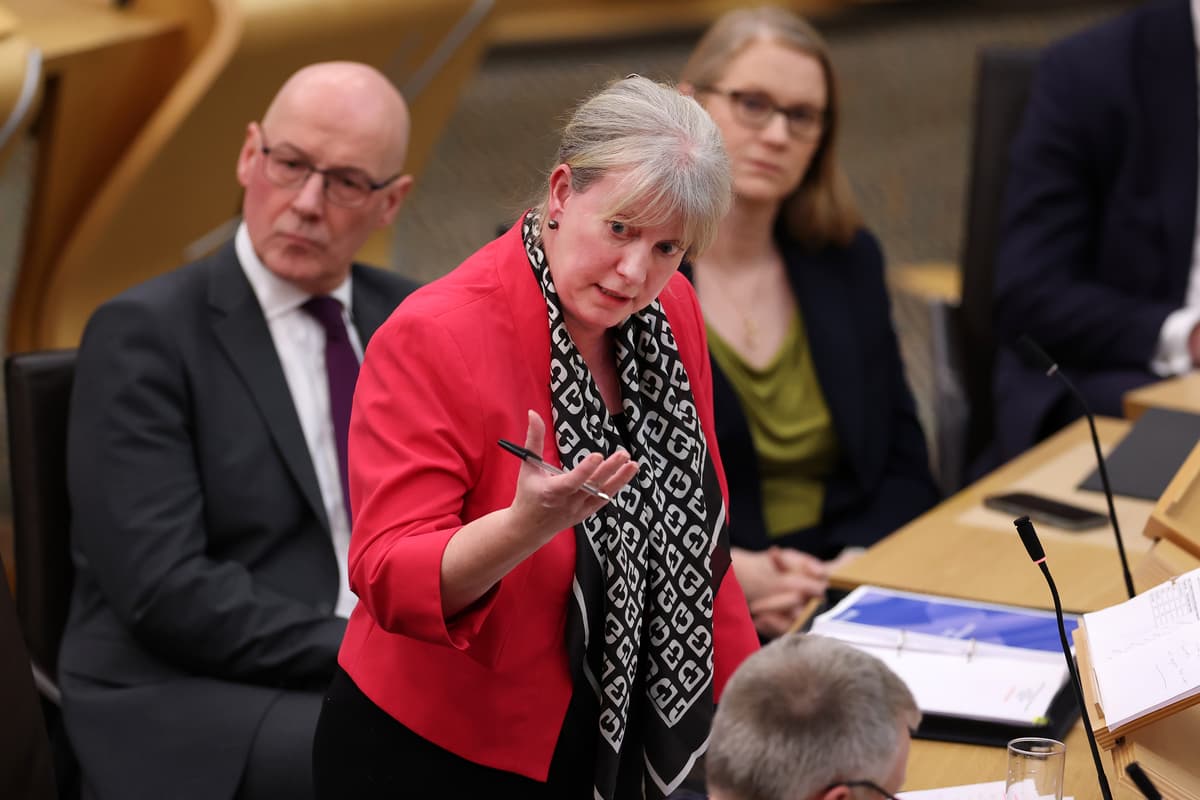
 Finance Secretary Shona Robison | Jeff J Mitchell/Getty Images
It warns this will come at the expense of other government portfolios.
David Phillips, an economist with IFS, said: “The Scottish Government’s funding allocations for health in 2026/27 look increasingly detached from reality.
“Excluding social care pay, health and social care funding is up 1.6 per cent in cash (down 0.6 per cent in real-terms).
“But the agenda for change pay is due to rise by 3.75 per cent, and resident doctors’ pay up 9.4 per cent, which begs the question - where will this money come from?
“I know funding can be topped-up in-year - it will almost certainly have to be, and a lot.
“But in contrast to the last two years, the Scottish Government’s funding is already stretched in 2026/27 with it already assuming a £150 million underspend this year to use next year, and the UK Treasury is less likely to give big in-year funding top-ups.
“I’m not begrudging doctors or nurses their pay rise, but promising these without a (published) credible plan for how to fund them risks some very difficult decisions after the May elections.
“This doesn’t feel like credible fiscal and public spending control to me.”
The think tank also warned there will be a “deterioration in service provision” if the funding is not topped-up in-year, and will be “harder to fund without making in-year cuts to other portfolios”.
It also noted that increases to health and social care funding in 2027/28 and 2028/29 by around 2.4 percent will only be possible if there are real-term cuts of 1.7 per cent to most other government portfolios.
The IFS report added: “The Scottish Government is also planning a huge relative shift in funding out of hospitals to the community over these years - core funding for the territorial and national health boards (which cover hospitals and the ambulance service, among other things) is set to increase by an average of just 0.4 per cent a year in real-terms.
“The remaining parts of the health and social care portfolio are set to grow much more (averaging nearly 12 per cent a year in real-terms), although it is unclear how this will be distributed - for example, between primary care such as GPs and social care, and this shift may not be achievable without declines in hospital and ambulance performance as health boards will struggle with their small funding increases unless they can deliver large efficiency gains.”
On top of this, health and social care is to see a 10 per cent cut in investment spending compared to the current financial year.
It was opposed by the Scottish Conservatives, who branded the budget “dreadful” and warned it will increase people’s bills while also making real-terms cuts to the NHS, social care and small businesses.
Craig Hoy MSP, the party’s finance spokesman, said: “It passed because Scottish Labour is too weak, divided and distracted to stand up to John Swinney.
 Craig Hoy MSP | Andrew Milligan/Press Association
“The SNP has shown itself unfit for office - and Scottish Labour has shown itself incapable of opposition.
“The Lib Dems are also backing it despite being conned into doing so last year on the broken promise of no spending on independence.
“The left-wing parties at Holyrood want to hike taxes to pay for a ballooning benefits bill. All the other parties, including Reform UK, refuse to rein in welfare spending which will soon hit £10bn.
“Only the Scottish Conservatives are offering real opposition.”
Meanwhile the Scottish Lib Dems say they have managed to secure £300m from the government for business rates relief, social care and colleges.
Jamie Greene MSP, the party’s economy spokesman, said: “When it became clear that this budget would pass, I promised that the Scottish Lib Dems would squeeze it for every penny to deliver for people across the country - that is exactly what we have done.
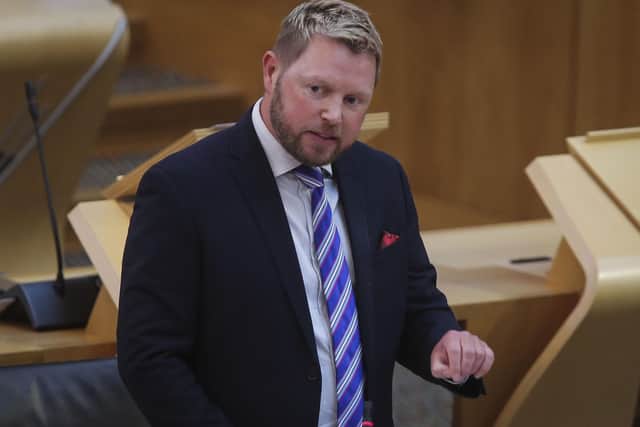 Jamie Greene MSP
“The £300m that we have secured in a whole host of areas shows just how serious we are about getting stuff done.
“It means there is more money to protect businesses from crushing rate rises, more money to help small businesses and to support the next generation of entrepreneurs.
“There is more money for hospices, for colleges, for people waiting on a neurodevelopmental assessment.
“There is more money to remove peak fares on Northern Isles ferries for island residents.
“Neither the Scottish Conservatives nor Scottish Labour got a penny from this budget. That is because neither cared about using their leverage as opposition parties to deliver for people.”
The budget passed by 65 votes to 30, with 24 MSPs abstaining.