
Remember me




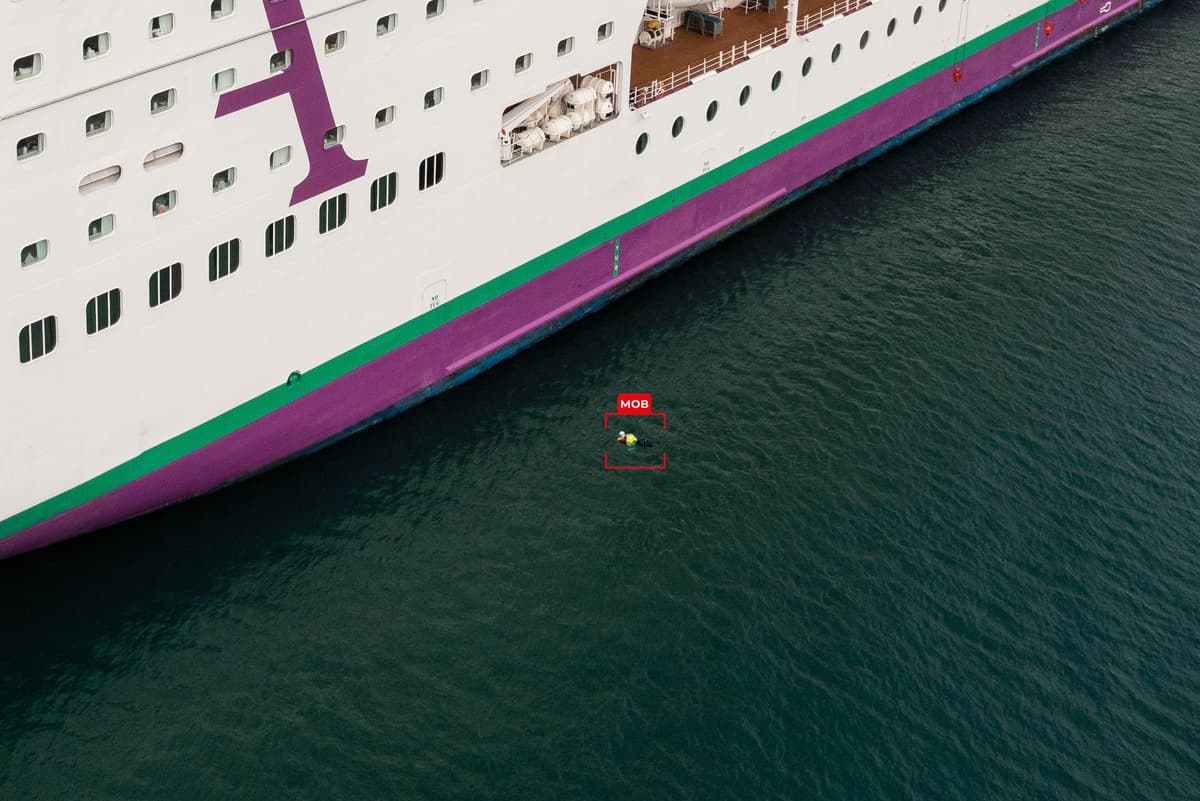


 Zelim 's Zoe detection system | Zelim
Imagine you are on an ocean cruise. There’s a sudden commotion on deck as the ship’s crew realise that a passenger has gone overboard.
The person in the water—if they are still visible — is a tiny target in a blur of whitecaps and swell. The grim reality is that with the ship still moving, the odds in favour of rescue are receding fast.
So fast, that in a situation like this 80 per cent of fatalities by drowning occur within 30 minutes. In that moment, the riskiest phase in maritime rescue is the early moments trying to locate the person.
Zelim, an Edinburgh-based scaleup, is trying to remove this risk from the equation. Its proposition is simple: take the search out of search and rescue, then take the risk out of rescue.
The first part of Zelim’s solution, called ZOE, involves the deployment of man overboard detection cameras fixed around the edge of ship’s deck that lock on to a falling object immediately, and stay locked on.
 Sam Mayall and Andy Tipping | Zelim
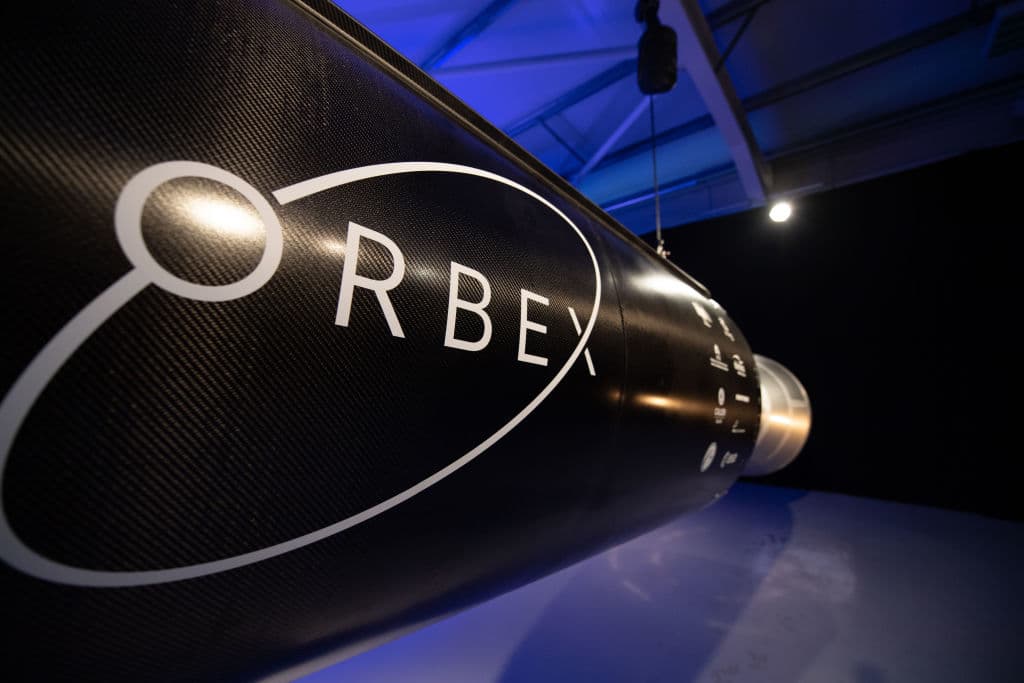
The second is an unmanned rescue boat called Guardian, to which is attached a conveyor belt called Swift that scoops the person out of the water.
“Essentially we’ve built and certified the world’s first unmanned rescue,” says chief executive Sam Mayall, a 31-year-old Welshman who runs Zelim – a mash-up of “zero” and “limits” – with Englishman Andy Tipping.
Crucially, the solution removes the need to put crew into a conventional rescue boat, a process Mayall describes as inherently dangerous given that lifeboats are the third biggest killer of seafarers.
A former sailing instructor and later navigator in the offshore oil and gas servicing sector, Mayall founded Zelim in 2017 after deep personal loss some years ago. He was involved in attempted rescue efforts in two man overboard incidents in the North Sea that, tragically, came too late prevent the death of work buddies. That led to his dogged pursuit of a solution to finding people in the water faster.
The clever part of ZOE is AI-enabled software allowing the cameras to instantly detect an object falling from a ship, and its trajectory afterwards. It does this by leveraging a database of about 9.5 million images of mannequins tossed into the water in simulated man overboard scenarios, conducted by some of Zelim’s 37-strong team over the last five years.
“Humans are the limiting factor in saving life at sea, especially in atrocious weather. The idea is to bring automation into it,” explains Tipping, 39, who joined Zelim in 2019 after the two men met when Tipping was working at the Glasgow headquarters of ORE Catapult, the UK’s innovation centre for offshore renewable energy.
The emergence of Zelim is a sign of how Scotland’s startup ecosystem is producing companies that are leveraging native expertise in artificial intelligence with offshore marine knowledge. Another example is Aberdeen-based Fennex, which uses AI to improve operational safety in offshore energy.
Zelim is also emblematic of Scotland’s increasing importance as home to small and medium-sized enterprises (SMEs) that are developing dual-use technologies with military applications at a time of rising geopolitical tensions and increasing defence spending. Both will dominate the annual Munich Security Conference, which starts in the Bavarian capital today.
 Zelim Swift rapid rescue | Zelim
Last year, Zelim was awarded a grant under NATO Diana, a UK-based accelerator scheme launched in 2022 by the Atlantic alliance to match private companies offering emerging dual-use technology with governments and military end-users. In 2024, Zelim was among recipients of funding from the UK government’s Defence and Security Accelerator (DASA), which funds SMEs developing defence technology innovations.
The ZOE solution has caught the attention of navies in the US and EU, including two specific features. One, called ZOE Lookout, is for navigational safety while another, ZOE Shield, detects unidentified objects such as unmanned vessels moving towards or near a ship. In September, the ZOE system was installed on a Portuguese frigate as part of Exercise REPMUS, NATO’s largest naval exercise, off the coast of Portugal.
Edinburgh is an ideal base for Zelim, Mayall and Tipping say, because of the availability of graduates in AI and data engineering from universities in Edinburgh and Glasgow, as well as software expertise at local businesses.
Funding has come in the forms of grants, including from Innovate UK, Britain’s innovation agency, and £8.4 million of equity funding, including from a venture fund that’s part of Edinburgh asset manager Amati Global Investors.
Civilian regulation has also driven demand. In the US, legislation was passed by the Obama administration mandating that cruise ship operators must adopt man overboard detection systems. An average of 19 people fall off cruise ships annually, according to Cruise Lines International Association data.
Yet until Zelim came along, nothing existed that used AI to allow a detection rate close to what ZOE offers, Mayall says. The system recently passed a series of Lloyd’s Register approval tests with a “man overboard” detection rate of 99 per cent. It has also undergone extensive testing on board a ship operated by UK-based Ambassador Cruise Lines.
As a result, Zelim anticipates its first order from a US cruise line shortly, after last year securing an order to instal ZOE on four new-build ferries in Canada.
Last week, the business appointed its first sales director for cruise and defence, and is set to open its first overseas office in Abu Dhabi within weeks.
Mayall says that an early attempt to persuade offshore wind to buy into the concept failed due to “lack of investment and risk appetite”. He doesn’t rule out trying again. But for the moment a concept born out of personal tragedy, yet with life-saving potential, looks buoyant.