
Remember me




Valentine's Day stands as one of history's most successful examples of how culture, psychology, and commerce fused into a powerful global spending ritual.

Photo: freepik.com is licensed under Public domain
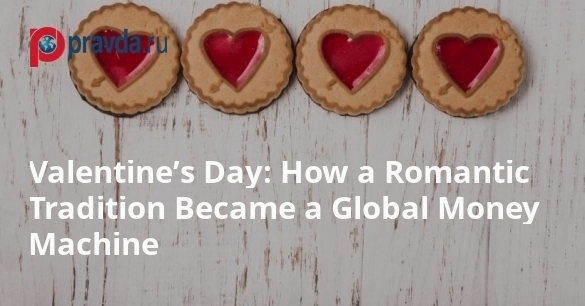
Cookies with red hearts on a wooden table
Love as the Perfect Commercial TriggerEvery year on February 14, businesses across the world enter one of the most predictable and profitable sales cycles on the calendar. What once began as a religious observance gradually transformed into a finely tuned economic engine powered by emotion, expectation, and social pressure.
The structure of the holiday functions with remarkable efficiency. Love provides the justification, anxiety fuels decision-making, and the final act often appears as a familiar sequence of financial notifications. The process embeds itself so deeply into social norms that participation feels less like a choice and more like an obligation.
How the Tradition Took ShapeThe association between February 14 and romantic love emerged gradually. In the fourteenth century, Geoffrey Chaucer helped connect the date with courtly romance, a cultural shift that later generations amplified. By the eighteenth century, printed declarations of affection appeared in England, offering ready-made language for those uncomfortable with composing their own messages.
In the nineteenth century, Esther Howland industrialized the production of decorative valentines and demonstrated the commercial potential of sentiment itself. Confectionery companies soon recognized the opportunity. Cadbury popularized heart-shaped chocolate boxes, merging gift-giving with durable symbolic packaging.
By the early twentieth century, the greeting card industry had firmly established Valentine's Day as a recurring social ritual supported by retail, hospitality, and advertising.
A Global Retail EventModern Valentine's Day generates enormous economic activity. Florists raise prices, jewelry retailers intensify promotions, restaurants introduce special menus, and delivery services operate at peak capacity. Streaming platforms curate themed selections, hotels design romantic packages, and consumer electronics brands promote idealized gift solutions.
Even sectors with no obvious connection to romance adapt their offerings. Pet stores introduce themed products, while digital marketplaces such as Avito occasionally display unconventional listings that reflect the holiday's social dynamics.
The Psychology Behind the SpendingThe durability of Valentine's Day rests less on advertising alone and more on behavioral economics and social norms. Many consumers understand the constructed nature of the ritual yet continue to participate. Social expectation exerts a stronger influence than individual skepticism.
Valentine's Day ultimately sells not products but reassurance — the confirmation that attention, care, and remembrance remain intact.
Ignoring the date can trigger discomfort, misunderstanding, or perceived emotional neglect. Participation therefore becomes a form of risk management within interpersonal relationships.
Commerce, Culture, and ChoiceValentine's Day represents a rare convergence of cultural tradition and market efficiency. Businesses benefit from predictable seasonal demand, while individuals engage in a symbolic exchange that reinforces social bonds. The phenomenon illustrates how economic systems thrive when they align with deeply rooted human emotions.
The holiday persists not simply because marketers promote it, but because it resonates with universal psychological patterns — the desire to express affection, avoid conflict, and meet shared expectations.
Comments (0)