
Remember me


In the heart of the Royal Borough of Kensington and Chelsea, interior designer Erik Munro has unveiled a transformative residential project that proves "classical elegance" and "bold expression" are not mutually exclusive.
The project, a 1,518-square-foot apartment set within a grand Grade-II listed building, represents a masterclass in spatial problem-solving.
Prior to Munro’s intervention, the flat was a fragmented "maze" of small, dark rooms that obscured the building's historic soul. Munro’s primary challenge was to honour the property's Georgian proportions while adapting it for a contemporary lifestyle. The solution lay in transparency. By introducing industrial-chic, steel-framed glazed partitions, Munro replaced solid walls with light. This move restored a sense of architectural flow, allowing sightlines to stretch across the floorplan while maintaining the distinct "zones" required for modern living.
The redesign meticulously preserves the apartment’s heritage, retaining original period fireplaces and intricate wall panelling. However, these traditional elements now serve as a sophisticated backdrop for Munro’s signature "layered aesthetic."
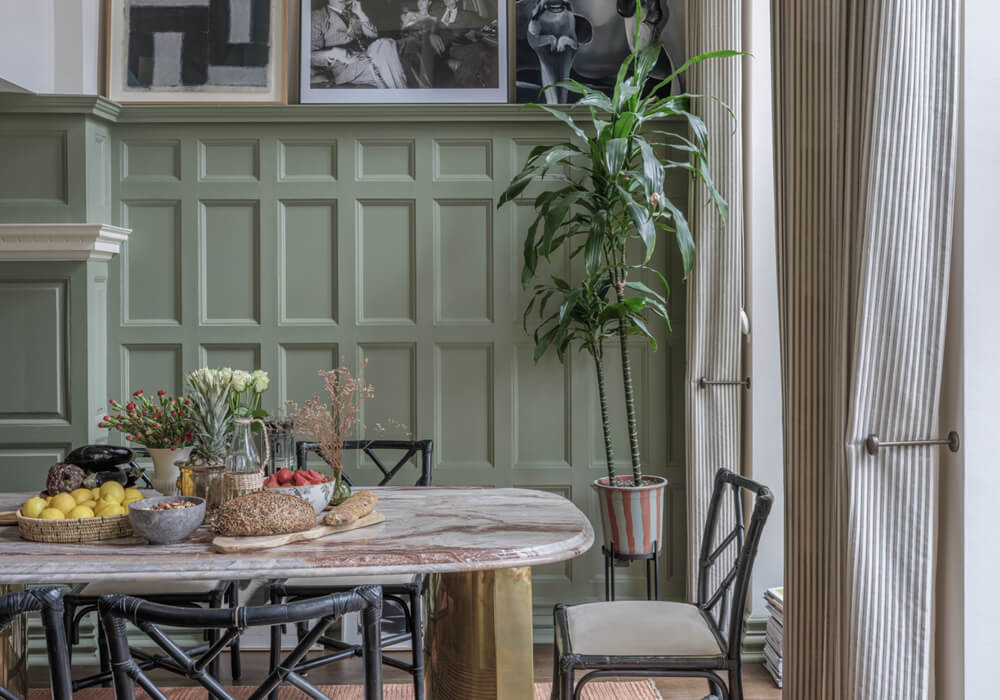
The apartment is defined by what Munro calls "dramatic gestures"—design choices that are as functional as they are aesthetic. Most notable are the oversized pink linen curtain pelmets. While they serve as a bold, soft-textured focal point, they also perform a clever architectural feat: concealing unsightly structural pipework that could not be moved due to the building's listed status.
The finished residence is far from a standard white-box renovation. It is a richly personal environment that respects the timeless appeal of Georgian architecture while injecting a "distinctive and expressive point of view."
By blending steel, marble, brass, and vibrant textiles, Erik Munro has created a space that feels both historic and avant-garde—a rare feat in one of London’s most traditional neighbourhoods.
For more information on the project and to view the full portfolio, visit Erik Munro.
Comments (0)