
Remember me






An upland wildfire charity said renewables work if well sited, but claim a current development in the Borders will do damage to the birds of prey.
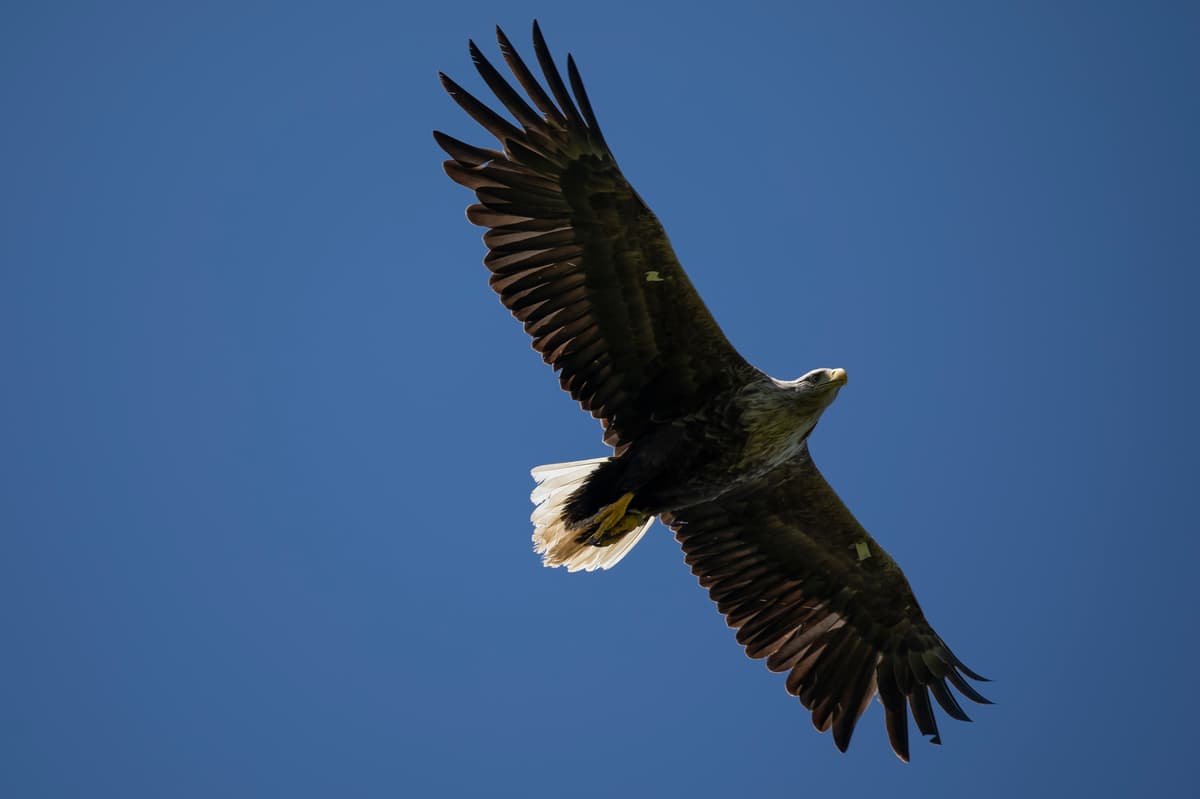
Golden eagle numbers in the south of Scotland face “unacceptable risk” if a proposed wind farm gets the go-ahead, conservationists have warned.
Wildlife charity Restoring Upland Nature (RUN) is urging a Scottish Borders Council committee to reject plans for the Scawd Law wind farm near Walkerburn.
Developer Fred Olsen Renewables plans to build eight turbines up to 180m tall at the site which would have a 60MW generation capacity.

 Golden eagles are native to Scotland
 Dr Cat Barlow, chief executive of RUN, called for the plans to be refused.
She said: “While we strongly support the role of well-sited renewable energy in tackling the climate crisis and safeguarding nature in the long term, our detailed analysis evidences that Scawd Law in the Moorfoot Hills is the wrong location for a wind farm development.
“Using data from our state-of-the-art satellite monitoring, alongside extensive field observations by our experienced staff, we have significant concerns that the proposal would pose an unacceptable risk to the fragile local golden eagle population at a particularly critical time.”
Ms Barlow claimed some of the data currently relied upon by the developer is outdated, with more recent tag data showing that eagle use of the site is far higher than suggested.
“Our analysis indicates that the risk of collision at Scawd Law is at least six times greater than the figures presented by the developer,” she said.
“This risk will increase further as fledglings enter the landscape. Indeed, the likelihood of an eagle being killed at this site alone exceeds the collision risk posed by all existing wind farms across the South of Scotland combined.”
Fred Olsen Renewables said in its 30 years of owning and operating wind farms in Scotland, the company takes ornithological risks “very seriously” when determining the locations of our renewable energy sites.
“We have thoroughly reviewed the concerns raised by Restoring Upland Nature (RUN) regarding our Scawd Law proposal,” a spokesperson for the renewables giant said.
“Our comprehensive assessments, complemented by expert analysis from external specialists, demonstrate that all predicted impacts and associated risks have been carefully evaluated and fall within acceptable parameters.
“While interpretations of data may vary, our in-depth understanding of the site, environmental conditions, and proven methodologies gives us confidence in the robustness of our approach. We are committed to maintaining open, constructive dialogue with all stakeholders to ensure transparency and trust."
 Local conservationists claim the location of the planned wind farm is inappropriate and poses significant risk to eagles
 Local communities and groups have voiced opposition to the development.
Mike Wilcox, planning lead of Walkerburn Community Council, said: “This is the last chance to save our majestic golden eagles.
“There has been a massive, concerted effort over many years by conservation experts and volunteers from all over Scotland to reintroduce this iconic species to the south of Scotland.
“The local community has been very excited to see these incredible birds in our skies again after an absence of perhaps 100 years. Going ahead with Scawd Law could potentially wipe out all the progress made in the past decade – Scottish Borders Council should reject this destructive scheme.”
The plans have also been objected to by both Clovenfords and Heriot Community Councils and the local Lauderdale Preservation Group due to its location and threat to golden eagles.
The council’s planning committee will review the application on March 2.
The death of the locally-fledged bird was the first of its kind recorded by the South of Scotland Golden Eagle Project.