
Remember me







This debate never stops troubling veterans of the gaming world. By 2004, the thing was pretty straightforward: you bought a game whose content was fully on the disc, took it home, put it into your console, and played it until you couldn't keep your eyes open. However, in 2026, the situation changes dramatically as you first have to download big patches of size 150GB, then deal with microtransactions, and on top of that, you are constantly reminded of the early access bugs. No one gave up the simplicity of the past; instead, the future, with its visual spectacle, was embraced. The question is not merely about graphics; it's really about whether gaming as a 'soul' has managed to survive the transition from being just a small group hobby to a multibillion-dollar industry.
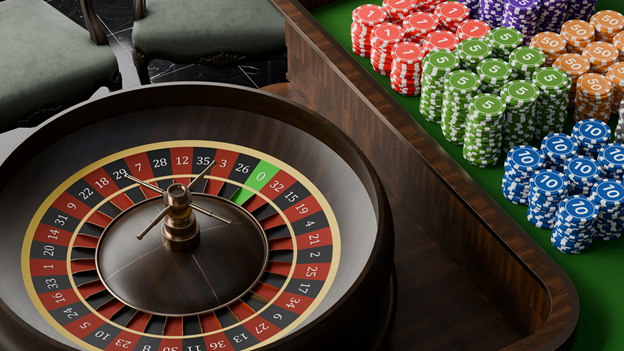
The Shift to Real-Time EntertainmentThe biggest change lies in how we consume content. We moved from static, offline experiences to dynamic, live environments where everything happens in seconds. This trend hit the entertainment sector hard, merging traditional gaming mechanics with live broadcasts. For instance, players now look for a Crazy Time live score to track high-multiplier wins and historical data in real-time. This specific game represents the pinnacle of this evolution, combining a physical spinning wheel with digital multipliers and interactive bonus rounds. It captures the modern player's demand for instant results and high-production value that was impossible back in the PlayStation 2 era.
In the 2000s, "live" meant a LAN party in a basement with tangled cables. Today, it means global connectivity. Consider a gamer in 2005: if they hit a glitch, they waited for a gaming magazine to publish a workaround. Now, you check a live feed, see the data, and adjust your strategy instantly.
Graphics vs. Gameplay: The Diminishing ReturnsIn the early 2000s, each new generation of consoles seemed like a leap into another dimension. The transition from Metal Gear Solid on PS1 to Metal Gear Solid 2 on PS2 was a shock to the system. The jump in polygon count and lighting seemed monumental. Today, we have ray tracing and 4K textures, and the "wow" visual effect has reached a point of diminishing returns. Although many gamers still enjoy simple games without a "visual revolution," such as Crazy Time.
Feature2000s Era (Gold Age)2020s Era (Modern Age)OwnershipYou own the disc forever.You own a license on a server.MonetizationOne-time payment ($50).Battle passes, skins, and DLC.Tech FocusPhysics and AI experimentation.Photorealism and resolution.InternetOptional for most titles.Mandatory even for single-player.BugsRare; games had to be finished.Fixed via "Day One" patches.Modern games look like movies, but they often play it safe. A hypothetical case: In 2004, a studio might spend $5 million on a weird, experimental title like Katamari Damacy. In 2024, a "Triple-A" budget often exceeds $200 million. When that much money is on the line, shareholders demand sequels and proven formulas. We get Assassin’s Creed 12 instead of something truly new.
The Monetization TrapThe 2000s were the era of the "Expansion Pack." You bought StarCraft: Brood War, and you got a massive chunk of new content. Fast forward to the 2020s, and we live in the age of the "Microtransaction". Let’s look at the numbers. In 2005, a top-tier skin or extra character was usually an unlockable reward for beating the game on hard mode. In 2025, that same skin costs $20 in an in-game store. Studios found that they could make more money selling "Horse Armor" than they could by making a whole new game. This shifted the focus of game design. Developers now build games around "retention loops" rather than just "fun." They want you to log in every day to finish chores (daily quests) rather than exploring at your own pace.
Convenience and Accessibility
It’s not all bad news. The 2020s win hands down when it comes to convenience. In the 2000s, if your local store was out of Halo 2, you didn't play Halo 2. You waited weeks for a restock. Today, Steam, Xbox Game Pass, and PlayStation Plus give you an instant library of thousands of titles for the price of a couple of pizzas.
Accessibility features have also seen a massive boost. Gamers with disabilities now have specialized controllers, high-contrast modes, and text-to-speech options that didn't exist twenty years ago. The community is larger and more diverse. Gaming is no longer a "nerd" activity; it is the dominant form of global entertainment, surpassing both movies and music combined.
The Death of the "Couch Co-op"One tragic loss in the 2020s is the social proximity of gaming. Split-screen gaming was the heartbeat of the 2000s. You sat on a couch, ate greasy pizza, and elbowed your friend when they screen-cheated in GoldenEye or Halo.
Today, multiplayer is almost exclusively online. You have a 12-year-old in another country shouting at you through a headset while you sit alone in your room. While online matchmaking is efficient, it lacks the tactile, human connection of the old days. High-speed internet made the world smaller, but it made the gaming room lonelier.
Technical Stability and the "Patch Culture"There is a disturbing trend in the 2020s: releasing broken games. Because developers can patch games over the internet, many studios ship titles that are barely functional. They use the first three months of sales to fund the actual completion of the game.
Imagine buying a car in 2004 that didn't have brakes, and the dealer said, "Don't worry, we'll mail you the brakes in six weeks." You wouldn't accept it. Yet, gamers today regularly pre-order titles that crash every thirty minutes. In the 2000s, if a game was broken on the disc, it was a commercial disaster because there was no way to fix it for the millions of people who bought it. That forced a higher standard of "Gold" quality.
Final Verdict: Which Is Better?The 2000s offered a sense of wonder and complete ownership. You bought a game, you owned the art, and you played it until the hardware died. The 2020s offer infinite choice, incredible fidelity, and the ability to play with anyone on Earth instantly.
If you value depth, finished products, and couch co-op, the 2000s were your peak. If you value convenience, social streaming, and cinematic visuals, the 2020s are a paradise. We didn't necessarily get "worse" games; we got a different business model. The challenge for the modern gamer is ignoring the predatory monetization to find the gems that still prioritize the player's experience over the shareholder's profit.