
Remember me



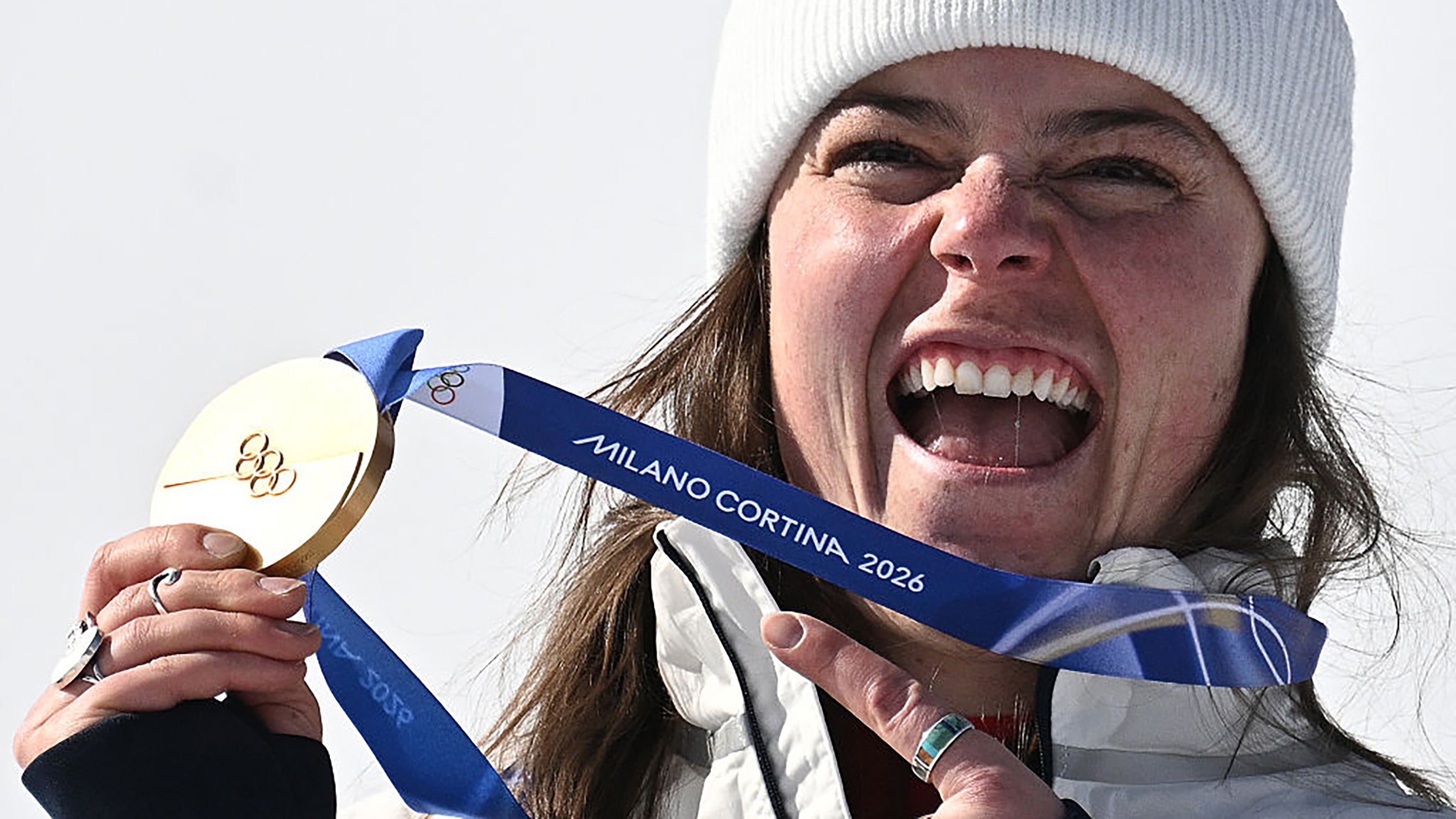
The night after she won the Olympic gold medal in downhill, American alpine skier Breezy Johnson celebrated with a champagne toast. After the ritual, Johnson, 30, spent the rest of the night in an anxious spiral, worrying that her career accolade might somehow disappear.
“I had won, and somebody was going to come after me and find a means to take it away from me,” Johnson told Outside. Meanwhile, texts poured in from veteran skiers, writing that they couldn’t think of anyone who deserved the title more.
Johnson’s worries stemmed from a ski racing career that has reached Olympic heights, but also suffered lows, injuries, and heartache.
“I’ve spent my whole career trying to be the hardest worker in any room that I walk into,” Johnson said. “I have enough experience to know that that doesn’t always pay off in the way that the storybooks tell you that it will, and I had sort of resigned myself to the fact that trying to be the hardest worker is its own reward.”
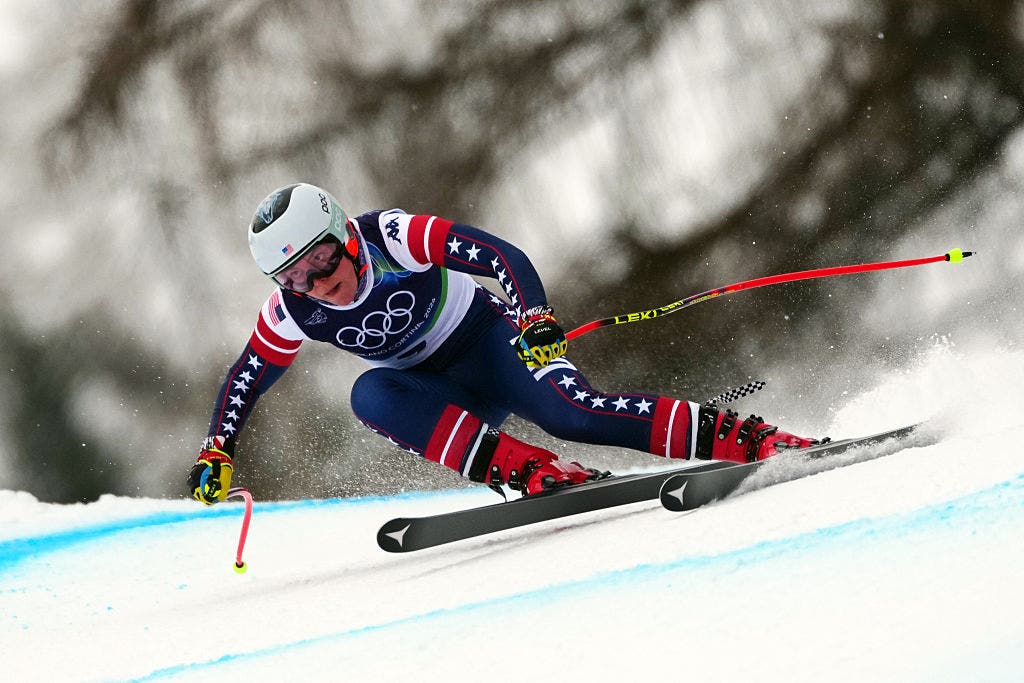 Johnson skied aggressively on the Cortina course (Photo: Michael Kappeler/picture alliance via Getty Images)
Johnson attained alpine skiing’s highest award with a streaking run down the Cortina downhill track on Sunday, February 9. During the opening weekend of the 2026 Winter Olympics, Johnson was the fastest woman on the course. She completed the punishing run in 1:36:10—fast enough to win the gold and become just the second American woman to ever claim the prize in downhill.
“Being able to get the Olympic gold—that only one other American woman has ever been able to achieve—and being able to stand at the top was also validating,” Johnson said. “It doesn’t always work out, but sometimes it does.”
A Career of Victories and SetbacksThe Olympic title was not a fluke. Johnson achieved it during a high point in her racing career—she’s the reigning world champion in the downhill and in the women’s team combined event alongside Mikaela Shiffrin.
Yet these medals have come amid a career ark with plenty of setbacks. At 30, Johnson has been skiing professionally for a decade. After being heralded as downhill skiing’s next American star, Johnson was beset by a brutal cycle of injuries: a tibial plateau fracture in 2016; an ACL rupture in 2018; a PCL rupture and MCL tear in 2019. For a while, she became preoccupied with the fear of crashing; she’d line up at the start gate and think about wiping out catastrophically.
“I was just breaking down on a regular basis in the gym when no one could see me,” Johnson said in a previous interview. “I was super anxious all the time.” She was used to having total control of her body, but that feeling, too, was compromised by injury. Johnson started working with a mental coach, who helped with the emotional and psychological sides of her recovery, and in 2020, she raced to her first podium finish at a World Cup.
Cortina itself, a stop on the regular World Cup circuit, had been the site of some of her fastest skiing, including her first top-10 finish, in 2017. It’s also been the site of her gnarliest crashes. In 2022, she tore knee cartilage on the course, forcing her to pull out of the Beijing Olympics.
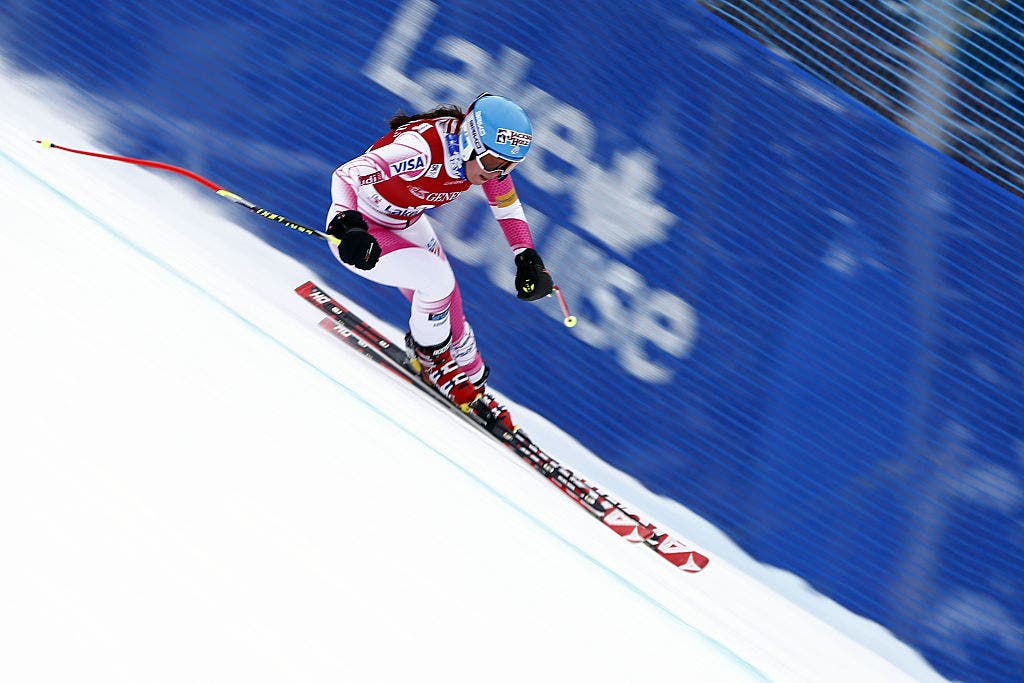 Johnson has been a mainstay on the World Cup circuit for more than a decade (Photo: Christophe Pallot/Agence Zoom/Getty Images)
“It’s hard to give up on a lifelong dream when it feels so close,” she said at the time. “But I know how to keep going to reach my end goal, both mentally and physically.”
Then, in 2023, Johnson received a 14-month suspension from the United States Anti-Doping Agency. The ban wasn’t from a positive test, but rather because she didn’t update her whereabouts information, so testers went to an address to find that she wasn’t there.
“For the last two years, I’ve been working my hardest, but also kind of walking on eggshells,” Johnson told Outside.
A Huge Shadow Cast by Lindsey Vonn’s ComebackThroughout this period of injuries and setbacks, Johnson kept her eyes on the 2026 Olympics in Cortina.
“At the end of the day, I want to win a gold medal,” she told the Guardian in the fall of 2025. In some ways, her career arc leading up to the Olympic race echoed that of her teammate, Vonn, a bonafide alpine legend who had returned to competition in 2024 after a five-year retirement and a partial knee replacement.
For both of them, the Olympics could be a potential site of redemption. Every four years, the Games cast a harsh media floodlight over an array of sports that don’t typically get the same attention they receive over these two weeks, and in this environment, Vonn’s comeback proved especially irresistible.
Johnson said the focus on her famous teammate, one of the winningest skiers of all time, reduced some of the pressure on her own return to the Olympics, but “there’s a subtle piece where I feel like it’s hard,” she said “I mean, we are performers, we are social creatures and in Lindsey’s comeback, it’s felt at times like there’s no oxygen left in the room for any of the rest of us.”
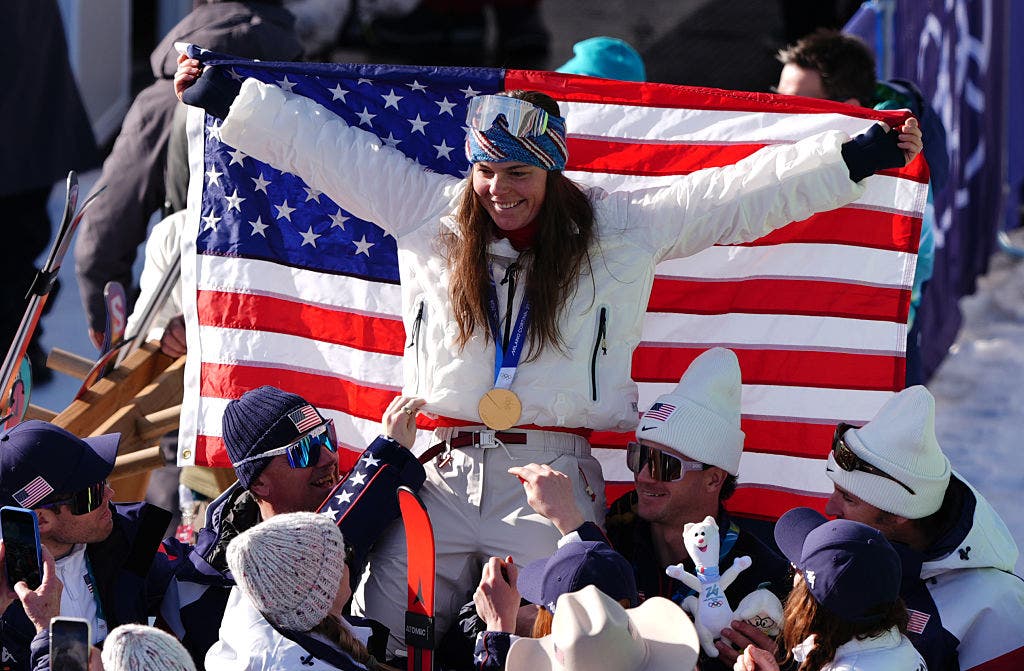 At 30, Johnson still has plenty of good years of skiing left in her (Photo: Andrew Milligan/PA Images via Getty Images)
After her run in Cortina, Johnson sat in the chair reserved for the fastest athlete as she watched subsequent skiers descend the course. She was watching when Vonn blasted out of the starting gate. Johnson saw Vonn’s arm hook a gate, sending her tumbling down the steep piste. She heard the crowd, dense with Americans who had been hollering in support, go quiet. She thought she could make out the sound of Vonn’s screams.
“I was just hoping at that point that things weren’t as bad as they seemed,” she said.
“I feel for her because I also know what it is to be burned by this course,” Johnson added. “Cortina, at the best of times, is really incredible, and it feels like the racers are kind of one with the mountain. But at its worst, it ends careers, and it is a devastating place.”
A Career Arc that’s Far From OverDespite the fear and pain that can sometimes come with this career, Johnson has said that downhill racing is when she feels “truly alive.”
I asked if the win changed what felt like was possible for her future in ski racing.
“Definitely,” she said, “but I think that it’s broader.” She cited older peers—American Jackie Wiles, 33, and Italian Frederica Brignone, 35—who also recorded blistering races at the 2026 Olympics.
“I mean, I think seeing Jackie win her first medal in her fourth Games, seeing Federica win her first gold at almost age 35, and, you know, Lindsey coming out of retirement at 40 and winning races has really reshaped what people thought the confines of skiing greatness is,” Johnson said.
Athletes speak of a post-Olympics blues, when the media attention recedes and they come down from the hype, the expectations, the particularly intense training cycle. But when Johnson said that she’s not done yet, she meant it quite immediately.
Johnson has a wedding to plan—her partner, Connor Watkins, proposed to her at the finish line of the Olympic Super-G event. She also has Alpine skiing’s World Cup season to complete.
“I’m not done with the sport,” she said. “I feel like I’m skiing better than I ever have.”
Comments (0)