
Remember me
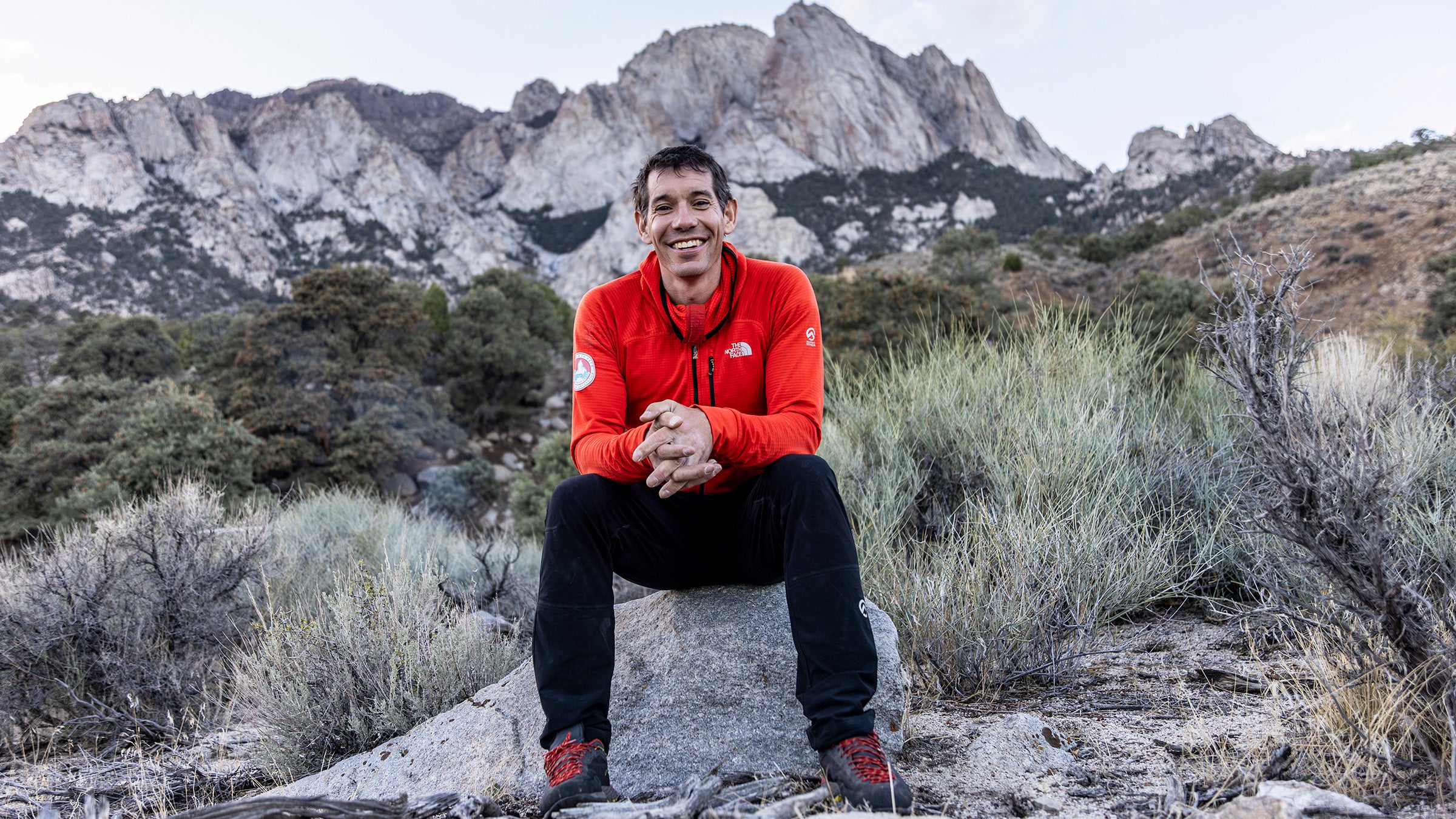
You may have thought he’d spend a few days relaxing on a beach, or at the very least visit the local health spa to soothe his aching forearm flexors and finger calluses. But no, the morning after Alex Honnold meticulously climbed all 1,667 feet of Taipei 101 for his Netflix special Skyscraper Live—yes, he did it without a safety rope—he boarded a flight from Taiwan back home to Las Vegas, Nevada. The roar of the crowds gathered at the base of the 101-story building still echoed in his ears, and the thrill of scaling its ten abstract metal dragons vibrated through his body. Yet Honnold and his wife, Sanni, had to return to their two daughters, June and Alice.
“The big thing was childcare—we had to get back home to our kids,” Honnold recently told Outside. “We left our babies at home.”
Skyscraper Live etched a new chapter into Honnold’s already storied career and expanded his celebrity in a way that even Free Solo, his Academy Award-winning 2016 documentary, could not. Camera crews, beaming images live around the world, showed Honnold’s eye-popping athleticism and his calm, jovial demeanor amid a life-and-death scenario. Overhead shots showed him pulling his body up the skyscraper like a ballet dancer 1,000 feet off of the sidewalk, no safety net required.
But the spectacle was simply one of many projects that Honnold has chosen to pursue. These days Honnold, 40, is a one-man media platform: he hosts two podcasts (Climbing Gold and Planet Visionaries), completes documentaries for National Geographic, and takes on big-wall ascents in Yosemite National Park and other famous crags across the country. He’s also now the host of a TV show, Get a Little Out There with Alex Honnold, which debuts Outside TV on February 26. In the latter program, Honnold takes viewers to different outdoor destinations in his new home state, Nevada, and shows how he spends his time solo, and with his family, at the campground and on the trail.
Outside recently caught up with Honnold to talk about Skyscraper Live, Get a Little Out There, and how, exactly, he balances his love for family, rock climbing, and danger.
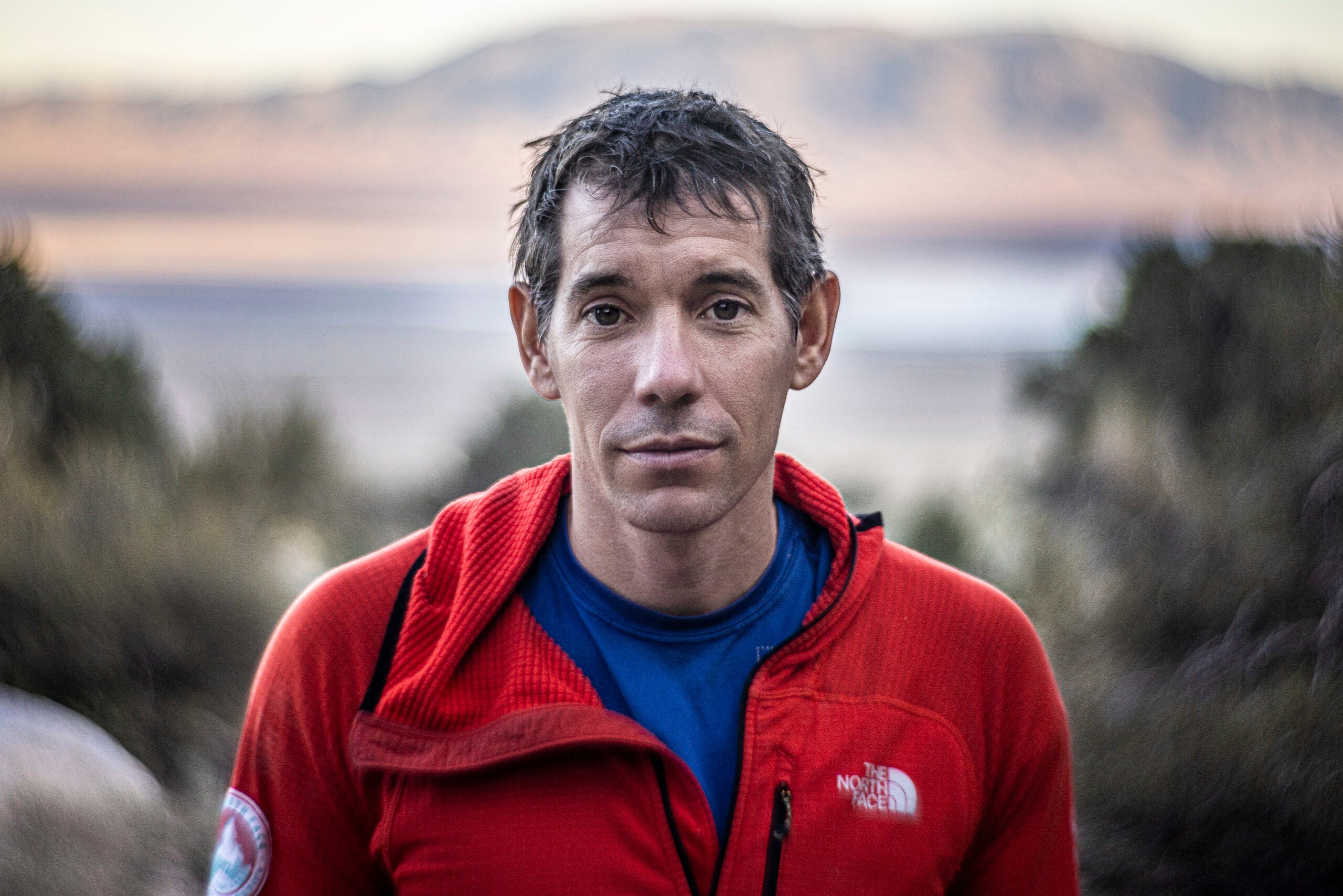 Honnold, 40, is coming off of his biggest media project ever (Photo: Morahan Visuals)
OUTSIDE: What level of fatigue and body soreness did you feel after climbing Taipei 101?
Alex Honnold: I was definitely sore. I did the climb in the morning in Taipei and then spent the afternoon doing interviews in one of the conference rooms on the 90th floor. It was really cool, this beautiful view, a really amazing experience. But as I was doing these interviews, I was like I think my back is getting kind of sore. I could tell that I tweaked my back. It hurt.
Was it comparable to how you feel after a big climb on rock?
Yes and no. While I was climbing the building, I was basically doing this one move over and over and over because I was climbing a man-made structure. So in some ways it’s less comparable to traditional rock climbs because on other climbs you’re doing a variety of different movements. Plus, traditional climbs involve hiking back down the mountain afterward. If you’re doing a 1,700-foot rock face, you’re probably doing 1,000 feet on the approach on talus, and then you’re maybe doing 3,000 feet of hiking downhill on loose rocks. So after a traditional climb, I feel it in my knees, and I’m tired from the hike. But with the building, I literally walked across the street, climbed the building, and then took the elevator back down. I wasn’t carrying a backpack or a load of ropes. The overall wear and tear on my body was so chill compared to rock climbing.
Would you do another skyscraper climb on Netflix if given the chance?
If anybody wanted to do anything like that I’d definitely do it again. It’s so fun. It’s crazy. It’s so different. You wouldn’t believe how cool a building is behind-the-scenes. Seeing all of the utility spaces and hatches and ladders you’re going through. You get to see a part of the world you’d never see otherwise. I wouldn’t want my whole life to be building projects. But the thing about a building project is you spend one week doing the thing. It’s pretty low-cost in terms of my time. I wouldn’t want to do a six-week expedition to the middle of nowhere to climb a building. It doesn’t take much of a personal toll. I’m not even losing fitness during the project. On most expeditions to, like, Pakistan to climb a big wall, you’re actually getting worse at rock climbing during the expedition. You’re suffering at altitude and slowly wasting away. On a building trip, I’m eating in the hotel buffet and working out at the gym every day. It’s a totally normal life, and you get to do an adventure.
Why didn’t you take your kids?
If any project like this happens again we probably would take the kids. They’re almost old enough to benefit from that type of travel. Right now, they’re just too young (ages two and four). In another year or two, it would be amazing. But right now, I don’t think they even care, and it would be so much work. A two- and a four-year-old with jetlag? No way. If you’re trying to perform at your best, it’s like maybe I should actually get a good night’s sleep.
The climb generated an impressive amount of mainstream media attention. What questions from reporters came up again and again in your interviews?
The questions I got weren’t that different from the ones I get for traditional climbing. Is this scary? Why take the risk? Do you think about death? Why even do this? What’s the point? Questions about family stuff. They’re the ones I’ve been getting since 2007.
Did you watch the broadcast?
I haven’t even seen the broadcast yet. My wife and I watched part of it, but haven’t had time to finish it. So, I don’t even know what they really talked about in the broadcast.
A lot of the broadcast focused on your relationship with Sanni, and they talked about how she normally doesn’t watch you free solo. What was your debrief like with her?
She was definitely super stressed, but not so much about the climbing or, like, me falling off, but just about being on live TV and having all of these people and this crazy scene around us. There were literally thousands of people in the streets watching you all the time. And there were all of these cameras everywhere. For two normal people to show up and be placed in the middle of it, it’s a lot. I think she got more stressed when we arrived there because the conditions were challenging. It was raining. The building was really dirty. And those are things that I wasn’t too worried about because I knew they’d get managed. But there was a lot of noise around the project, and that is always stressful. But if you ignore the noise, the actual climbing wasn’t that stressful.
In the lead-up to Skyscraper Live, you said that one of your motivations for doing it was the fun of climbing a building. In many of your other interviews, you discuss your projects through the lens of practicality and logic. What role does emotion, like fun or happiness, play in your decision-making?
Maybe I don’t say this around all of my projects, but I’m always climbing for pleasure. I think that maybe I spoke about this more with the building just because people don’t necessarily assume that climbing a building is fun. When people ask me about climbing on rock, I think there’s an inferred assumption that I enjoy rock climbing and that climbing mountains is enjoyable. I got questions around the building, like why would you do that? And I’m like, there’s always the inherent pleasure of climbing something.
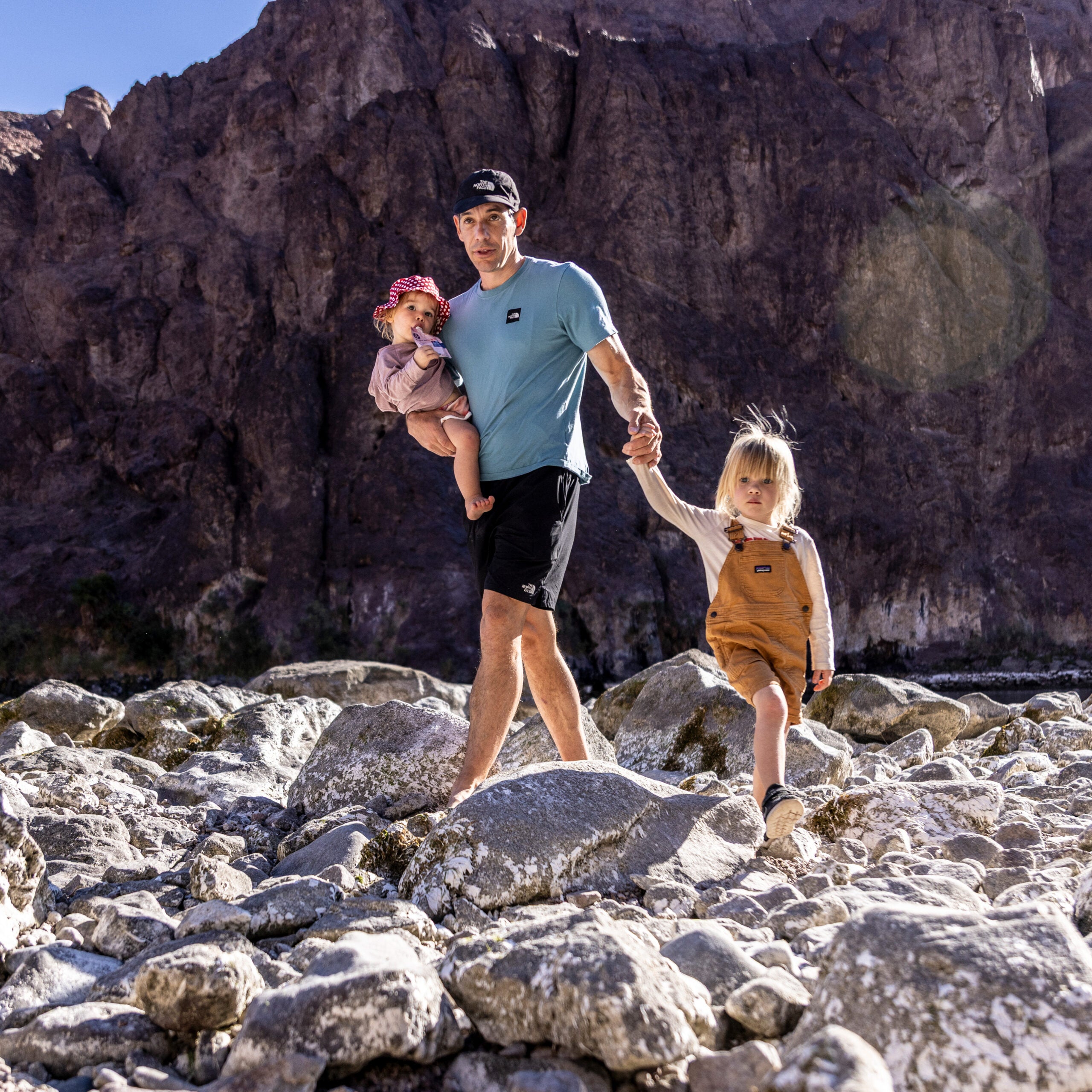 Honnold and his wife, Sanni, had two daughters (Photo: Morahan Visuals)
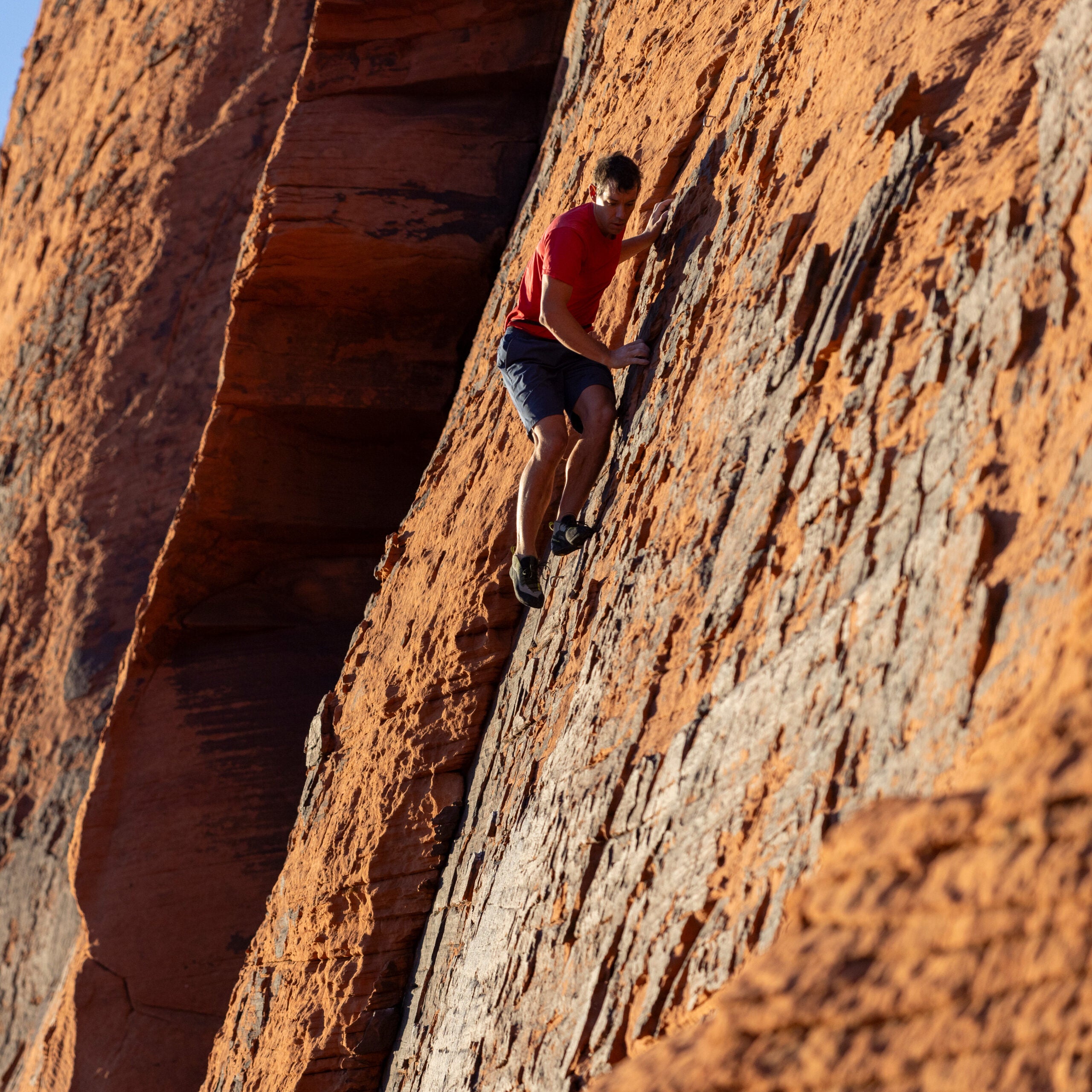 Honnold continues to climb punishing routes all over Nevada and California (Photo: Morahan Visuals)
According to Netflix, Skyscraper Live was viewed by 11.5 million people in 74 different countries. Stories about his ascent and reviews of the broadcast appeared in dozens of international media outlets, from The Today Show, to The South China Morning Post. The New York Times published a soaring interview with Honnold on the eve of the ascent.
But even as the climb was unfolding, disapproval about the spectacle poured out in various corners of the Internet. The Reddit community r/climbing—a page dedicated to discussion around hardcore rock climbing—held a so-called watch party chat during the climb, and critics labeled the spectacle as corny or cringeworthy. Take what you want from the chatter—it is the Internet, after all—but the overarching tone of the chat was criticism over a broadcast that was obviously for casual viewers.
Handling criticism is part of Honnold’s job. A decade ago, Free Solo elevated him into the mainstream in a way that no other rock climber had achieved. And since then, he’s had to balance his dual personalities as an icon for hardcore rock climbers and a public figure for average Americans. But Honnold still sees himself as a dedicated member of the global climbing community. And with that connection comes a desire to help the sport grow and progress into the future.
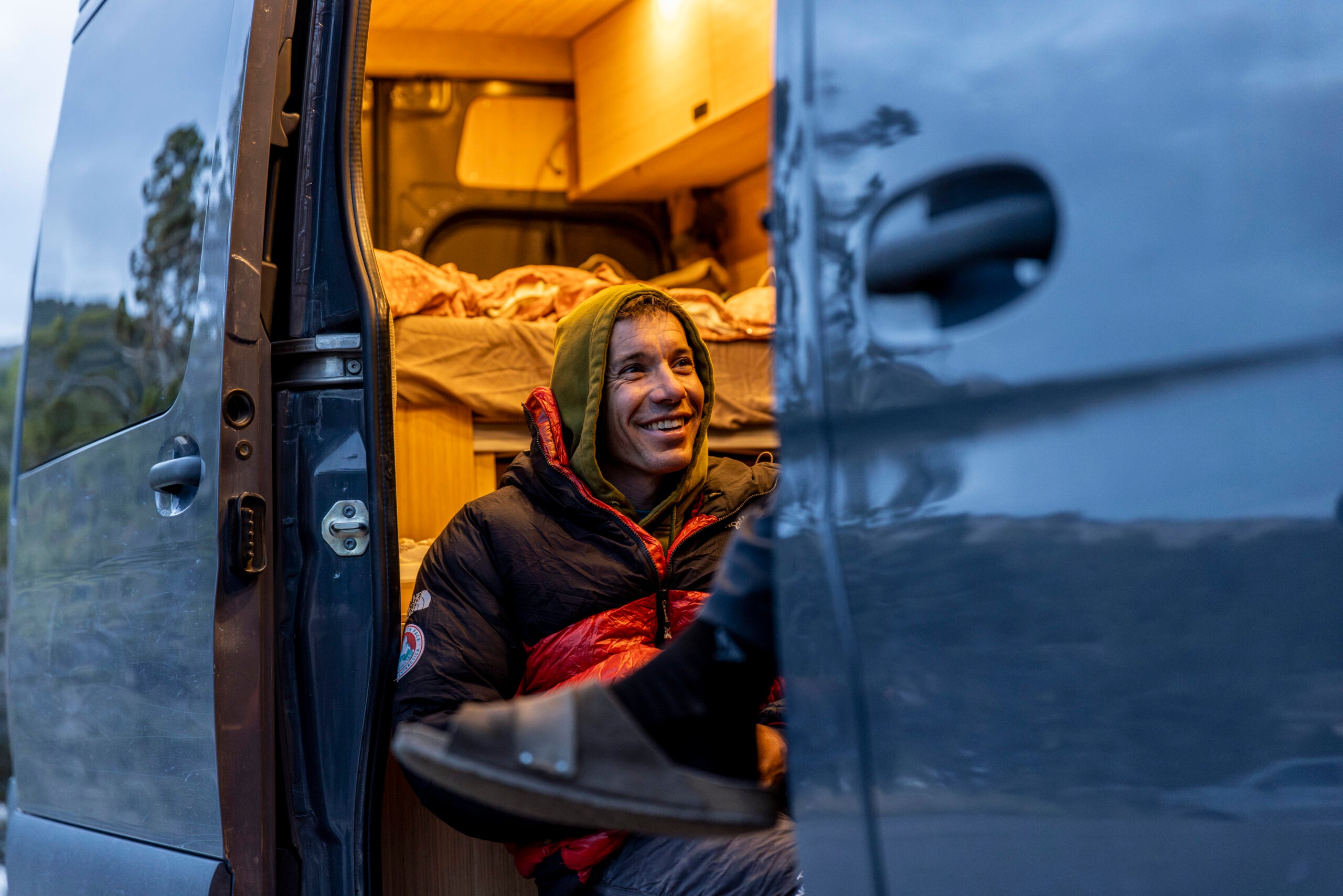 Honnold is traveling across Nevada in his new show (Photo: Morahan Visuals)
OUTSIDE: Skyscraper Live was obviously a project for the mainstream. But what role does the core climbing audience play in your life and your decisions to take on various climbing and media projects these days?
Alex Honnold: Actually that’s funny, it’s not something I ever think about. I mean, I basically always want to do the things I want to do. And some things are big and some things are small. I always have climbing goals. We’re going on a bouldering trip to Europe later this year, and I want to do some climbs in Yosemite this season. All of those are core climbing goals, but none of them are going to be filmed or promoted in any way. It’s just like I’m going to go climbing. These big media projects, on the other hand, are usually like some big, crazy idea that comes together. I’m trying to climb year-round, and some of it winds up being a major project, but most of it doesn’t. And I’m fine with that.
Do you worry about losing your connection to the core climbing community by tackling mainstream films and TV projects?
Not really. I think that as long as I’m a professional rock climber, as long as I’m out there climbing, trying my hardest, trying to send, you know, trying to do things that I’m proud of and still relatively good at, then I think it’s fine. The climbing community can think whatever they want, but it’s not like you’re ever going to begrudge another climber for going out and trying their hardest at the crag to send their project.
At Outside, we get to see the careers of athletes from all of these different niche sport communities, and every few decades one of them transcends their sport and enters mainstream American culture. And within that sport, there can be a feeling of detachment to the athlete, like he used to be one of us, and now he’s too big for us.
I host the podcast Climbing Gold, and that is a nice way to stay in touch with the core climbing community. We’re just interviewing climbers about the cool projects they’re doing, and talking to inspiring people who are doing impressive things in climbing. Literally, the whole point of the podcast is talking about how great other climbers are in a way to bring the climbing community together in a way. I don’t think people can be too stressed out about things if you’re using your profile to show how other people are having fun and doing great things in climbing.
Are there risks you won’t take today that you would have taken 20 years ago?
When I was in my early twenties, I was more likely to roll the dice and to just go for it on climbs. Not that I was being reckless, but I think climbing felt more like a grand adventure where I just wanted to push myself to find out what was going to happen next. Now, once you’ve been doing that for 20 years, it’s like, well maybe I don’t need to push quite as hard, and that’s not even specific to free soloing. I mean, I think about my gear choice for hard traditional climbing. Twenty years ago, I was more willing to take certain risks with my gear usage. But now I’ve seen gear fail. Even if the likelihood of a piece of gear failing is low, if there’s the potential for catastrophic injury, it’s like I don’t think I’m going to do that. But in my early twenties I’d probably think, oh this will never break. The types of expeditions I choose to go on have also changed. I’m probably a little more timid around dangers like avalanches and snow sports like alpine climbing. I’m more cautious around overhead hazards like ice seracs and stuff like that. A younger version of me would have been more willing to just go for it.
Your kids are still pretty young. When they get older, what advice will you give them about how to process risk?
I would tell them to do all the things, just do them correctly. Be intentional with your risk-taking. Be thoughtful. Mitigate risk as much as possible. Basically, be clear-minded about which risks you’re actually taking. I think a lot of risks aren’t actually apparent. Like, if you’re going bouldering with your friends, your biggest risk for the day is probably driving to and from the boulders. In terms of the potential for catastrophic injury or death, it is certainly higher for the drive than the actual bouldering. But you could still sprain your ankle at the boulders. So, understanding the different risks that you’re taking throughout the day is important.
How have you seen climbing move into the mainstream during your career?
It definitely has. I’ve been climbing for 30 years and it used to feel super fringe and niche and almost weird. I started climbing with the first generation of climbing gyms. And now even the gyms are a totally different thing. There are gyms all over every major city. They’re all super good. You can climb anywhere. Just the fact that you can search for climbing content online and find a limitless assortment of films and videos of people climbing is huge. Climbing is even in the Olympics.
Do you worry that climbing risks losing elements of its culture or appeal as it grows?
I personally don’t worry about it. There’s obviously a lot of hand-wringing around climbing losing its soul. And I think there’s a lot of debate around this with climbing going into the Olympics. In general, I see it as the rising tide raising all ships. As it gets bigger, it just means there’s a little more money in it. So many of my climbing friends now make a living not just as professional climbers, but also as coaches and route setters and working in gyms and as entrepreneurs in the sport. They make climbing equipment and do all sorts of different jobs in climbing. The bigger the industry, the more potential these people have to earn a living doing a sport they love to do.
What do you see as the future of rock climbing?
Right now the big changes are just that the physical standards of climbers are rising so quickly. Part of that is because of the competitions. Yes, climbing is in the Olympics and whatever else. But people are just able to do incredible things that are far beyond what we would have considered possible five or ten years ago. Climbers are way more capable than they used to be.
Is there anything about the current culture in climbing that worries you?
No, there’s nothing really that worries me. I mean, I imagine that a climber from the seventies would maybe look at modern rock climbing and think, like, that’s too much, it’s too different now. But for me, growing up in suburban California in the late nineties, climbing is very different now and that’s a good thing. It’s mainstream. It’s bigger. But it’s not that different. People go into a climbing gym, or they go outside, and they climb as much as they can. It’s still basically the same scene that I grew up in, just bigger and more mature.
What gives you hope about the next generation of climbers?
Just the other week at my local crag, I saw this 23-year-old kid do one of the most impressive performances on a rock that I’ve ever seen in my life. He sent all of these hard routes. It was insane. And he’s basically hanging Christmas lights seasonally while climbing to make a living. He’s climbing hard stuff and it’s not that big of a deal. He booked a two-month trip to Spain just to do this one route and he sent it on the fourth day. He’s so good, so young, and totally amazing. And to just meet young climbers like this at the crag, it’s like, we’re in good shape. There are still young people out there who are devoting themselves to the craft. It’s inspiring.
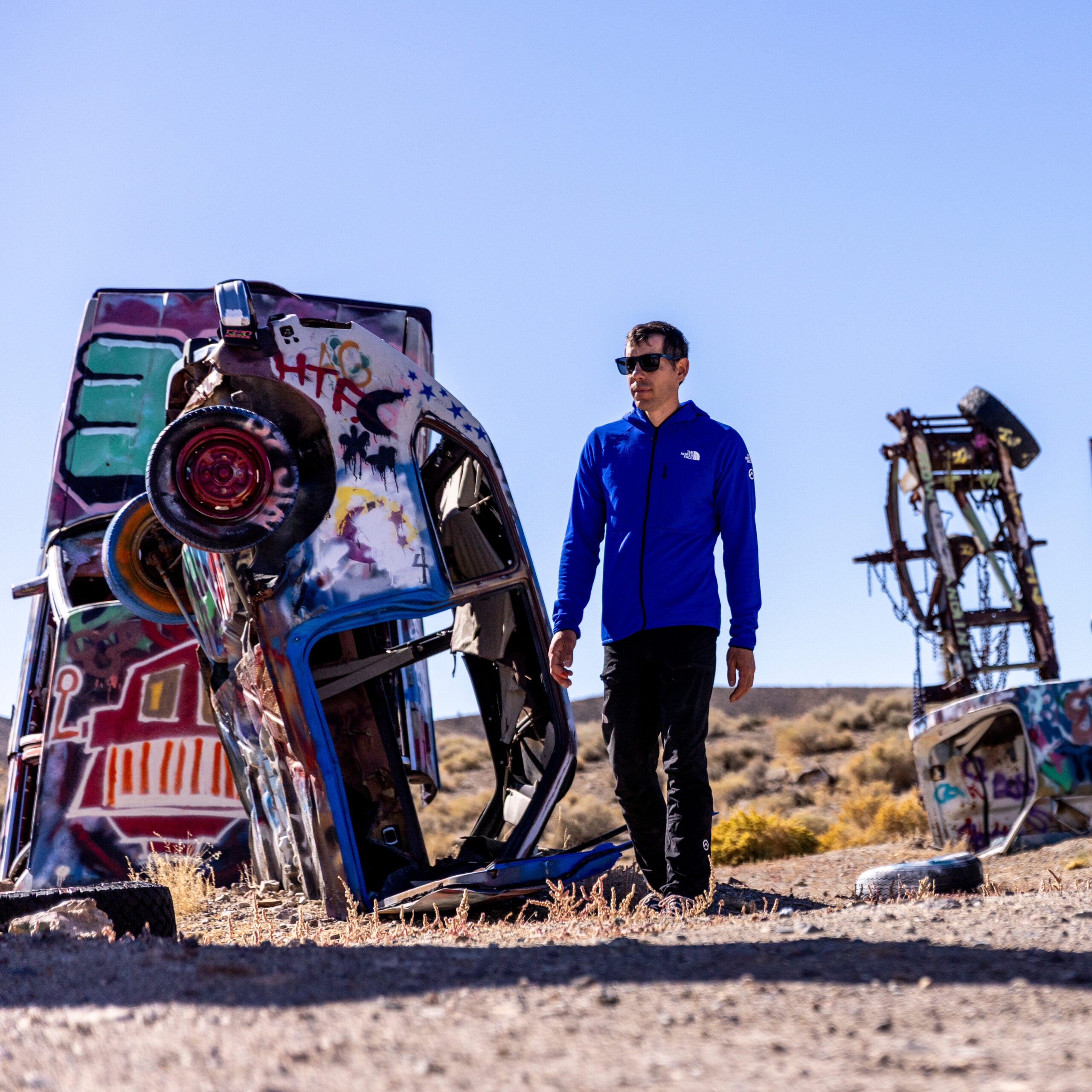 Honnold explores Nevada's weird and wild destinations in his new show (Photo: Morahan Visuals)
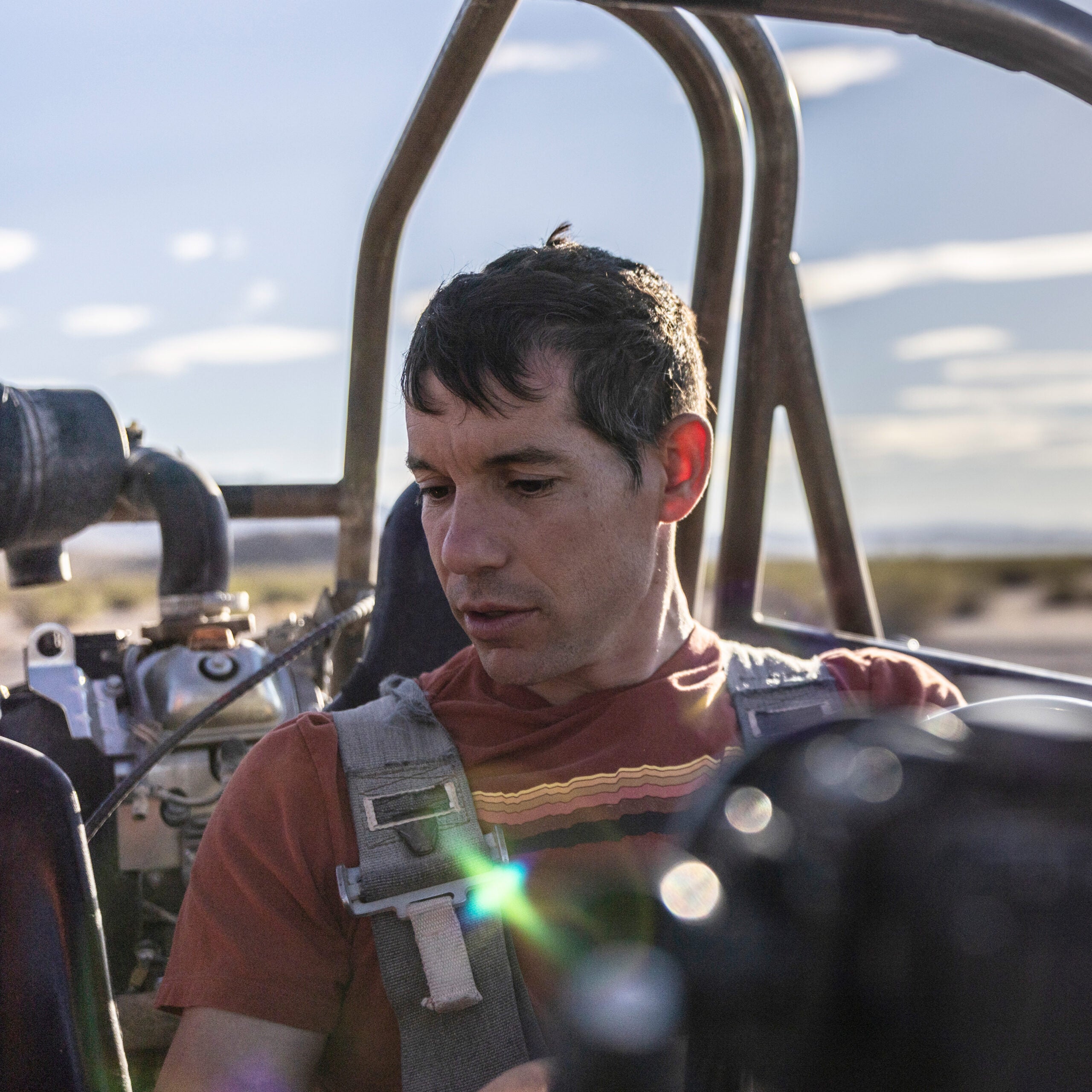 Not all of Honnold's new adventures include climbing (Photo: Morahan Visuals)
In recent years, Honnold has spoken at great length about his process for assessing a media project to pursue. He must actually want to climb the mountain at the heart of the project. He must have some type of emotional or personal connection to the quest. And, perhaps most importantly, the entire ordeal must fit into the demands of his family. And that means he’s reluctant to travel to far-flung corners of the world for months at a time to ascend a peak.
“If I’m going to spend that much time away from my family, I want the project to mean something to me personally,” Honnold said in our interview. “These days, I try to spend as much time close to home as possible because of my kids. It’s the right time in my life to do this.”
That’s one of the reasons why Honnold decided to do Get a Little Out There. The show takes Honnold to different parts of Nevada—many of the destinations are just a short drive from his home.
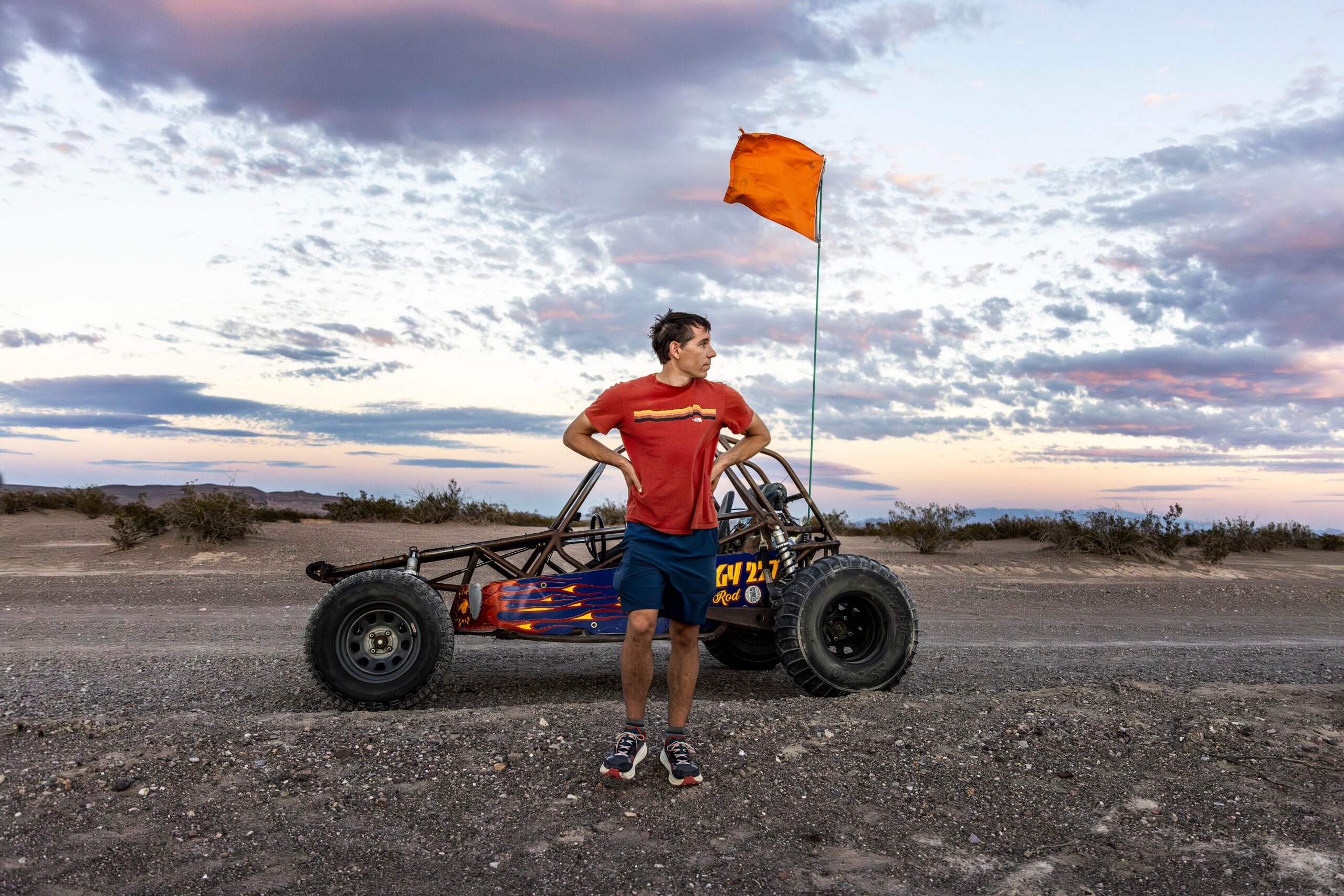 Honnold didn't have to travel far from his home in Las Vegas for his new show (Photo: Morahan Visuals)
What’s your favorite climbing route in Nevada?
Maybe the Rainbow Wall, like the original route up the Rainbow Wall in Red Rock. If I have to choose one off the top of my head, that’s it.
What’s your favorite Nevada spot for a camping trip?
There are so many, from the Tahoe basin to the White Mountains. We don’t really camp; we do the van life thing and go climbing. I’ll go with the Tahoe Basin.
What’s your favorite outdoor family activity in Nevada?
Our family activity is hiking. We love hiking as a family, which usually just means wandering around adventuring and looking for cool stuff on the trail and going to cool places. We do a family hike every week.
How do you get your kids to overcome that 15-minute mark when most kids melt down or get bored?
You limit the size of their backpacks, sometimes you carry or cajole, and you just do all of the things to keep them moving. When they complain, I’m way too tired, they’ll forget about it and be fine. And you’re like, “You’re not really tired; you just need to get excited about the thing you’re doing.” I try to optimize for hikes that are an adventure with fun things to do. You go to a cave. Or you walk for a little bit and then scramble up a mountainside. Activities that have real bang for the buck for a kid. Adults like walking far distances, but kids just don’t. So, not too big a walk with some fun features for them to play on.
What’s your favorite wacky destination in Nevada?
The International Car Forest is pretty cool. I like that you can just drop in, there’s nobody there, you don’t pay for anything, it’s just a place you can explore at your own leisure with no rules. One of the beautiful things about living in Nevada is that there are so many cool, wide-open spaces, and this is definitely one of them.
What’s your next big climbing project?
I have my own personal climbing plans in 2026. I want to do some climbs in Yosemite on certain routes. As far as big media projects, I want to keep doing the things I’m doing. I love traveling in Nevada for the show, touring in my home state and having an adventure with my friends. As far as work things go, that’s pretty good.
This interview was edited for length and clarity.
Comments (0)