
Remember me






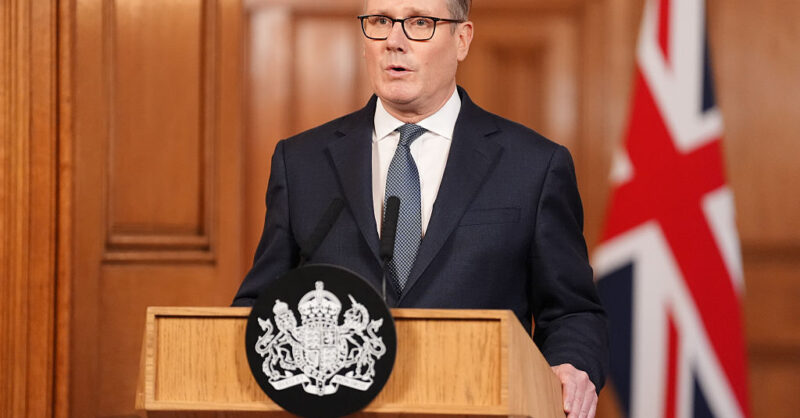
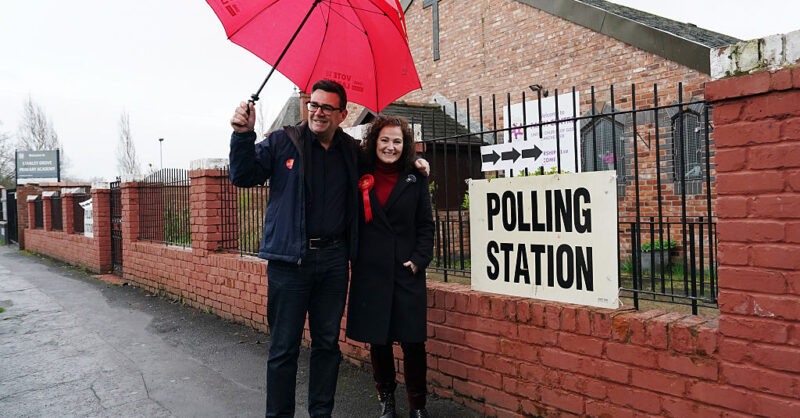

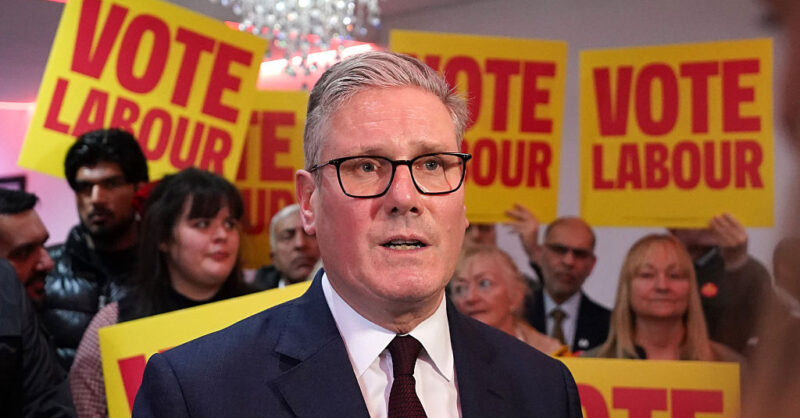
The dust is settling on the Gorton and Denton by-election, which saw Labour relegated to third place behind Reform and a triumphant Green Party, which won its first parliamentary by-election.
There are a few lessons from this election. The one that will be most discussed most over the following days and weeks will be that the Labour government is deeply unpopular even in places that were among its safest seats at the last general election. A hard-fought ground game, a good candidate and campaigning visits from the Prime Minister could not hold back a historic 26 per cent swing to the Greens.
Another lesson is that the Greens have much broader appeal than was previously thought. For years they have been plugging away as a protest vote that won around 10 per cent in by-elections, almost regardless of the wider political weather. Now they have managed to win one and by an impressive margin, capturing 41 per cent of the vote.
The last lesson, but perhaps one of the most significant as we look towards the next general election, is that dislike and/or fear of Reform UK is a powerful motivator. Since it started topping opinion polls in early 2025, Nigel Farage’s party has faced three electoral tests under first past the post. In Runcorn, it won by six votes. In the Senedd by-election for Caerphilly, the party lost to Plaid Cymru, the progressive alternative to Labour in that seat. And in Gorton and Denton, it lost to the Greens who held an equivalent position.

Subscribe to the New Statesman today for only £1 a week.
In all three by-elections, turnout was comparatively high – in Gorton and Denton turnout was just 0.2 percentage points lower than in the 2024 general election. If Reform continues to lead the polls into the next general election, it may be one of the highest turnout contests in living memory as anti-Reform voters try to stop the party forming the next government.
But in the following days and weeks, all attention will focus on the Parliamentary Labour Party. With the Prime Minister once again weakened, the 404 Labour MPs in the House of Commons will now decide the future of Keir Starmer’s leadership and of the direction of this government. How have they reacted to the result?
As is usual on the morning after a by-election, on Friday we were flushed with takes from politicians and pundits about what the result meant. But some Labour MPs, loyal to the leadership, are feeling less than introspective.
Says one: “It’s disappointing but the turnout wasn’t as high as I was expecting and when you look at us and the Greens, the difference between 15k and 10k isn’t huge. You can’t just say this is all because of national stuff. In that seat we had a lot of trouble on Gaza.”
There are those moderates who concur with the Prime Minister that such results are the price of incumbency. Says one: “It’s not the end of the world. We’ve gotta get behind Keir. I don’t wanna hear from the PLP. I’m sick to death of the noise. Politics is difficult. Politics is hard. You don’t just give up and say change the leader. You go out and deliver and push the message because our message is clearly not cutting through.”
Says another: “Nobody in the current Labour Party will be able to lead us and deliver. I support Starmer.”
The PM has already tried to head off recriminations with a letter to Labour MPs. He said: “It hurts, but this is the kind of result that we have often seen parties of government face.” Starmer also criticised the Greens as a divisive party with “extreme policies”.
It was not received by universal acclaim in the PLP. Said one MP: “Repeating the lines about the Greens that spectacularly failed in the by-election does not seem a smart move.”
It is worth remembering that, despite what Starmer says, it is not a by-election rule that the governing party must come a bad third in a seat it won comfortably at the last election. In the by-elections of Tony Blair’s first term, from 1997 to 2001, Labour held all the nine seats it had won in the previous general election landslide.
Starmer’s allies might say that comparing him to Blair is unfair. But isn’t that exactly the point? This result will be interpreted – if not totally, then at least to a large degree – as a reflection of the PM’s limitations as a politician.
Long-standing critics of Starmer who have long been calling for a left pivot from the government have now redoubled their efforts. They will use the Greens’ surge as evidence that this is necessary (their opponents on the right of the party, meanwhile, will urge caution and say that Gorton and Denton is not the country at large).
But the question of a leadership election remains something of a taboo, with a widespread feeling across the different wings of the PLP that there is no obvious candidate to replace Starmer right now. The situation has not changed since Scottish Labour leader Anas Sarwar called for Starmer to step down and no one heeded his call.
“I still think that, post-Anas, any move from Wes or Angela is really difficult and fraught with risk,” says a Labour MP from the 2024 intake.
Instead, change at the top is more likely to take the former of a reshuffle, which one Starmerite says will “definitely” happen in the coming months. Another MP said: “They need to do a reshuffle. It’s obvious. This is not just because of the by-election but wider failures of comms and delivery. There are questions for the whole cabinet.”
A soft-left MP told me: “It’s pretty obvious to 90 per cent of the PLP what needs to be done: just be fucking progressive. We don’t need to change leader to do that but it’s down to him now.”
MPs in once-safe urban constituencies in the north and Midlands are feeling the heat after watching the Labour vote squeezed from left and right. And it is not just MPs in seats like Gorton and Denton who are concerned by the result. One, in a historically Tory seat that Labour clinched last time, said that the by-election represents “a realignment in British politics”.
Then there are those in inner-city seats who enjoy support from large progressive voting blocs and face no threat from Reform. As they look towards the next election, this result also bodes ill. They are now looking at a straight fight with the Greens. In London, for example, where the Greens are expected to do well in the May local elections, Zack Polanski’s party could emerge as a robust left opposition to Labour.
Others have taken today as an opportunity to bang the drum for Andy Burnham and rake over the coals of the NEC’s decision to block him from standing in the by-election.
Andy McDonald – who was once a shadow cabinet minister under Starmer – said: “The complacent response now would be to say governments lose by-elections. That would be a mistake. The party has to come to terms with the reality that factionalism fails the party and more importantly fails the country and it needs to be abandoned.”
It wasn’t just the Campaign Group and those in its orbit criticising “factionalism” in the form of the NEC’s decision to block Burnham. The Blue Labour group similarly placed the defeat at the door of “the Labour right”.
But some are slightly more nuanced. One moderate put it to me thus: “Andy Burnham is great on the doors and the voters give him a lot of weight. The thing is, yes, if he had stood we would have won. But is it right to then put into the jeopardy the mayoralty? The mayor is a much more significant role. There’s no two ways that Andy would have won it.”
The left of the party was vocal in its anger on Friday, speaking on the record to journalists about why this by-election must trigger a change of direction and even a change of leadership. Brian Leishman, to whom the whip was only recently restored after he was suspended for persistent rebellion, has already said of the PM “he’s got to go”.
But the overwhelming sense I got from talking to a broad range of Labour MPs in the aftermath of this result is that the by-election has reinforced the prior preferences and analyses of most of the PLP.
As a former Starmer adviser puts it: “Clearly Labour need to get much stronger and better in government to win over voters they’re losing on left and right. But people calling for leadership change wanted that anyway.”
This defeat will take on more significance if it results in those who hitherto backed Starmer – whether out of personal loyalty or a feeling that there is no better alternative – deciding that they have given up on him.
[Further reading: Inside the Greens’ “seismic” Gorton and Denton win]
Content from our partnersRelated

Comments (0)