
Remember me





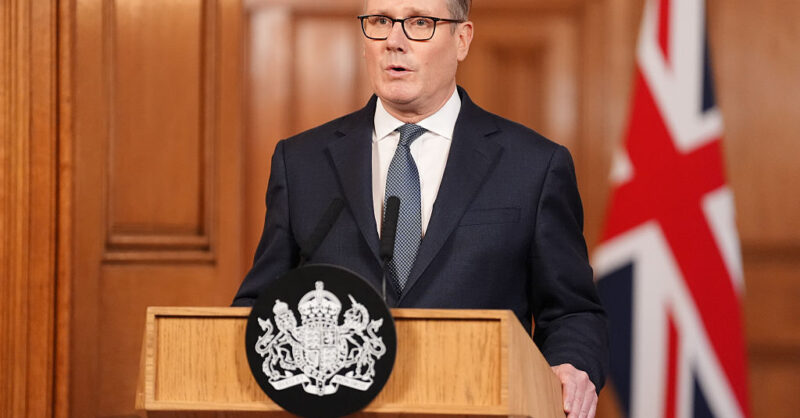

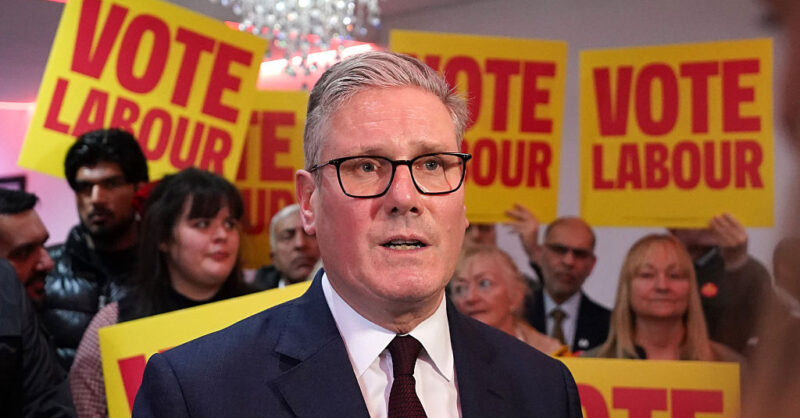
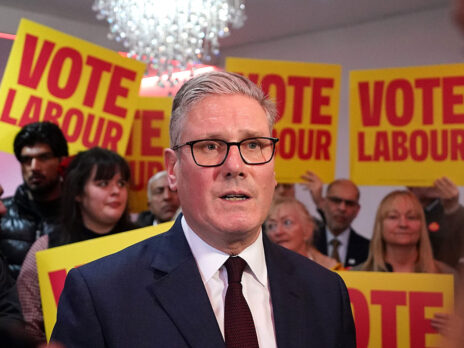
In a moment when all the country cared about was ridding the nation of the Tories, Labour held its breath in 2024, said little and snuck over the line for a win that was as big as it was shallow. It’s been downhill all the way since. A government offering too little to help struggling families today, offers even less hope for tomorrow. Last night’s seismic Gorton and Denton by-election result is the final nail in the coffin of a politics that kisses right and punches left. The result is a disaster for Labour. The worry is not just the loss of a seat, but the self-inflicted forfeiting of the party’s place as the primary home for progressive voters.
There was a straw in the wind in the Welsh Senedd by-election in Caerphilly at the end of last year when Plaid Cymru came from third to first, just as the Greens did yesterday. In both seats voters decided Labour was no longer the progressive alternative to Reform. This could be a seismic moment of realignment on the progressive wing of the nation’s politics.
It is not just that Labour has lost over half its share of the vote since the general election, more than half of its members, and has a leader who’s ratings are worse than Liz Truss, it’s that the party has lost its soul. Or rather its soul has been expelled by a small hyper factional clique, whose prime goal wasn’t to transform the country but ensure the Labour Party would never again be led from the left. To achieve that goal they had to extinguish the hope and the possibility that a progressive case could be put to the country and won. For them the 2017 general election results, which saw Labour win 40 per cent of the vote on a solid social democratic platform had to be airbrushed from history.
In Gorton and Denton, the Greens swept Labour and Reform aside on exactly that kind of ticket. Listening to Hannah Spencer’s victory speech, in which she too got 40 per cent of the vote, was like hearing what Labour could and should still be. The floodgates are now open and Labour stands not just devoid of policy but of principle and purpose.

Subscribe to the New Statesman today for only £1 a week.
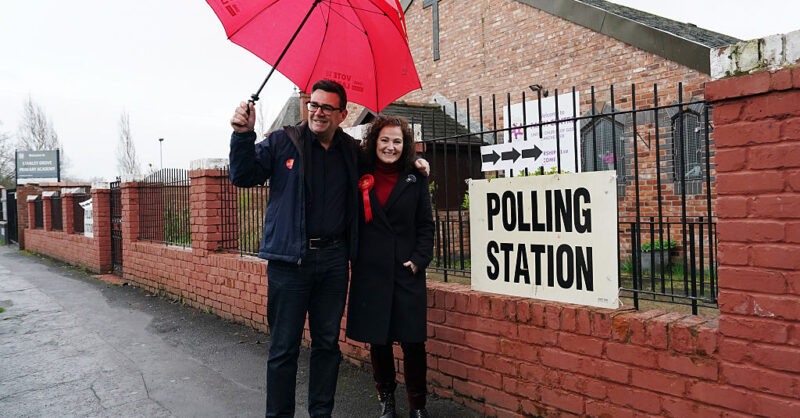
Even at the last-minute things could have been different when Andy Burnham, the immensely popular Mayor of Greater Manchester, threw his hat into the by-election ring. Confident given the conversations that he had held that his name would at least go forward to a members ballot, he was rejected at the first step in a blocking manoeuvre led by the Prime Minister himself. It was a blatant case of personality before party, before country. There was a widespread consensus and polling evidence that only Burnham could have won the seat for Labour. Lame and inaccurate excuses were put up about the cost of a Mayoral by-election, while everyone knew the truth that Burnham offered a popular and progressive alternative to Labour’s future. The Fateful Eight on Labour’s National Executive Committee who lined up behind Starmer to block Burnham, allowing the first of potentially many seats to fall to the Greens, must now be regretting their short-term and short sighted decision.
Because this is Labour’s worst nightmare, a serious electoral challenger to its left. No longer can Labour claim this is a ‘conservative country’ that can only be won from a reassuring safety first centre-right position. And no longer can it say that a vote for the Greens is a wasted vote. Indeed, Labour’s whole re-election strategy is now in tatters. It was to tell the nation that however much it disliked them, it disliked Nigel Farage and Reform even more and would have to hold its nose and re-elect Labour. No one else could defeat Reform. It was always a flawed political strategy, because it denied the very possibility of winning on a progressive mandate, and therefore just slowed the rate at which the country moved remorselessly to the right. Now it’s been proved to be an electoral failure. The vacuum on the left that Labour’s shift to the right opened up has been filled. Voters will head to the polls in May in England, Wales and Scotland knowing that there are progressive alternatives to Reform – and it’s not necessarily Labour.
In the wake of this historic by-election, two big challenges now need to be confronted. First, Labour must look at itself and decide whether it wants to be a viable part of the now complex eco-system of progressive politics in the UK. The most important step here is for the Labour leadership to accept the party memberships support for proportional representation. While Keir the Chameleon once switched effortlessly and cynically from Corbynite to anti-Corbynite, there looks no way back for him in the medium term. But before Labour jumps into a premature leadership election, it should debate what kind of party it now wants to be given the utter failure of its existing strategy and the existential challenge of the Greens.
The second and linked challenge is how progressives come together and defeat Reform. While the Greens have done spectacularly well it’s hard to see how they become the majority party at the next election. It is not about one party winning 40 seats but progressive together winning 400. The two-party stranglehold on the UKs politics looks broken and only a progressive alliance can defeat Reform and the causes of Reform. But the chaos of fragmentation has to be avoided along with the threat of progressive tragedies in which the left vote splits and let’s a potentially united right in on a tiny fraction of the vote. It is interesting to note here that Zach Polanski is on record as saying Andy Burnham would be a game changer in terms of potential cross party cooperation.
The right-wing hyper-faction which has sadly and inevitably brought Labour to its knees is now mired in scandal as well as political and electoral failure. They blocked Burnham but welcomed back Mandelson. They mimicked Reform and opened the door to the Greens. The floodgates have been opened, and Labour’s right and Keir Starmer opened them.
[Further reading: Green Party takes Gorton and Denton, pushing Labour to third]
Content from our partnersRelated


Comments (0)