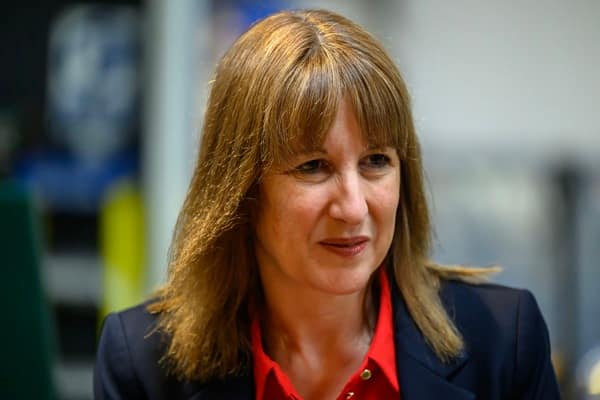
The Chancellor, Rachel Reeves, has implemented a series of policies that have raised concerns regarding their impact on individuals facing the rising cost of living in the UK.
According to Blick Rothenberg, a prominent audit, tax, and business advisory firm, these policies could significantly affect ordinary citizens.
Winnie Cao, a partner at Blick Rothenberg, explained, “The Chancellor asserts that individuals are now better off by £1,000 per year.
However, this claim must be viewed in light of the fiscal drag created by the decision to freeze personal allowances, rate bands, and tax thresholds until April 2030.
This policy, coupled with potential short-term inflation, ultimately suggests that many individuals may continue to feel the financial pressures associated with the increasing cost of living.”
She elaborated on the situation, stating, “On a more optimistic note, the rise in tax revenue generated by these policies should facilitate the allocation of funds to critical areas that enhance quality of life, promote economic growth, and ultimately lead to increased incomes for the general population.”
Cao pointed out that the Chancellor’s discussion concerning investments in infrastructure is particularly timely.
She emphasised that the UK’s infrastructure is currently lagging behind that of other economically advanced nations, such as Singapore and Japan. “There exists an urgent need to address these infrastructure deficiencies to elevate the UK’s status as a desirable location for investment, residency, and business operations,” she stated.
While recognising the government’s decision to invest more in infrastructure amid shifting international dynamics, Winnie also advocated for the introduction of more favourable tax and social security measures specifically for military veterans. “It’s essential that those who have served in the Army, Navy, and Air Force receive appropriate fiscal support post-service. Moreover, employers should be incentivised to hire veterans, recognising their sacrifices and contributions,” she explained.
Winnie underlined the importance of marketing the UK as a prime destination for overseas investment, especially in light of recent global conflicts. “The UK has established itself as a stable jurisdiction in both legal and political contexts, which is an attractive quality for international businesses. We should actively promote this unique position as a ‘business haven’ while juggling our responsibilities among other major global players,” she added.
To further stimulate economic growth, Winnie recommended that Chancellor Reeves consider reducing the Corporation Tax rate. She noted that this tax currently accounts for approximately 8% of the government’s revenue intake. “A headline Corporation Tax rate lowered to 20%, compared to the current 25%, could distinguish the UK favourably from other G20 countries. This reduction could serve as a powerful incentive for attracting both domestic and foreign investments,” she argued.
Winnie also highlighted recent reforms by the Financial Conduct Authority (FCA) that have streamlined the listing criteria for companies on the London Stock Exchange. She noted the significance of the FCA’s recent announcement allowing the acceptance of Chinese accounting standards, which is expected to encourage participation from companies in China, the world’s second-largest economy.
Furthermore, she drew attention to the financial struggles faced by the UK’s prestigious higher education institutions over the last year. “If the UK aims to capitalise on the talents and soft power emanating from its higher education sector, the government must rethink its approach to attracting overseas students. Currently, the Post-Study Work visa is limited to 18 months, and the associated work visa costs are prohibitively high. The forthcoming immigration white paper should focus on encouraging highly skilled workers to remain in the UK, alongside measures to reduce the financial burden on employers who seek to hire international talent,” she said.
Lastly, Winnie addressed the critical role that entrepreneurs play in driving economic and innovative growth in the UK. She expressed concern about the noticeable exodus of entrepreneurs in the past 24 months, particularly following the announcement of the FIG regime and the introduction of a cap on Business Property Relief for Inheritance Tax. Many entrepreneurs have relocated their businesses to Dubai in search of more favourable conditions,” she noted. Although recent international geopolitical developments may provide some incentive for these entrepreneurs to return, Winnie strongly believes that to reverse the adverse effects experienced by the entrepreneurial community, the government should seriously consider reinstating the Business Asset Disposal Relief to the pre-March 2020 threshold of £10 million and establishing a competitive tax rate of 10%. This would be a crucial step toward revitalising the UK’s entrepreneurial ecosystem.









Comments (0)