Fears of oil spill disaster grow as Iran conflict hits Gulf shipping
An ecological disaster may be looming in the Persian Gulf, where attacks on oil tankers crossing the Strait of Hormuz threaten one of the region’s richest marine ecosystems in an area already familiar with such risks.
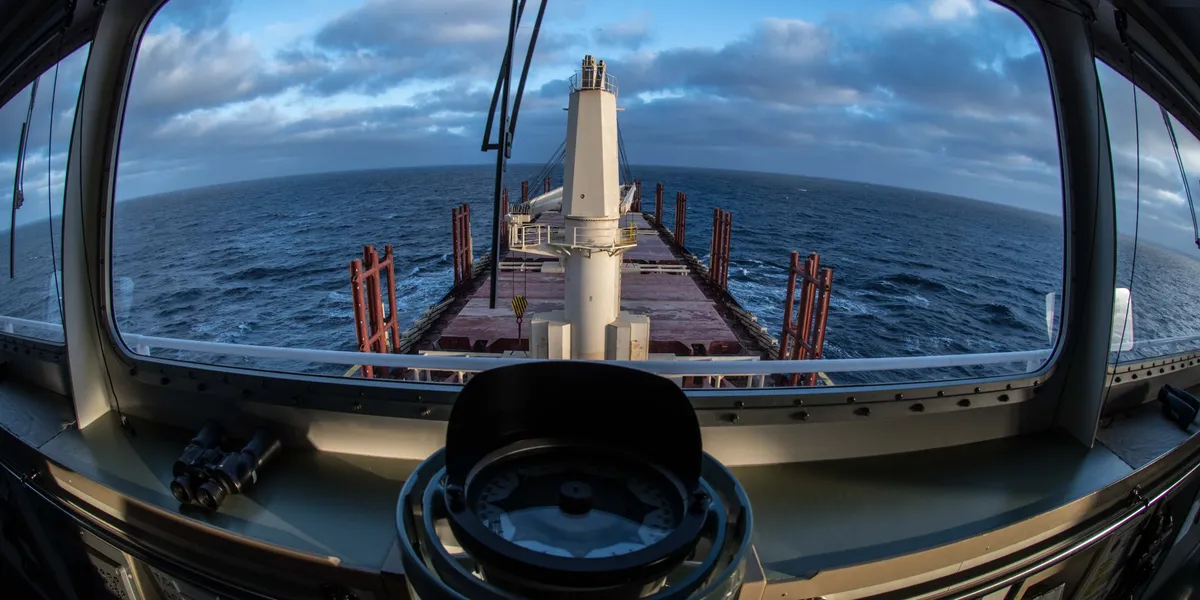
The escalating conflict with Iran has moved to the Persian Gulf, with a senior commander in Iran’s Islamic Revolutionary Guard Corps (IRGC) warning on Monday that Iran would “burn any ship” that tried to pass through the Strait of Hormuz, a key route for global oil and gas shipments.
The consequences for the environment could be dire, as the conflict increases the risk of oil spills and pollution in the region.
“Any attack or incident involving oil tankers in narrow and heavily trafficked waterways like the Strait of Hormuz carries a real risk of spills,” the campaign group Seas at Risk told Euractiv. “It can cause long-lasting damage to fragile ecosystems and coastal communities.”
Long-term impact
At least three ships were attacked on 1 March near the Strait of Hormuz, according to the UK Maritime Trade Operations (UKMTO).
The number of ships affected has climbed to five, according to the UK-based Conflict and Environment Observatory (CEOBS), a non-profit group that has released a snapshot the environmental toll during the first days of military action.
The organisation is now working to establish whether the targeted oil tankers MKD Vyom, Stena Imperative, Skylight, Ocean Electra and Hercules Star have spilled oil into the Persian Gulf.
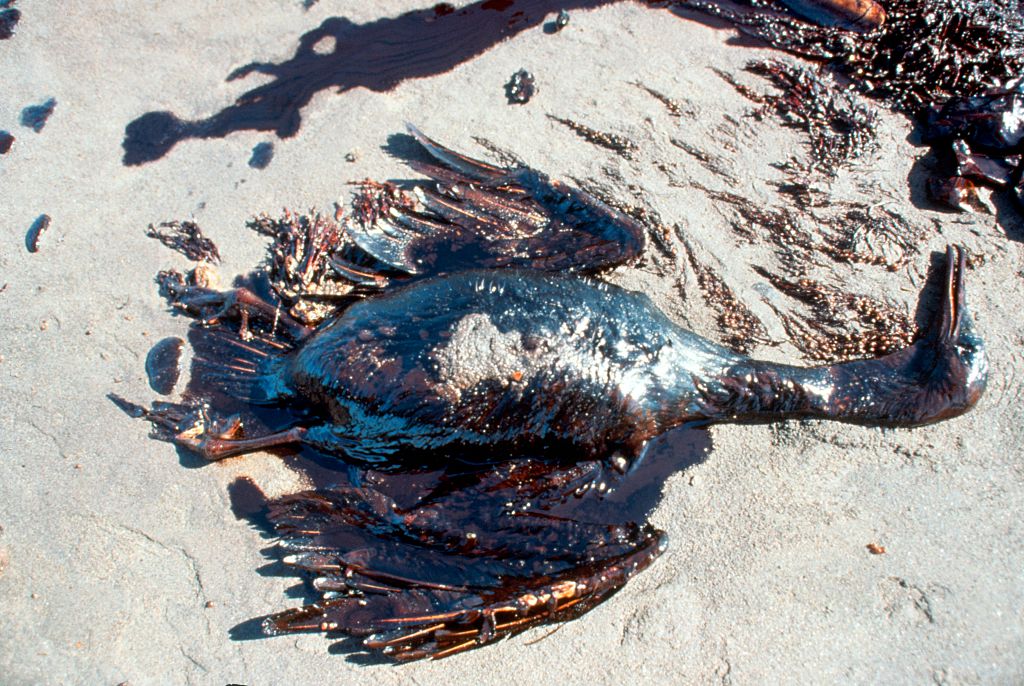
The impact of oil spills is devastating for marine wildlife and habitats, as sticky crude can persist in the environment for months or even years, according to the US National Oceanic and Atmospheric Administration (NOAA). In 2016, 25 years after the 1991 Persian Gulf War, CEOBS noted that the consequences of what is considered the world’s largest-ever oil spill had not yet been “fully addressed”.
Back then, the release of as much as 11 million barrels of crude oil into the Gulf damaged 800 km of coastline. Even 12 years later, in the mid-2000s, the US geochemist Jacqueline Michel revealed that vast amounts of spilled oil were still present – largely because it had an unusually high capacity to seep deep into sediment on the seabed.
As just one example of the ecological cost, scientists reported that about 30,000 grebes and cormorants perished after oil coated their feathers.
There are clear warning signs that the renewed conflict in the Middle East could have similar consequences. Last Saturday, US President Donald Trump vowed to “annihilate” Iran’s navy. Eleven vessels were reportedly “damaged or sunk” on Tuesday alone, CEOBS noted.
The US Department of Transportation initially recommended that vessels “keep clear of this area if possible”, as IRGC General Sardar Jabbari warned that Iran would target oil pipelines and “not allow a single drop of oil to leave the region”.
Economic focus
This halt in traffic in the Strait of Hormuz – through which nearly 20% of the world’s liquefied natural gas and about a quarter of global crude oil shipments pass – is not to China’s liking.
“The Strait of Hormuz and its adjacent waters are an important international trade route for goods and energy”, the Beijing’s foreign ministry spokesperson Mao Ning said on Tuesday.
China urged “relevant parties to immediately stop military operations, avoid further escalation of the tense situation and prevent regional turmoil from causing greater damage to global economic growth”.
Reactions in Europe so far have similarly focused on limiting the economic damage caused by rising oil and, in particular, gas prices. Environmental risks have so far received little attention.
Shipping firms around the world have halted traffic through the Strait. The Japanese container company Ocean Network Express (ONE) announced on Monday that it was temporarily suspending bookings to and from the Persian Gulf.
As well as halting passages into and out of the Gulf, Danish shipping giant Maersk has already rerouted cargoes around the Horn of Africa to avoid the Red Sea and Suez Canal route amid fears of instability in the wider Middle East.
Faced with increasing risks, insurance companies have cancelled war-risk coverage for vessels. According to Reuters, these changes will take effect from 5 March for companies Gard, Skuld, NorthStandard, the London P&I Club and the American Club.
However, Trump has signalled he wants to restart seaborne freight, especially oil and gas shipments. On Tuesday evening he announced the US would provide insurance cover and military escorts to ships passing through the Strait of Hormuz.
The stock of major American exporters of liquefied natural gas surged on the back of…
3 minutes
(rh, aw)








Comments (0)