Originally from Belfast, now long resident in Edinburgh, Cousins is previewing four extracts from his new magnum opus – an ambitious 16-hour, 16-episode-long mega-project called The Story Of Documentary Film, produced by Hopscotch Films in Glasgow.
I ask if he remembers the first documentary that made an impression on him, and he’s quick to zoom in on his childhood.
“I was brought up in a home where there was never a discussion about culture or creativity. I mean, I didn’t even know documentaries were directed.
“Growing up in Belfast, there must have been a Panorama about the Troubles, so when I was a wee boy, maybe about age seven, I remember seeing dead bodies from Belfast in coffins. And there was the shock in that – to see fear and war on TV.
“I knew that there was fear in our community, in our city, but to see that TV could report this was probably the first moment I became aware of documentaries. That documentary had this power to shock. Combined with that, it had a moral seriousness.”
Back in his Edinburgh flat on a Zoom call, I remind him of the Q&A session from Berlin and his pride in showing a large paper chart that outlined the enormous planning behind The Story Of Documentary Film: “I always use charts on big sheets of paper – I’m a visual person more than a verbal person – so any project must start, almost like a child’s, with a big piece of wallpaper to get the shape of it.
"I realised I wanted to tell the story broadly chronologically. I could have done it by themes, but I felt most people don’t know this chronology, so I put the decades along the top from the 1890s to 2020s and then down the side was the most important bit – the parts of the world – the countries, and the continents. It was crucial for me that the project was international and not Eurocentric or Atlanticist.”
He’s passionate that Africa, India and South America should be represented. And he’s an internationalist suspicious of those who say the greatest movies are all from America and Europe.
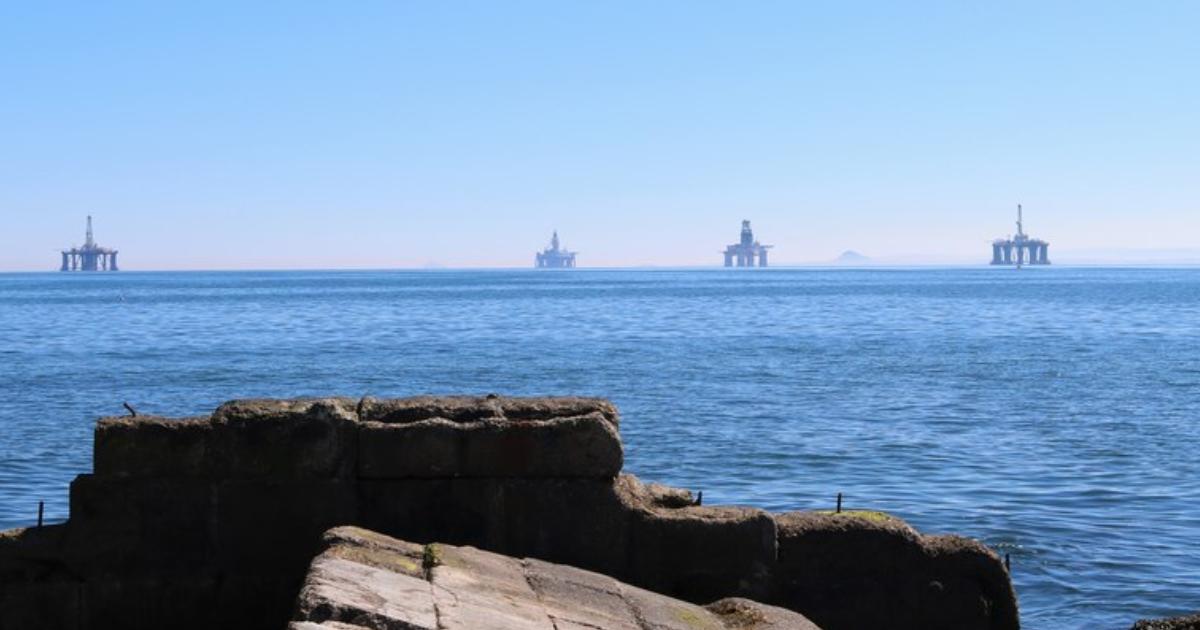
We talk too about how he has situated the decades quite specifically – rather than randomly – as for example using Egypt when he’s talking about the 1950s, the age of decolonialisation. Or America in the 1960s, the time of Black Panthers. As for the 1970s, he homes in on Scotland because of the arrival of North Sea oil and the first UK feminist collectives being set up in Edinburgh.
We digress into talk on Scottish directors and Scottish documentaries …
“Scotland has always made good documentaries, and it’s exactly 100 years since the sainted John Grierson came up with the phrase ‘documentary’.
“You think too of Harry Watt and Night Mail (1936), most people don’t know he was an Edinburgh lad. In the 1950s, there was Margaret Tait.
“More recently, there’s Emma Davie and Graham Fagen too, with his Robert Burns film, The Slave’s Lament. In each era, Scotland has made interesting work.
“One of my favourites is Thomas Riedelsheimer’s film on Evelyn Glennie – Touch The Sound. We’ve always done good work because the industry in Scotland has never been Hollywood; it’s at the lower budget end: fertile ground.”
I ask him to expand on the early rules of documentary.
“It was a new type of consciousness. There was fictional cinema of course, but no-one had taken a camera and just pointed it at, say, the Pyramids, and asked, ‘look at this space and time, this simple movement, this elsewhere’. Quite simple but quite moving.
“Everyday life elsewhere: where human beings could look at other human beings doing their daily business. Documentary’s implicit ability to show other lives in real time is magnificent.”
We talk of the quotidian and how documentary says “Look!”, from Andy Warhol observing someone asleep to a TikTok clip he talks about featuring a young Scottish woman who’s just bought a Chinese takeaway. Pointing at the meal, she’s asking us: Check out the scran. He compares these episodes of micro-footage to the early experiments of the Lumiere brothers.
“It’s witness bearing that says: look at what I’m about to eat in Glasgow!”
Unpretentious. So, this is real life. We move on to another Glaswegian – the artist Douglas Gordon – and a new documentary on his life and world directed by Finlay Pretsell.
Gordon once made a terrific study of an elephant, and this leads us to chat about animals in The Story Of Documentary Film.
There’s elephant imagery here too, where one is about to be electrocuted and, in another disturbing sequence, we see a horse killed at a knacker’s yard. Was this a deliberate rejoinder to the arguably overly aesthetic take on animal life as depicted by David Attenborough’s films?
“I’ve got some of that kind of imagery on show as with Luc Jacquet’s March Of The Penguins (2005), but no, I wasn’t trying to obliquely comment on TV documentaries about animals.”
I’m awestruck at the range of The Story Of Documentary Film, and ask him about his omnivorous interests. Was anything off-limits?
“I haven’t used any pornographic imagery. Or ‘mockumentary’ because that involves actors. But that’s about it. I’ve tried to look at the full spectrum of life – the high and the low and the everything in-between, the public and the private. A portrait of the last 120 years through this medium.”
I tell him that what I’ve seen so far of his film reminds me of the idea we see our life flash before our eyes before we die.
“But I talk too in the other episodes about another big theme: the ‘unseen’ – the fact that film didn’t catch the life of Jesus Christ and only very little of the traumas at Auschwitz. But … to be uplifting again, I love that phrase from Robert Louis Stevenson: ‘A thousand coloured pictures to the eye’. So, as such, you can see the project as one big, long kaleidoscope of visual moments.”
I ask if there’s a risk of desensitisation through over-exposure to traumatic imagery, as with the terrible scenes from Gaza and Ukraine?
“I suppose people can become desensitised if profoundly disturbing imagery is repeated in certain contexts. Hence, Claude Lanzmann’s strictures against visualising the horrors of the Holocaust in his documentary Shoah (1985). It’s true that the context might flatten the moral seriousness of something. But if you see atrocity footage in the right context, it’s as if you’re seeing it for the first time.
“Virginia Woolf and Walter Benjamin talk about how we might re-encounter the reality of something that is very familiar to us. How do we avoid becoming blasé?”
He reminds me that he didn’t think it necessary to show the actual electrification of that elephant.
“You show things if it’s necessary, but you don’t want to hurt people. But we can’t protect ourselves from atrocity, and it often comes in unexpected ways.”
First do no harm. We talk of the non-western documentarians he favours.
“About three-quarters of the project is from the non-Western world. First, there’s the Indian Mani Kaul and his masterpiece Siddeshwari (1989) about a Hindi singer. I’d also champion Anand Patwardhan and the great Japanese documentarians of the 1970s; it’s a global art form. Given the awful things going on in Iran just now, I’d also highlight The House Is Black (1963), a film about leprosy, by Forugh Farrokhzad. I’d mention too the Latvian Herz Frank and his film about a man on death row called The Last Judgement (1987). There’s so much! You could spend your life just watching great documentaries and still not run out of them!”
We close with a discussion about AI and its potentially damaging effect on truth-telling. I ask about documentaries and the nature of truth, and we both laugh at the crazy immensity of such a simple question.
“People have spent their whole careers and professorships asking that! Documentary is broadly centrifugal in its imagination – it’s interested in what’s outside ourselves. It’s generous. It’s a solidarity machine that helps us to understand the struggles of others.
That’s all good. But others have used it for bad reasons.
“Documentary can be on the side of the devil and the angel. It’s a technology. AI is a technology too, and it is scary, but I suddenly realised it’s a bit like photography when it arrived. Painters had to think quickly: ‘What can I do that it can’t do.’ This is exactly where we are with AI.
“I’ve taken its arrival as a creative spur to try and think more originally about this great art form. I try to make new connections about documentary, and I’m proud of that. AI should push people to be more creative. And do not use it to lie to the audience. You must say if you’ve used it.”