
Remember me






The UK Treasury issued a statement ruling out the immediate end to the Energy Profits Levy (EPL) to the Sunday National amid mounting calls from the Scottish Government for the tax to be brought to an end. Last Thursday, First Minister John Swinney said he wanted “an immediate end to that profits levy”, a day after calling its removal "utterly essential".
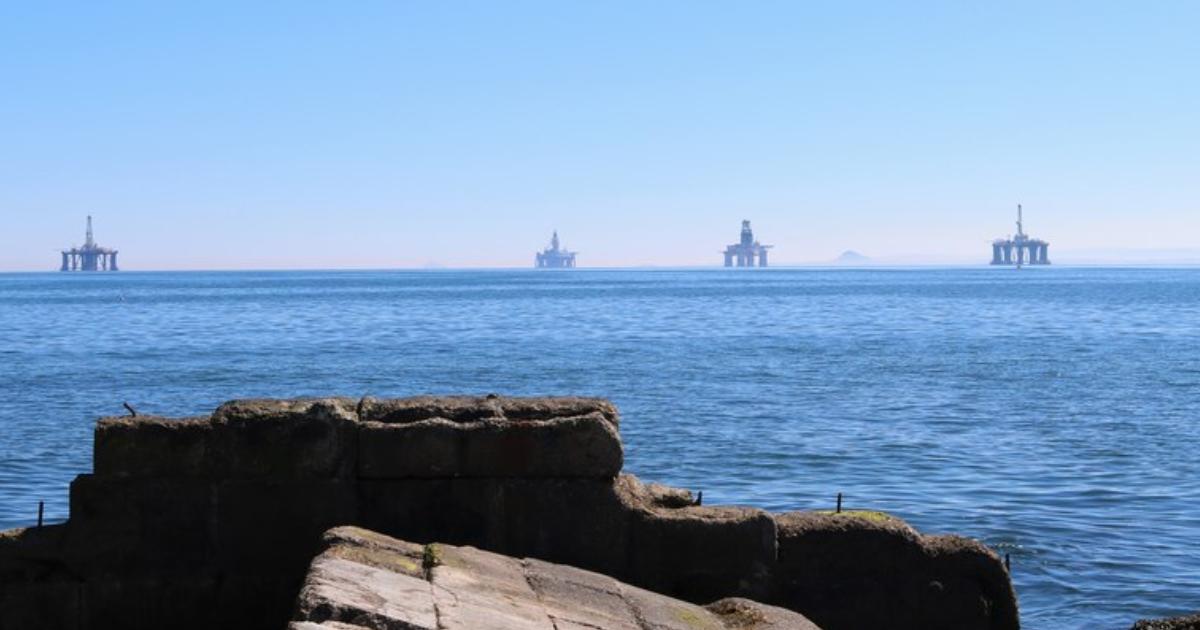
Introduced under the Conservatives in 2022, the EPL was an additional 35% tax on North Sea oil and gas profits, bringing the headline rate to 75%. After Labour took power in July 2024, it was increased by three points to 38%, putting the headline rate at 78%.
READ MORE: Scottish oil boom 'worth £1 trillion to economy', landmark study says
Unless oil and gas prices fall to “historically normal levels” for a sustained period, the levy is due to expire on March 31, 2030. However, in a meeting with north east business leaders last week, Chancellor Rachel Reeves signalled that she wanted to end the EPL before then.
A Treasury source said at the time: “It was a commitment she wanted to make this week. But the crisis in the Middle East has had real-time consequences on oil and gas prices, and it is right that we respond to this.”
Russell Borthwick, the chief executive of Aberdeen and Grampian Chamber of Commerce, argued that the “events in the Middle East strengthen, not weaken, the case for change” in the North Sea, and that expanded oil and gas production could “reinforce the UK’s energy security at a time of growing global uncertainty”.
The right time to end the windfall tax?HOWEVER, Dr David Toke, an energy expert at the University of Aberdeen, said that expanded drilling in the North Sea would not reduce people’s bills – and now is the “wrong time” to end the windfall tax.
“As this crisis lasts, they'll be getting shed loads of extra money,” he said of the oil and gas industry. “So I think this would be the wrong time to end the windfall profits tax. This is the time to have it.”
The US-Israel bombing campaign against Iran, which began on February 28, and that regime’s subsequent retaliation across the Middle East, has had an immediate impact on global gas prices, which under the UK’s marginal pricing system often set the price of electricity domestically.
The Strait of Hormuz – the sea passage between Iran and Oman through which 20% of the world’s energy is transported – has seen a 90% drop in shipping, and Qatar – which provides 20% of the world’s liquified natural gas (LNG) supply – has shut down production.
That has put sharp pressure on gas supplies and sparked huge price rises. On February 27, before the US-Israel attacks, LNG cost around 77p per therm, according to Trading Economics’ price tracker. It was at 133p per therm last Friday – a 73% price increase in one week.
For crude oil, prices rose from around $67 per barrel on February 27 to $86 per barrel one week later on March 6 – a 28% increase.
“This is exactly the kind of situation that the windfall tax is designed for,” Stuart Dossett, a senior policy adviser at the Green Alliance think tank, said.
READ MORE: Windfall tax causing 'decline' of Scottish economy, says John Swinney
“There is the potential for excess profits to be made by fossil-fuel companies over the coming period that will be paid for by businesses and households, so it is right that those are reclaimed and put towards some form of public spending.
“The windfall tax and the overall rate of tax on gas and oil extraction in the North Sea are not out of line with international peers, Norway, for example, [which also has a marginal tax rate of 78% on oil producers].”
Robert Palmer, the deputy director of the just transition campaign group Uplift, added his voice to those arguing for the EPL to remain in place.
“Why would the Chancellor choose to end a tax on windfall oil and gas profits, when they are set to make billions in excess profits as a result of the conflict in Iran?” he said.
Asked to respond to the comments from Toke, Dossett, and Palmer, a spokesperson for the UK Treasury said: “The Chancellor is of the same belief – now is not the right time to commit to an end of the Energy Profits Levy given the volatility in the market we’ve seen in recent days, but it remains her goal to end it and replace it when the time is right with a new mechanism that provides more certainty for the industry.”
The SNP accused the UK Government of having “betrayed Scottish energy workers” by declining to end the windfall tax in the Spring Statement, which Rachel Reeves delivered last Tuesday.
But Scottish Green MSP Patrick Harvie argued it was the right decision, saying that “the reality is that the windfall tax does not go far enough”.
“With oil prices soaring and those profits swelling even further, it is vital that the money raised is reinvested in clean technology, green jobs and cutting household bills; things the fossil fuel companies themselves will never choose to do,” he said.
READ MORE: BBC studio left silent after audience asked if 'UK should be involved in Iran war'
“As long as household bills are tied to fossil fuel prices, we will be hit by geopolitical tensions like Donald Trump’s illegal and immoral bombing of Iran and tied to repressive and authoritarian states like Saudi Arabia and Russia.
“It is far better for us to build a Scotland powered by homegrown renewable energy, which is the cheapest and most ethical energy available.”
Why do rising gas prices push up electricity prices?THE UK’s wholesale electricity market uses “marginal pricing”. This means that the most expensive generator needed to meet demand in a 30-minute period sets the price of every unit of electricity that is provided in that period.
Dossett explained: “That's the idea of marginal pricing, that the marginal unit that satisfies demand is the unit that sets the price for all units.
“What we have in the UK is that, more often than not, gas-powered stations are the marginal unit because they tend to be the most expensive, so it's gas stations that set the overall cost of electricity.”
READ MORE: If Scotland wants to be a nation that stands for peace, we must stand up to Trump
Dossett said that if the UK were in a period where renewable energy could meet demand, then it would set the market rate, and prices would fall.
“Clean energy really is our ticket to energy security here,” he said. “Crucially, it's already protecting families. Wind power reduced the wholesale day-ahead cost of electricity throughout 2024 by about a third compared to if gas had been providing that power instead.
“So having those renewables on the system is already protecting us from that volatility in gas markets, but there's obviously a long way that we need to go.”

