
Remember me

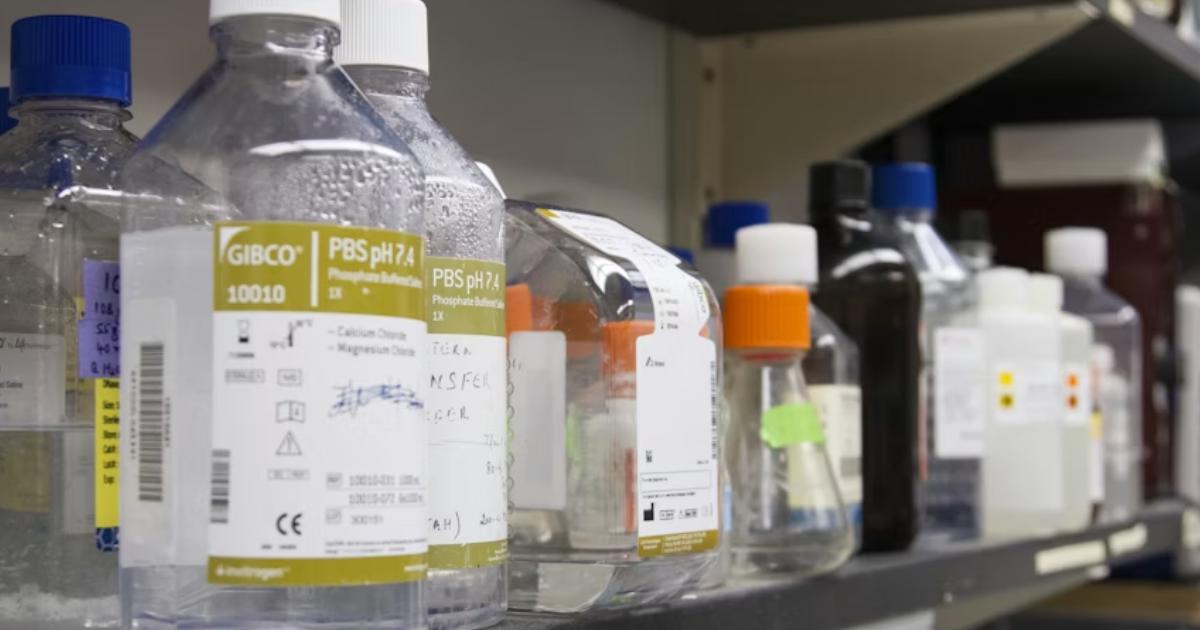


It seems simple, but that is why knowing which chemicals are hazardous is essential to using them safely and avoiding dangerous exposure. Without hazard information, workers don’t know what protections they need, public health experts can’t set limits for hazardous chemicals in food packaging, and environmental scientists struggle to make the case for bans on those chemicals that are destroying our precious wildlife.
Until Brexit, the UK was part of the European Chemicals Agency, which combines scientific data and expertise from 27 member states and manages a regulated process called classification. Once a hazard was recognised through classification, other regulations would pick this up and develop protections for workers, children, the environment, and health.
READ MORE: If Scotland wants to be a nation that stands for peace, we must stand up to Trump
Post-Brexit, the UK’s Health and Safety Executive (HSE) is now both the policy maker and the regulator for hazard classification in Great Britain (Northern Ireland still aligns with the EU to maintain frictionless trade across the island of Ireland). Whilst the new GB system looks like the EU’s on paper, it operates with far fewer resources.
The HSE was left with some big safety boots to fill – and unsurprisingly, they have admitted to struggling to do so.
To address this challenge, in June 2025, HSE proposed breaking the link between the EU’s classification system and the GB one, and instead copying decisions from all around the world. Health groups, environmental charities like Fidra, workers’ unions, and some businesses warned this could complicate and delay processes rather than streamline them.

Then, last month, the HSE announced the EU was the only place with similar rules to our own, so they would change the regulations to better enable EU alignment. However, the HSE didn’t share the full details of those new regulations.
Scottish Energy Secretary Gillian Martin and the Scottish Parliament’s Net Zero, Energy and Transport Committee were asked if they would agree to these vague proposals.
The committee did not have much information to go on, and despite some concerns raised, agreed to Scottish consent as they were assured it would enable EU alignment.
Then, last week, the HSE presented draft legislation in Westminster that tells a different story.
The legal text allows hazard decisions to be drawn from other states and territories outside the EU, removes statutory time limits, and axes an obligation to consider all EU hazard opinions.
READ MORE: Lesley Riddoch: How could Scotland follow Finland's education success?
It enables a chaotic pick and mix, where the UK could copy decisions from countries that don’t even consider asbestos hazardous, or only pick a couple of chemicals to classify each year, while the EU acts on dozens.
Meanwhile, the EU is continuing to strengthen protections for its citizens and wildlife. For example, it has introduced new rules to protect children from growth and developmental issues caused by chemicals that interfere with hormones.
There is now new EU regulation to prohibit these endocrine-disrupting chemicals in children’s toys. This product regulation relies on chemicals being recognised and classified as endocrine disruptors in the first instance. But because the UK has not adopted this hazard classification, these hormone-disrupting chemicals can still appear in toys in Scotland (but not in Northern Ireland).
Despite some assurances on EU alignment from the HSE in other documents, the legislation itself strips away key safeguards, including statutory deadlines, obligations to consider all EU opinions, and even a devolved administration oversight mechanism.
Given the central role of hazard classification in protecting health and environment, these changes risk undermining product safety, trade, our health, and our environment.
This sets a worrying precedent, and leaves us all potentially more exposed to hazardous chemicals in the future.
Heather McFarlane works for Scottish-based environmental charity Fidra on projects to prevent plastic and chemical pollution. She received a Master of Chemistry degree from the University of Edinburgh in 2006 and is a member of the Royal Society of Chemistry.