
Remember me





Rose Uniacke
This year’s edition of London Design Week revealed a clear shift in the design world: a renewed respect for craft, a reinterpretation of historical references, and a growing conversation between disciplines such as fashion, furniture and interior design. Hosted at the iconic Design Centre Chelsea Harbour, the event demonstrated how contemporary designers are rethinking tradition while pushing creative boundaries.
One of the most notable themes across the showrooms, installations and new collections was the return to craft-focused production. In an era dominated by digital manufacturing and fast production cycles, designers are leaning towards embracing slower, more tactile processes. Hand-carved furniture, intricate textile work and hand-painted murals signal a growing desire for authenticity and individuality in interiors. Rose Uniacke demonstrated a powerful example of quiet luxury and craftsmanship in her new collection, prioritising tactile materials and tonal harmony over spectacle. While understated compared to more expressive installations, it reaffirmed her status as a leading voice in timeless British interior design.

Rose Uniacke
This renewed emphasis on craft is not simply nostalgic. Instead, it reflects a broader movement toward pieces that tell a story through material, process and human touch. Sculptural wooden furniture demonstrated the expressive potential of traditional woodworking techniques, while richly layered textiles showcased weaving, embroidery and block-printing methods. The latter, seen boldly at Ottoline, is a firm nod to centuries-old craftsmanship.

Ottoline
Alongside this celebration of craft, designers also explored historic references reinterpreted for modern interiors. Classical motifs – columns, urns and ornamental detailing – appeared throughout the event, yet rarely in their traditional form. A new imagined, surrealist slant was inspired and seen notably from Susi Bellamy.

Susi Bellamy
This approach allows designers to draw on the richness of architectural history without replicating it literally. A traditional motif might appear as a minimal line drawing on a textile, while antique furniture silhouettes are reimagined in bold colours or unexpected materials. The result is an aesthetic that feels both timeless and contemporary: familiar enough to evoke heritage, yet fresh enough to suit modern living.
Perhaps the most forward-looking theme emerging from the event was the rise of personal storytelling through objects, wallpaper and display. Designers are encouraging people to incorporate handwritten letters, heirlooms, textiles from travel, personal drawings, photographs, illustrations and signatures.

left. Bloomsbury Revisted, right. Rose Uniacke
What ties these three themes together is a shared emphasis on design as an expressive and cultural practice, rather than simply a functional one. Craft reintroduces the human hand into the design process. Historical references provide a connection to cultural memory. Personal-driven collaboration expands the possibilities of what interiors can be.
Interiors this edition were whimsical, playful and joyful. There was humour, imagination and child-like nostalgia in terms of scalloped edges, carved furniture, motifs and unexpected colour combinations. Homes are being encouraged to be story-telling spaces where objects reflect hobbies and individuality.
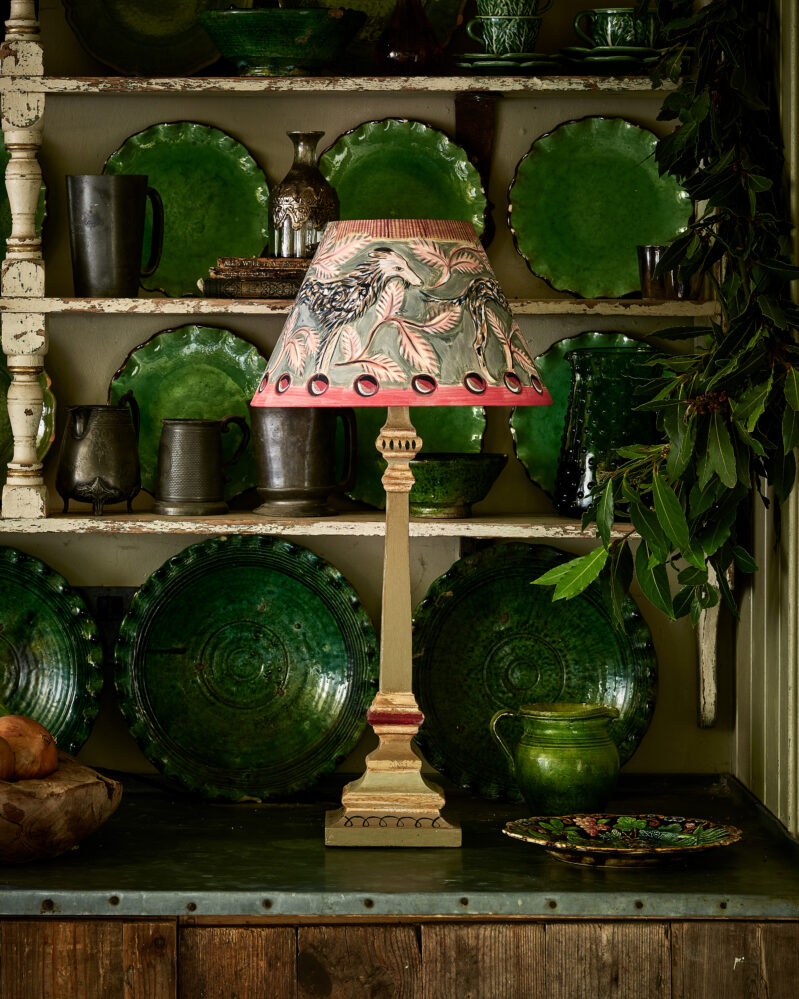
Bloomsbury Revisited explored painting illustrations and designs on lampshades, there were narrative-led wallpapers from Fiona Howard and stories told in pattern and print from Annika Reed Studios.

Annika Reed Studios
Together, these approaches signal a broader shift in contemporary design: one that values depth, story and artistry as much as aesthetics. As demonstrated throughout London Design Week, the future of interiors may lie not in abandoning tradition, but in transforming it through craft, creativity and collaboration.
Read more about London Design Week here.
Comments (0)