‘The smell would be unpleasant’: Battle rages over future of dogs on Ireland’s buses
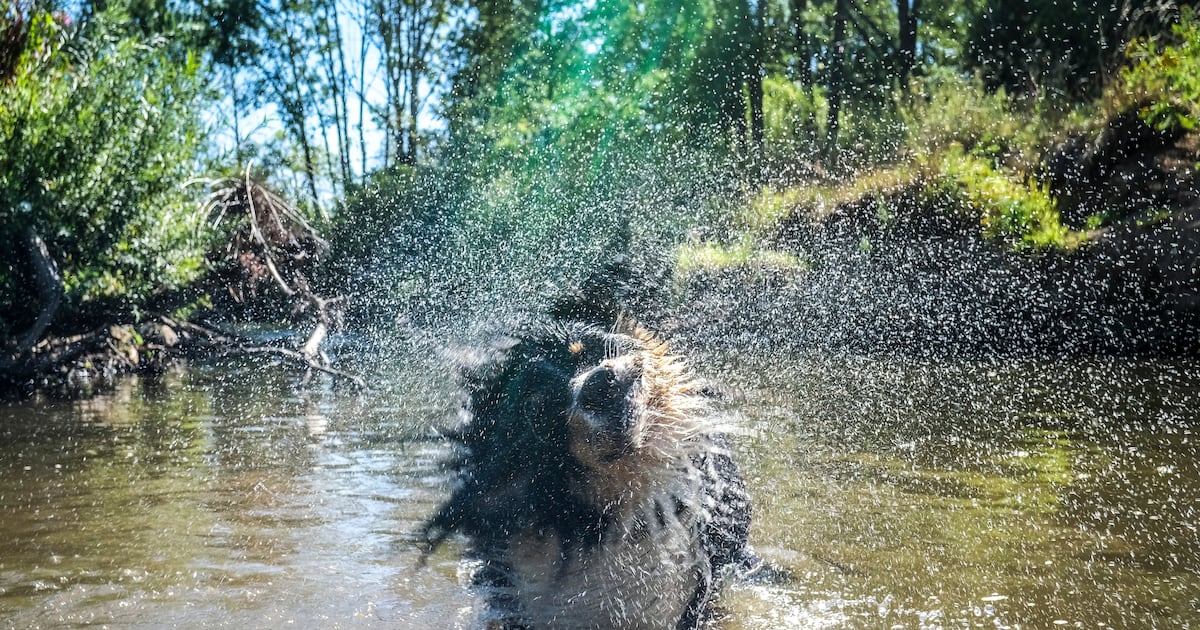
Cry “havoc!” and let slip the dogs on the bus: that’s what Transport Infrastructure Ireland (TII) is considering after launching a consultation on the fractious question of whether pets should be permitted on the State’s public transport system. Mini madras are to be carried in containers, while bigger bowlers will be muzzled and subject to refusal at busy times – no matter how plaintive they might look at the bus stop.More than 2,000 people responded to the request for input, with strong feelings being offered on both sides. In favour of the motion were, for the most part, people who would like to bring their dogs on the bus or train, highlighting issues with vet access, finding minders and unnecessary car journeys to pleasant walking areas.Many respondents to the consultation spoke of their experience with their pets abroad, where dogs lie resplendent on Tubes and U-Bahns from Barking to Dalmatia. One “even came kayaking with me on Lake Como”. Well for some.One submission was even written from the perspective of the animal itself. “I am very small and extremely well behaved,” one purported pet told TII. READ MOREThe €500m hole in Chernobyl’s roof: A race to repair damage from a Russian droneAddictive by design: this is the verdict every parent has been waiting forClive Myrie: ‘The best journalists are the ones who behave like human beings’How to not have a kitchen nightmare when you renovate this all-important roomAgainst the idea, the public highlighted problems you might expect – “I am terrified of dogs” – and ones you might not – have we considered the spread of zoonotic disease (infections that are transmitted from animals to humans)? [ ‘The rental situation needs to change’: Pet owners struggle to find homes in a housing crisisOpens in new window ]There are also issues of space (“a large dog could take up the space of three passengers”) and dignity (“do you want me to sit beside a dog on a bus, train or tram?”). Damp dogs also stink, it is noted: “In wet weather the smell would be unpleasant.” Fair points were offered on both sides, and not much by way of political cover for TII as it considers changes. As far as Overheard is concerned, we note a stark increase in the number of dogs in the pub over recent years. It makes sense to let them get home without getting behind the wheel. To boycott or to Boycott?Ousted co-chair of Drogheda United Joanna Byrne shakes hands with Minister for Sport Patrick O'Donovan on a match day. Photograph: Nick Elliott/Inpho A big week for both irony and nominative determinism amid the furore over Sinn Féin TD Joanna Byrne’s removal as co-chair of Drogheda United. Byrne was raised in the claret and blue of the League of Ireland football team; her grandfather was chairman of the club in his time.Followers of the news will be aware that Byrne opposed the playing of Ireland’s forthcoming Nations League fixtures against Israel, criticising the powers that be for allowing the country to compete at all.[ Malachy Clerkin: Fifa’s risible punishment of Israeli FA is a dereliction of dutyOpens in new window ]“Uefa should have expelled them as soon as Israel went into Gaza on a genocidal, ethnic cleansing mission that has seen tens of thousands of innocents murdered, including hundreds of sports men and women,” she said.The only option, she added, was to treat Israel like Apartheid South Africa: ban and boycott.Trivela Group, the US-based “multi-club investment group” in charge at Sullivan and Lambe Park, felt it was time to part ways with Byrne due to a breach of trust unrelated to the airing of political views, which to be fair are hard to avoid when you’re the Sinn Féin spokeswoman on sport.The investors own the club along with the giants of Walsall (near Birmingham), Silkeborg (Denmark) and Trivela FC (Togoville, Togo). Their founder and chief executive will “for the time being” serve as sole chairman while a new local voice is found to restore “trust and confidence”. His name? Ben Boycott.The Limerick RashomonJohn Moran, mayor of Limerick. Photograph: Alan Betson Frosty relations between Ireland’s only directly elected mayor, John Moran, and Pat Daly, the director general of Limerick City and County Council, have been well documented, as political correspondent and avid Limerick-watcher Cormac McQuinn recounts to Overheard.A cold war over rights and responsibilities is ongoing, and things came to a head when a Christmas market was cancelled last year, as Overheard reported previously, with Moran criticising local event quality on Limerick radio station Live 95 and Daly emailing staff to offer solidarity as a result.A series of long reads on The Currency website by Alan English, published this week, report an alleged physical altercation between the two men last October. Like a local government version of Akira Kurosawa’s Japanese movie classic Rashomon, there are differing accounts.Moran said: “The radio interview led to an episode in my office that was just unacceptable behaviour – by Pat. Where I was physically manhandled out of the way.”Daly is quoted as saying: “We just had a fairly robust exchange.”Moran said he was going out the door as a meeting was ending and “he got up from his chair and pushed me away from the door”.Daly said: “He was going out the door, I was going out the door, we both grabbed the door together. That was it. There was nothing beyond that.”[ Is the role of directly elected mayor workable? What’s happened in Limerick suggests notOpens in new window ]The Irish Times sent a Freedom of Information request seeking correspondence between the two which would have included emails sent after the row, but they were not released. According to The Currency’s reporting, Daly suspected Moran’s hidden hand in the FOI request: “You have an executive colleague who is priming stories.” Moran countered that the public had a right to know what’s going on.Moran told The Irish Times this week of the alleged altercation: “We have different recollections, but I don’t intend to add to that. My focus is on delivering for Limerick, driving local government reform, and making the directly elected Mayor model work.” Daly did not offer a comment in response to a query sent to the council.The Limerick mayoralty experiment is being closely watched as a bellwether for the future of devolved power, particularly in Dublin, where 28 per cent of the State’s population resides. “Can you imagine if Dublin had it?” a senior national official mused to the Currency. “How do you think that would end?” On the edge of our seatsThe chair at the centre of Chairgate is displayed on The Late Late Show. Photograph: RTÉ Farewell to Joshua Duffy, antique dealer, of Dublin’s Francis Street, who had to take legal action to defend his craft. The trouble started in 1997, when The Late Late Show ran a competition for furniture restoration and Siubhan Maloney of Donegal town won. In a controversy quickly dubbed “Chairgate”, shocking facts emerged. Despite Maloney telling Gay Byrne she had done 99 per cent of the work and hammered in 800 studs, Duffy – an experienced restorer of chairs – emerged to claim his rightful credit.He originally agreed to the job at a reduced rate in exchange for acknowledgment on RTÉ, he said, but it never came. He saw red. “It makes a mockery out of our trade. It simplifies a skill which takes years to learn,” he complained.[ Upholsterer gets apology over `Late Late' chairOpens in new window ]It took almost three years for Duffy to get full vindication, with an apology read in the High Court in 2000. The chair itself, charmingly, was present to bear witness to proceedings. It later wound up in Johnnie Fox’s, the storied pub in the Dublin mountains, where even tired mountaineers are barred from testing its prize-winning upholstery.Duffy, of Ballinteer and formerly Sandwith Street, died last week and is mourned by family, a wide circle of friends and admiring former colleagues from the antiques trade.




Comments (0)