From North Macedonia to Munster, it doesn’t pay for teams to be hopeless for long
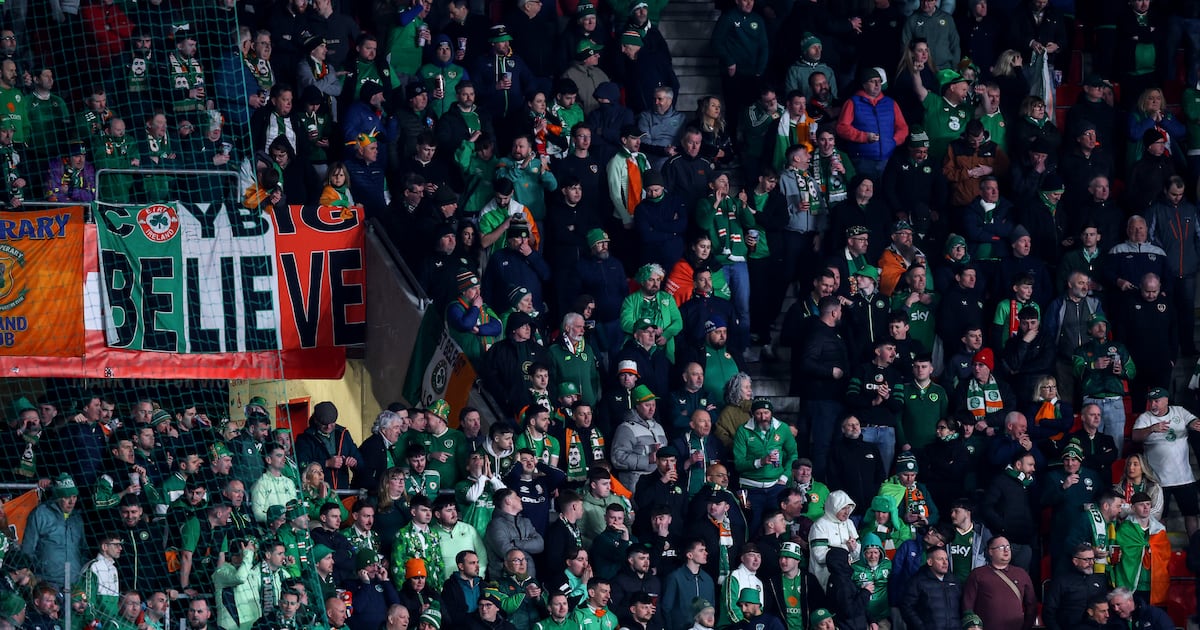
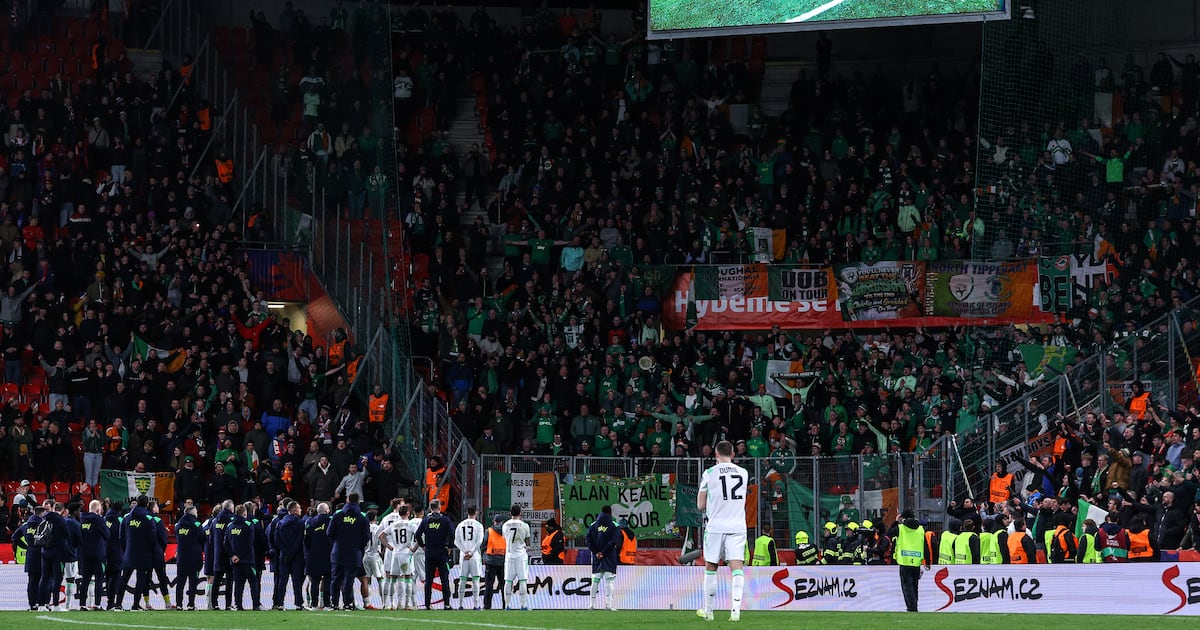
In sport, hope is like grass: it’s cut down, it grows back. Long before the qualification draw for Euro 2028 is made in Belfast in December hope will have been restored in the Ireland soccer team. In the months between Budapest and Prague it was the most powerful feeling the Ireland soccer team had generated in God knows how long: it was attractive and inclusive and it was plausible, which it doesn’t need to be. Hope can be ridiculous too. Unlike winning and losing, hope is not tethered to a bottom line. It distances itself from outcomes. It has a short memory. Sometimes it is blind, often misplaced. None of that matters. But because that feeling is so potent and vital, the creeping commodification of hope has taken place under our noses and with our unconscious consent. Along the way, its value dawned on people whose job it is not to leave a penny behind. In sport, hope could be endlessly recycled: repackaged, re-sold. It is the biggest reason why in competitions across the globe, the guillotine is much slower to fall. Killing hope is bad for business. Fifa and Uefa have been bulls in the hope stock market over the last couple of decades, inventing new ways to cultivate it. When Ireland qualified for Euro 88, there were just seven qualifying groups and only the winners went through to join the hosts in an eight-team tournament. There were no playoffs in the qualifying process; there were no playoff semi-finals; there were no alleyways to the tournament through the Nations League. READ MOREMy friend Michael Lyster met life on his own termsA team of good eggs but room for a bad one: What we learned from Ireland’s qualifying campaignGiles Richards: Why Max Verstappen gave me my marching orders from press conference Dave Hannigan: ‘Backward baboons’ booed Ronnie Delany in art and in lifeAs long as international tournaments were restricted to the game’s elite, though, hope’s earning potential was capped. Some countries would know after two or three rounds of qualifying matches that all hope was lost. That was a commercial disaster. Every stadium is hollowed out by the absence of hope. The Aviva Stadium has been witness to this phenomenon many times over the last seven or eight years, and to some extent, it will be again tomorrow night.So, now, the finals of the World Cup and European Championships are over-stocked with teams who, by any measure, are no-hopers. If we had made it, that would have been our status too. But that is the sleight of hand: the more no-hopers that Fifa and Uefa can cram into these tournaments, the more the general fund of hope swells. In sport, hopefulness operates on a sliding scale: hoping to win a match, hoping to get out of the group, hoping to catch a big fish in the knockout rounds. No-hopers are always hoping for something.If hope is being exploited by sport and its bean counters, all of us are complicit. It is what we crave. Next season, for example, the Championship playoffs in the second tier of English football will be extended to include the teams that finish seventh and eighth. That proposal came from the clubs. As many of them as possible needed to keep their supporters hoping for as long as they could. It was a business decision. The alternative is empty seats for inconsequential end-of-season games. Munster lost to the Bulls in South on Sunday but their URC hopes remain alive. Photograph: Christiaan Kotze/Steve Haag Sports/Inpho Professional rugby has already adopted this approach, with mixed results. In the URC, for example, it takes 18 rounds of matches to reduce a 16-team competition to eight playoff teams. The business model is to sustain hope among the die-hards through a long and fractured season without completely undermining the competition’s credibility. It means that a team such as Munster, whose form has oscillated between decent and dire since they beat Leinster in Croke Park more than five months ago, still have cause for hope with four rounds left to play. The reason for hope is not their form, but the URC’s determination to maintain hope inflation. About a dozen teams have a chance of making the top eight. In the Champions Cup, the trade off between jeopardy and protected hope follows a similar principle: 24 teams line up on the start grid and it takes four rounds of games to eliminate just eight of them. The consensus now is that the organisers have misjudged this balance. The guillotine falls too slowly. Waterford manager Peter Queally knows about the importance of keeping teams' hopes up. Photograph: Inpho The GAA have been grappling with this formula since the turn of the century. The old, straight knockout championships, were riddled with hopelessness or, worse, false hope. That has been alleviated over the years by championship structures that granted more permission to lose. Since the advent of provincial round-robin championships in hurling, for example, a couple of counties have lost their opening two games and still progressed. For as many teams as possible the GAA has purposely delayed the crushing endpoint when all hope will be lost. It is a help to this cause that the GAA’s secondary competitions have very little grip on a team’s long-term mood. Hardly any county will reach the end of the National League with all hope beaten out of them. That is also true of football’s provincial championships. One of the deliberate functions of the new intercounty calendar is to conserve as much hope as possible in the national grid until May. But even in the GAA a line must be drawn somewhere. The Waterford manager Peter Queally and others have argued that four teams should be allowed to advance from the provincial hurling championships. No team has suffered more than Waterford since that system was introduced, but food parcels of hope are no good either. It is hard to think of a sports organisation that trades more on hope than the GAA, though. There is so much time between the end of one championship and the beginning of the next that hope just recovers. People forget what it was like the last time hope left them short. Somehow, the Cork hurlers and their supporters are not less hopeful of winning the All-Ireland now than they were after the catastrophic end to last season. Imagine.If hope can survive that, how can it ever fail?