
Remember me


In Norse mythology, Valkyries provide transit to Valhalla, guiding the souls of fallen warriors to Odin’s Hall of the Slain in Asgard. In the Aston Martin lineup, though, it’s easier to get to Valhalla than to travel via Valkyrie. Examples of the new mid-engine supercar will be more than four times as plentiful as the last one, at a cost roughly a quarter as much.
While you don’t need to die a hero’s death for the Valhalla, the base entry price of $1,051,700 (at current exchange and tariff rates) still puts it in a mythical realm for lowly denizens of Midgard.

Aston Martiin
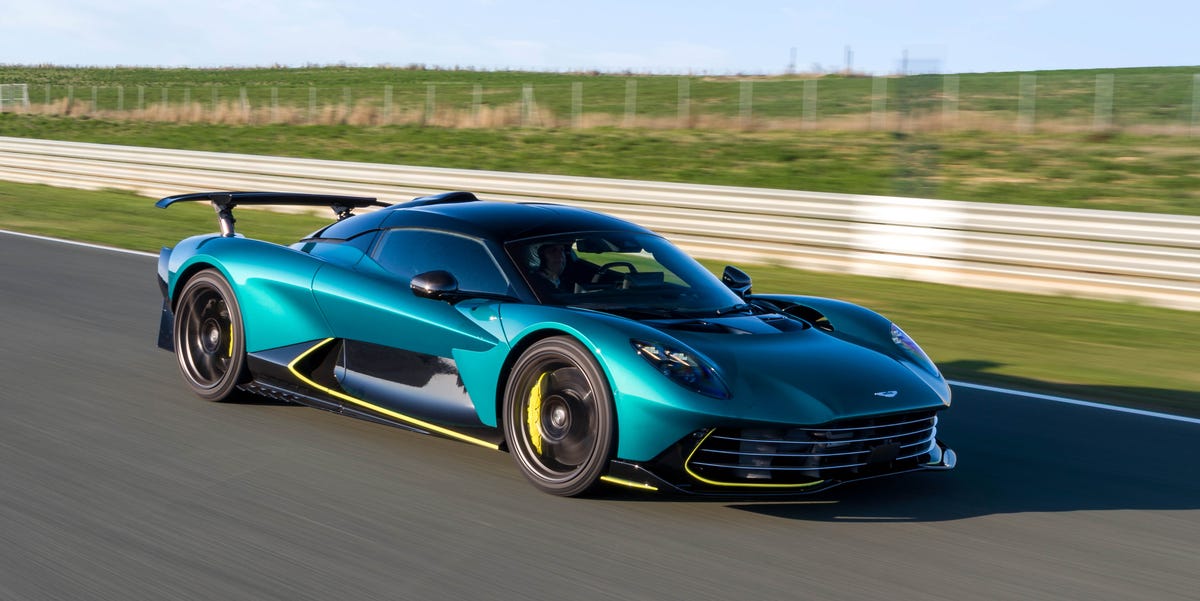
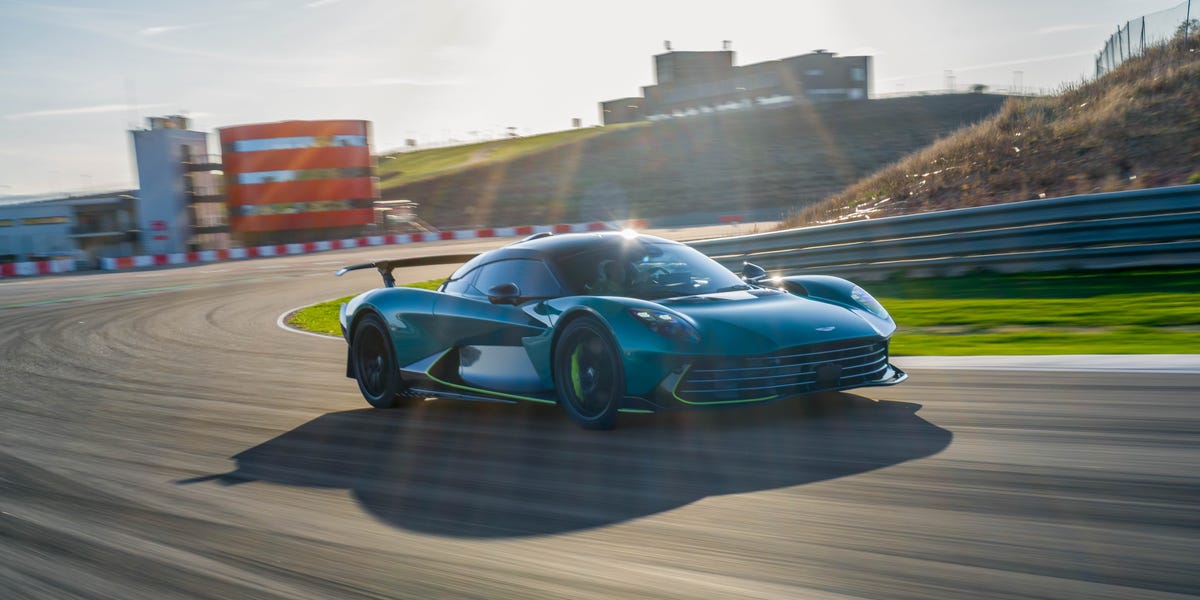
The Valhalla is new territory for Aston Martin, pun not intended. The brand counts it as its first series production mid-engine car, with the Valkyrie—which was produced jointly with Red Bull Advanced Technologies—being more of a special side project. On paper, the Valhalla checks all the boxes for a modern exotic: carbon-fiber construction, flat-plane internal-combustion engine, and hybrid assist—in this case one motor working with the engine and two powering the front wheels individually. With dihedral doors, a visible front pushrod suspension, and a giant rooftop intake ahead of vertical exhaust pipes, the Valhalla projects more of a hypercar aesthetic than mere supercar, if such semantic lines can be drawn.
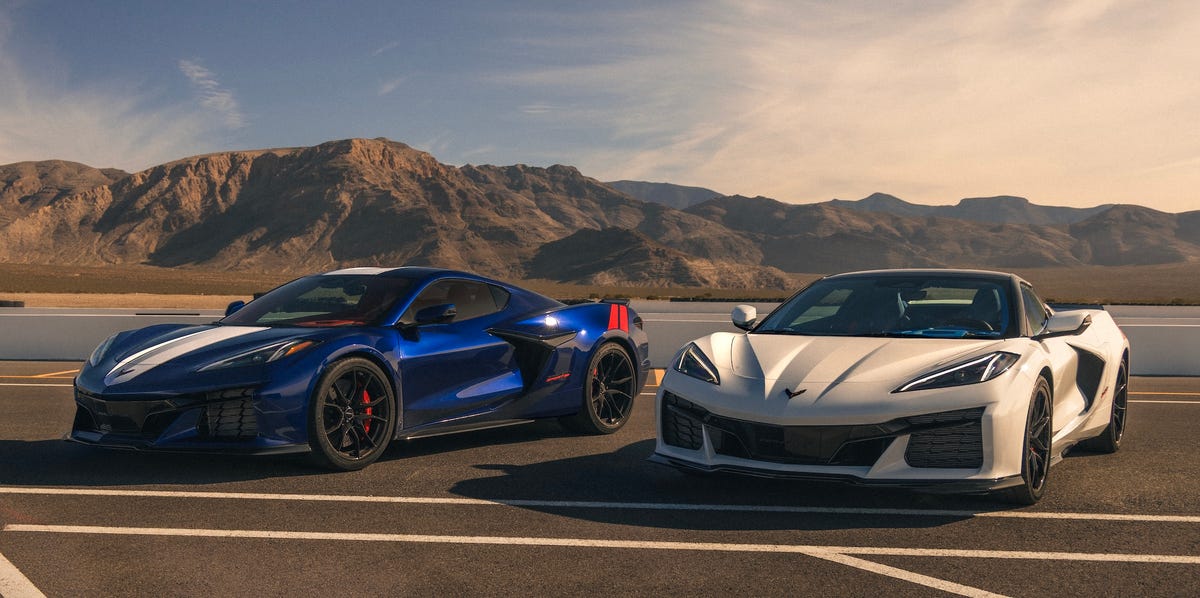
It’s worth noting that both the Lamborghini Revuelto and the Temerario, as well as the Ferrari Testarossa, use the same mid-engine layout with a triple-motor hybrid system. And mention of the Corvette ZR1X, which has a single electric motor for its front axle but a higher power output than any of these exotics, seems obligatory. The Valhalla’s AMG-sourced twin-turbo V-8 drives through an eight-speed dual-clutch transmission designed in-house. The rearmost electric motor sends power through the same shaft as the even gears, much like in the Revuelto. All the cars mentioned here are near or beyond 1000 hp—the Valhalla boasting 1064 hp—and weigh close to two tons. Aston Martin claims a “dry” weight of 3649 pounds, but the Valhalla’s actual curb weight is around 3980 pounds.

Video by Aston Martin
Where the Aston Martin most differs from its Italian and American counterparts is that is avoids the sharp angles and multiblade-razor styling for a more elegant aesthetic. Aston’s creative director, Marek Reichman, points out that the character line in the front fender runs uninterrupted along the door the rear bodywork, and that the lack of intake openings in the back was very much intentional. So much so that Reichman’s team designed the space aft of the front wheels to channel air to the openings on each side of the lower sill, which feed oil coolers. The snorkel up top feeds the engine and an air-to-air intercooler, and also pushes fresh air into the hot vee. In normal driving, the integrated rear wing sits flush, preserving the smooth side profile.
Inside, the Valhalla is what I’d describe as refreshingly uncluttered. A less optimistic colleague called it unfinished. In either case, the main features of the cabin are the rectangular screens, one in front of the driver and a center display for infotainment, both unadorned by binnacles. The squarish steering wheel is just round enough to work fine when turning requires moving your hands. The area behind the two spokes at 9 and 3 is shaped perfectly for wrapping your knuckles around the padding.

Aston Martin
The carbon-fiber bucket seats look thin and unforgiving but have the right amount of cushion in all the right places to be as comfortable as an everyday GT. The seating position is fixed and slightly reclined, with your feet slightly above the hips. It’s meant to reinforce the prototype-racer vibe but feels more like driving in an Eames chair. And I mean that in an entirely complimentary way—still upright enough for good visibility but cradled in a way that offers plenty of upper-body support.
And speaking of visibility, the A-pillars are located so far inward that it’s normal to look outside them. Again, it helps reinforce that this is no ordinary sports car. Another nice touch is the wing mirrors, which pivot as an entire pod instead of just moving the glass element. Rearward visibility is exclusively provided by a camera, as the firewall behind the seats is solid, although the rearview can be toggled between digital display and mirror modes. This strange homologation requirement is presumably in case you want to check the rear firewall is still there.

Aston Martiin
A short road drive before my track session at Circuito de Navarra in Spain provided some familiarization before things got too intense. The Valhalla’s door, which cut into the roof, opens wide and made for easy ingress. It’s a bit of a reach to pull the door down, but once closed, the cabin felt spacious and open, aided by carved-out spaces in the roof that help even 95th-percentile types like Reichman fit comfortably with a helmet. Getting out is slightly less elegant—picture yourself clambering out of that lounger sideways, and you’ll get some idea of how graceful it was for me.
Leaving the Navarra paddock, my first impression is that the front feels as wide as the trademark Aston Martin grill looks, but the visible front fenders made the Valhalla easy to place with precision. The steering is weighted heavier than, say, a Lamborghini Temerario or a Porsche 911 GT3, and it’s slightly numb, but the Aston turns in eagerly and tracks through corners with ease.

Aston Martin
There are four drive modes. EV uses the 6.1-kWh battery to travel in silence up to seven miles. I found it useful when passing through the small towns on the road route to avoid any extra unwanted attention beyond that already caused by a million-dollar interloper. The default operating mode is Sport, which runs like a hybrid system, switching the engine on and off as needed. My silent running strategy was perhaps overly cautious, especially because the engine doesn’t fire up with boom; it simply turns on and off. As Road & Track reviews director Mike Duff did in his earlier drive in a prototype version, I spend the bulk of my time in Sport Plus and Race modes, both of which leave the engine running.
Unlike the Italians, the Valhalla’s V-8 does not take center stage, despite the awesome look of the vertical exhausts (there’s a second pair of pipes that exit under the rear bumper), but it provides plenty of thrust. This is the same 4.0-liter twin-turbo last seen in the Mercedes-AMG GT Black Series. Aston has fitted bigger turbos and reworked the internals to raise the output to 817 hp, these made exclusively for Aston Martin by a supplier in Italy. The trio of motors adds 248 hp to the total, a sum limited by the battery voltage and not peak motor output, as is common with sport hybrids. The front motors share a housing but act independently, and all three are geared to run all the way up to the 217-mph governed top speed.

Video by Aston Martin
The TLDR of the previous paragraph is that the accelerator in the Valhalla acts like fast-forward button. The Valhalla simply leaps from 50 to 100 and beyond, although I minimized my time at such speeds out of an intense desire to practice my limited Spanish vocabulary with any officers of the Guardia Civil police service. The brakes helped keep that anxiety in check, slowing the Valhalla to more legal speeds with an easily modulated travel that seamlessly blends the carbon-ceramic discs and hybrid regeneration.
At moderate pace, the Valhalla masks its speed, such that every corner seems a little too easy. Only when I upped the velocity or cornered faster did it truly feel quick. The upside to this is a general refinement that’s far more like a grand tourer than high-strung hypercar. There was an expected rattle from every pebble and stone the Michelin Pilot Sport PS5s throw into the wheel well, but it was mostly just white noise while cruising, somewhat loud but not wearing. The ride was also compliant on the smooth Spanish roads, moving gently over undulations and rolling over bumps and holes without any harshness.

Aston Martiin
Suspension comfort in the Valhalla is partly due to the active aerodynamics. The rear wing, paired with an underbody front splitter, provides a maximum downforce of 1345 pounds starting at 150 mph, and the active elements are automatically adjusted to hold it level from there. This has allowed Aston to use single-rate springs with a lower ride frequency (in other words, softer), because the suspension doesn’t have to cope with ever-rising forces as speed increases.
Which means that, for a hypercar, the Valhalla is uniquely suited to cover long distances in comfort. As long as you pack light. You see, there is no cargo storage whatsoever, as the front is occupied by the pushrod suspension, front motors, cooling, and aerodynamics, while the wing occupies all the space behind the engine.

Aston Martiin
Sacrificing luggage in the pursuit of speed paid off around Navarra’s 2.7 miles of tarmac. Here the Valhalla displayed impressive stability, especially into the fast right-handed Turn 1, where I found myself carrying more speed each lap. The flip side of such confidence, in an unfamiliar car on an unfamiliar track, was that rising confidence levels were soon causing me to take slower corners too fast and bungle the exit. The downforce is part of the equation here, surely, but the aero elements transitions so smoothly between downforce, drag reduction, and airbrake positions that I never catch a glance at the invisible hand.
As further evidence that we are in a golden age for the ultra-high-performance car, the Valhalla makes a four-figure power output seem easy. What once would take heroic feats worth of entry into Odin’s hall to wrangle is now a straightforward affair. But it’s never boring. No more than 25 percent of the total torque goes to the front, which gives the Valhalla a lively bias toward the rear. As with the road drive, it took some time for me to attune to the steering feel, but as the laps accrued, the sense of communication increased.

Aston Martiin
Employing the front wheels for motive traction and stability enhancement in addition to steering means that the tires—Michelin Pilot Sport Cup 2s mounted on optional magnesium wheels for the track-session test cars—warmed up quickly to the point of greasiness. Aston Martin’s crew aired down the fronts for my second session, improving both the balance and grip. By the third and final session, I felt fully tuned in to the Valhalla, squealing the tires through Navarra’s chicanes and taking aggressive bites of throttle out of every corner.
Is the Valhalla as fast as the rest of today’s 1000-hp club? It’s tough to gauge from a solo drive, but the Aston is close enough to make comparisons irrelevant. Even more so when money no longer buys a differentiating amount of power, and when the ZR1X has rendered any supercar-value proposition (however pointless) moot.

Aston Martiin
The Valhalla succeeds in feeling unique and special, an absolute requirement for a seven-figure car. It forgoes the high-strung liveliness of the Lamborghinis for refinement and poise, trading bro-dude fighter-jet looks for smooth curves. But that vast rear wing also makes the Aston a much more aggressive proposition than the Ferrari 849 Testarossa. It is, to its credit, an appropriate transfer of Aston Martin aesthetics to the mid-engine exotic layout. All of that and also comfortable enough for multiday journeys, provided you either truck your bags or have a change of clothes at your destination.
Viking heroes traveled light as they passed into the next realm. So too will owners of the car named after the promised land.
Comments (0)