When Laylah Amatullah Barrayn and her co-organiser, NYU professor Dr Emilie Boone, were developing the title for their inaugural symposium on Black photographic archives, it was nearly titled To Collect & Collate: The Unsung Keepers of Black Photography.
However, the word “unsung” was scrapped in the preliminary stages. “We quickly had to ask ourselves,” Barrayn recalls, “unsung to whom? These keepers have always been known to their own communities.” That edit, while seemingly minor, was crucial to the organisers in rethinking what the archive means in contemporary culture. “It’s not just a formal space in a museum or an institution; it’s a living practice that happens across all spaces,” she explains to me.
Hosted at NYU Accra, Ghana, between 10-12 March, 2026, the symposium brought together a range of people engaged in preserving memory, from academic scholars and art historians to community archivists and family members. Over three days, they gathered to honour the archive as an institution while examining its assumptions, ethics, past and future, specifically within a decolonial, African context. “For us, this ‘memory work’ is deep within the heritage of people of African descent,” Barrayn explains to me. “It hasn’t just been a hobby or a professional choice; it has been a crucial part of our survival for a very long time.”
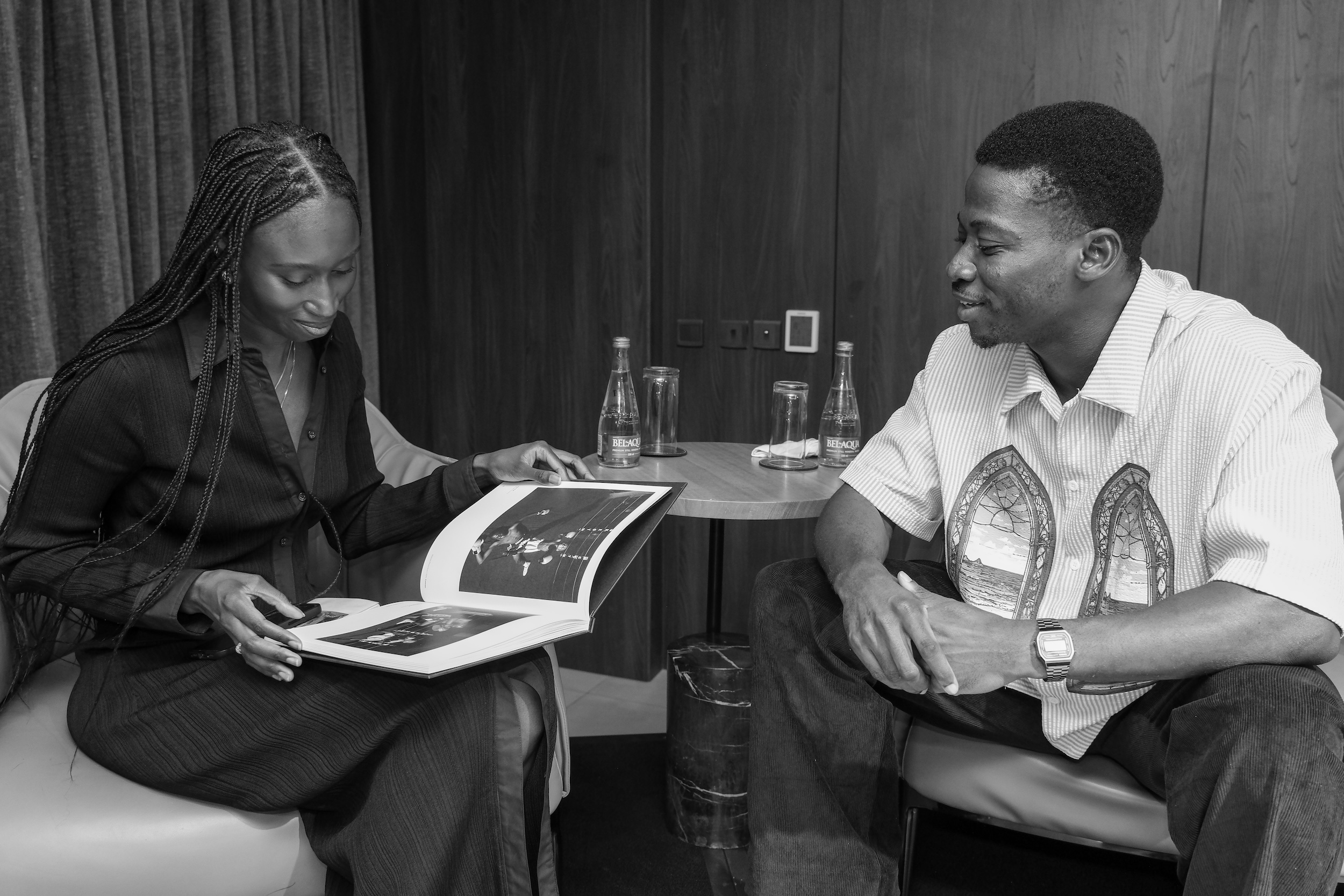
Barrayn, a documentary photographer and professor at Rutgers University, has spent years thinking about the photographic archive and its myriad functions. For her, the photographic history and its archive are “simultaneously liberatory and violent.” Every iteration of how photography is produced,” she argues, “reveals the ways it was deployed as a tool.” The archive, then, is not a neutral repository but a record of “the psyche of a time: the concerns of the people, the problems they sought to solve, the gains they hoped to access, and the values they held dear.” It is this expansive nature of the photographic archive that underpinned the programme for the symposium which included presentations by renowned cultural workers, artists and academics, site visits to archives and research centres in the city and interviews conducted between panellists.
“As a co-organiser alongside Emilie Boone, my approach was less about filling slots and more about curating a vital conversation. I started with a ‘wish list’ of earnest practitioners, including Dr Kenneth Montague, Amy Sall, Paul Ninson, and Dr Leigh Raiford, whom I trusted to be the perfect thought partners for this convening,” shares Barrayn. “My goal was to bring together people who were not only active in scholarship, exhibitions and institution building but who were also deeply embedded in the community.”


Comments (0)