In fact, you’ll be hard-pressed to find a dermatologist who doesn’t rely on hypochlorous acid in their practice—another fact driving hypochlorous acid’s ascension. “There are more doctor-led skincare brands than ever before,” says Dr. Yadav. “One that comes to my mind is a brand called Twenty / Twenty, which is founded by an ophthalmologist. I think the medical community is trying to move this ingredient, which we've had comfort with for a long time, into the mainstream.”
What can hypochlorous acid actually do for your skin?
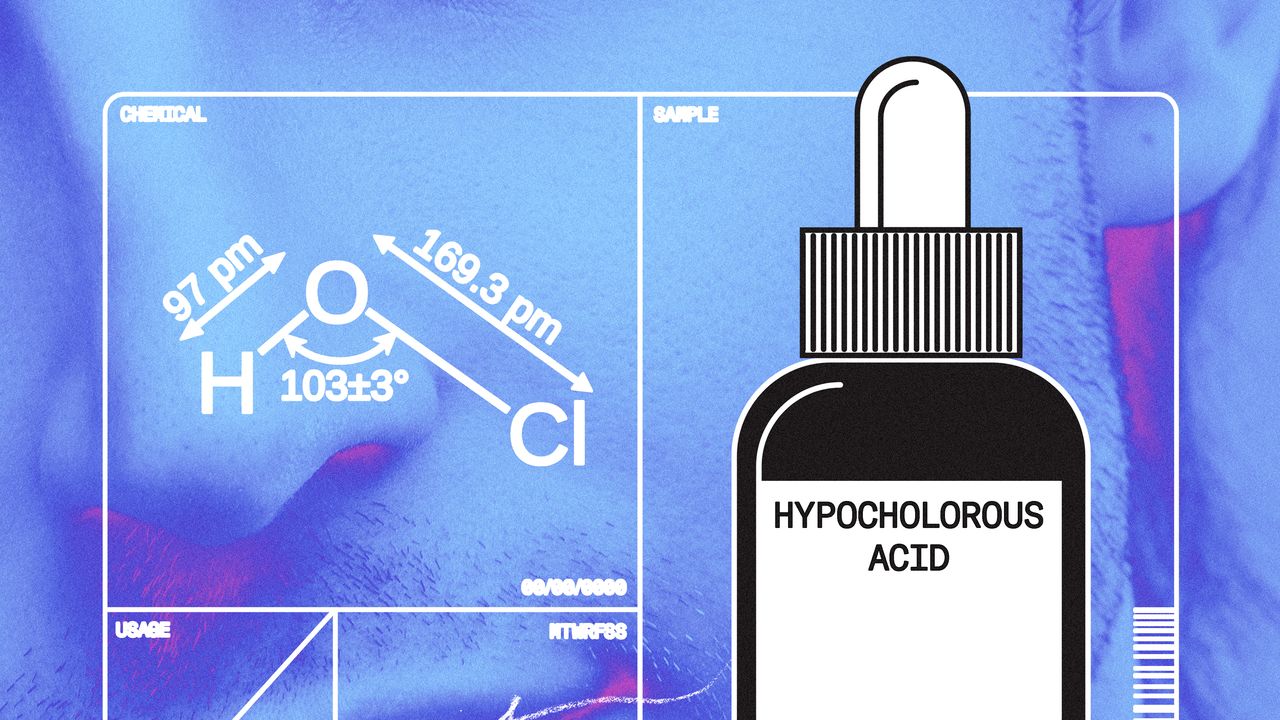
First of all, if you deal with acne, eczema, or rosacea, you’re probably already familiar with hypochlorous acid sprays. Dermatologists have been recommending these easily accessible, over-the-counter products for years to help patients manage the day-to-day symptoms of those conditions and others like them. “For those patients, it's a really nice product to help soothe their skin, calm the bumps, and reduce the risk of flare-ups,” says Dr. Yadav. “It's not just antimicrobial, but also antiviral and antifungal.”
But you certainly don’t have to suffer from a chronic skin condition in order to benefit from a hypochlorous acid spray. For starters, adding hypochlorous acid to your skincare routine can increase the absorption of the products you apply next, says Corey L. Hartman, MD, board-certified dermatologist and founder of Skin Wellness Dermatology in Birmingham, AL. “It helps the next step to penetrate a little better —absolutely,” he says. (Just avoid using hypochlorous acid right before a vitamin C serum, as “they cancel each other out,” says Dr. Obayomi, who recommends giving your skin 15–20 minutes between applying these products.)
Hypochlorous acid is just as deserving of a spot in your shaving routine, where a few post-shave spritzes can help prevent razor burn, bumps, and irritation. “Shaving bumps can come from the pattern of the hair, but also from agitation from any bacteria that's on the skin,” says Dr. Obayomi. “Using hypochlorous acid to clear up any bacteria that's on the skin can help to reduce any irritation that comes from that.”
And while you’re at it, grab a bottle for your gym bag. Because of hypochlorous acid’s antimicrobial and anti-inflammatory properties, it’s a go-to remedy for reducing post-workout skin redness, and can even be used to neutralize bacteria—and reduce the risk of breakouts—if you have to run out before hitting the showers. “Think of it like mouthwash,” says Dr. Obayomi “It's not going to replace brushing your teeth, but it's something that will help to freshen things up.”
Are hypochlorous acid sprays worth it?
While the hypochlorous acid spray products that we’ve tested have ranged from $10 to $60, they almost always use the same ingredient. In most cases, the difference in price comes down to the brand, the packaging, and the size of the bottle. But if you can find a version that fits your preferences, and your budget, it’s hard to imagine a scenario where you wouldn’t benefit from hypochlorous acid.