“My brain has never worked better in my entire life,” said Dave Asprey…. at the ripe age of 51. If you don’t know Asprey, he’s widely considered one of the longevity gurus and has made a name for himself exploring the science of how we can stay fitter and mentally sharper for longer. It's surprising to hear him say his middle-aged mind has never worked better, since the science on post-40-year-old brains isn't necessarily flattering.
The areas responsible for planning, decision-making, problem-solving, and spatial navigation become less efficient as we near midlife. We become more susceptible to the effects of bad sleep and worse at filtering out stress hormones like cortisol. And yet, Asprey, like many other wellness influencers on TikTok and YouTube, claims to be hitting his mental peak at the time when most of us are starting to battle our frequent brain fog.
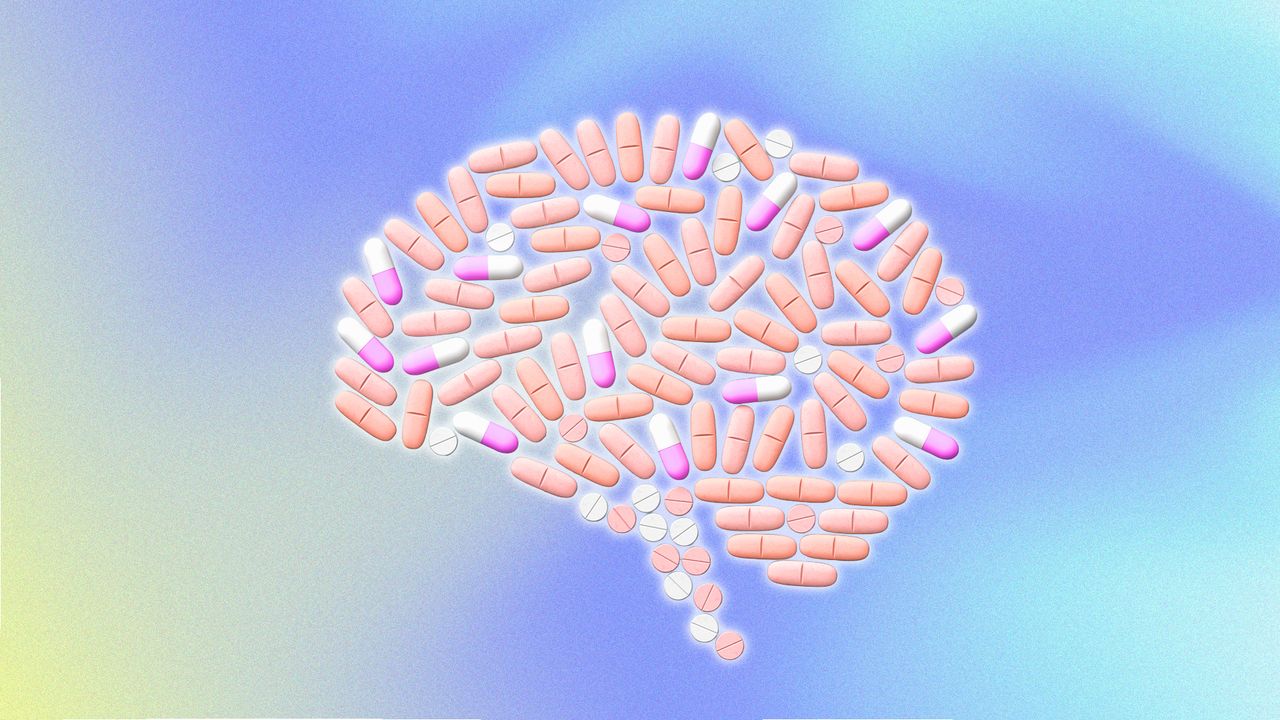
He puts it down to a quarter-century regimen of nootropics – the name for some very trendy drugs and plant compounds that can enhance cognitive function. In many cases, these supplements are being used in ways different to their original medical intent. Modafinil, for example, is prescribed for treating diabetes in the US and narcolepsy in the UK, but Asprey says he uses it to increase blood flow to the brain. He also swears by things like aniracetam and sulforaphane in his list of brain-centric supplements.
By taking these pills in daily combinations or ‘stacking’ them, longevity adherents like Asprey hope to supercharge the benefits. Others, like looksmaxxing’s controversial figurehead Clavicular, take it a step further, combining their “brain stack” with things like testosterone, peptides and steroids. It goes without saying that you’d need a doctorate in pharmacology to even pronounce some of these drugs, let alone properly prescribe them. But with real evidence that some nootropics can help our brains as we age, is it possible to explore the nootropic scene without needing to go full GymTok mode? And which drugs actually work? Our experts have thoughts.
Can nootropics really ‘hack’ our brains?
“Some interventions do work, but not in the way TikTok suggests,” Amir Bhogal, director of Pyramid Pharmacy Group says. For example, L-theanine is well-established in research to reduce anxiety and improve focus, but only when combined with caffeine. “The biggest gains don’t come from quick fixes,” he continues. “Regular exercise produces measurable improvements in brain volume and cognitive function that rival or exceed any supplement. A person without a solid foundation of good sleep, regular exercise, and reasonable nutrition will see minimal benefit from even the most sophisticated nootropic stack.”
Pupinder Ghatora, pharmacist and co-founder of Ingenious says it isn’t just about chucking random pills down your neck. “Complimentary stacking refers to combining compounds that act on different but related pathways so they can support each other’s effects without making each other redundant,” Ghatora says. But the TikToker obsession with ‘boosting’ neurotransmitters is misplaced. “Doing this can lead to downregulation and rebound fatigue, which is why aggressive stacks become less effective over time,” Ghatora warns.
Do the viral brain stacks actually work?
Different influencers swear by different nootropics, but even a cursory glimpse online reveals a few commonly recurring substances. Before you consider stacking them, we asked Bhogal to tell us if they actually work on their own.
Noopept
Noopept gets thrown around a lot these days by those on the internet who say it’s cured their brain fog. It’s been around for decades, but the real research backing is slim. “Most studies come from a single laboratory, and many use non-standard research models that don't translate well to real-world use,” Bhogal says.
Bacopa Monnieri
“Bacopa monnieri stands out because it has moderate evidence supporting its use for memory and learning,” says Bhogal. “The research quality is better than what we see with Noopept, and multiple independent laboratories have investigated it. That said, the effects are modest rather than dramatic. You're looking at improvements in memory consolidation and processing speed, not the kind of cognitive transformation that marketing materials sometimes suggest.”
Cerebrolysin
Cerebrolysin is a peptide mixture derived from – wait for it – porcine brain tissue. “It's approved in Europe for stroke and dementia, which gives it some legitimacy, but it isn’t FDA approved in the United States, and the evidence supporting its use has weakened over time,” says Bhogal. “The evidence doesn't support robust, sustained enhancement.”








Comments (0)