What you need to know about an MRI scan
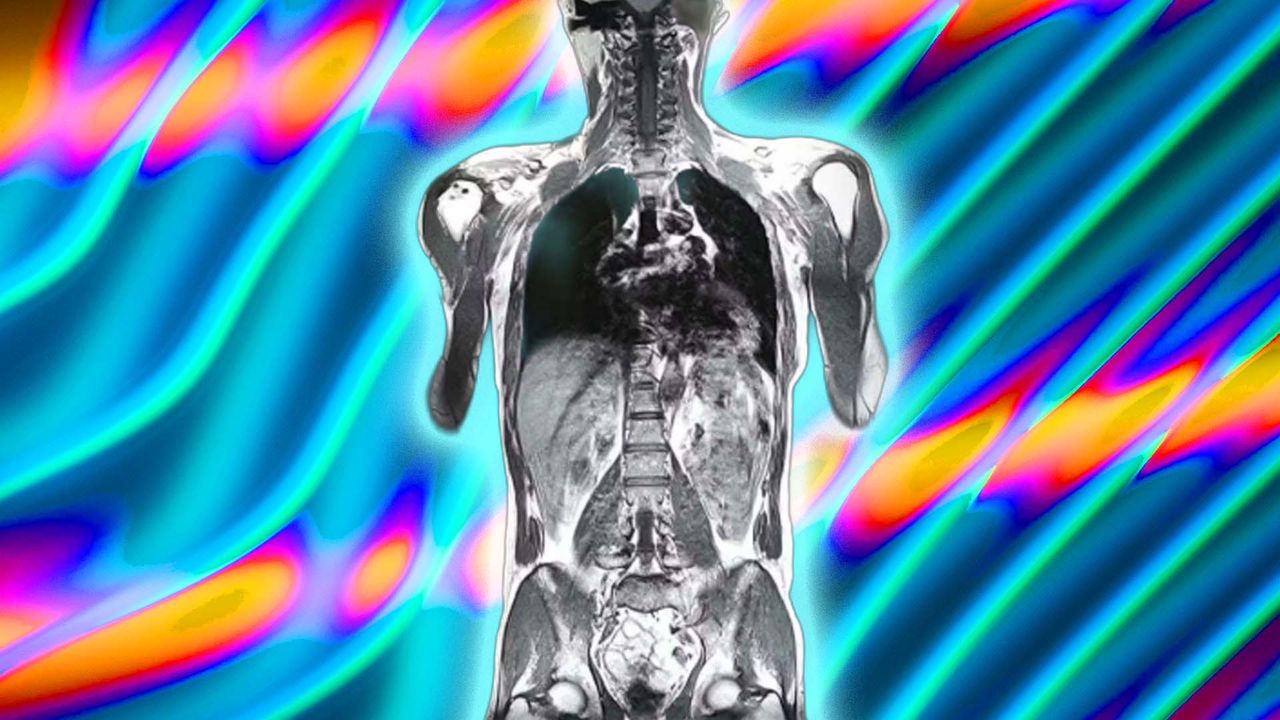
“We make this scan clear that it is not for people who have symptoms,” says Dr Pannick. If you’ve been advised by a doctor to get an MRI for injury, this will usually involve a dedicated area scan, or if you have concerns for cancer, you’ll be looking at a cancer screening such as an ultrasound, mammogram or contrast prostates test — as advised by your medical practitioner. This is not what Ezra is about. Indeed, MRI scans are currently “the best we've got at the moment in terms of early cancer detection", and can pick up tumours as small as 1cm, or abnormal skin lesions that will require further looking by a dermatologist — the incentive to book is to receive an overview of well your body is currently performing. Simply put, it is not intended to be a fear-mongering procedure but rather to give you “a comprehensive look inside the body”.
Comprehensive is the word for it; almost everything is looked at in minute detail. If we break down the neck area for instance: an MRI won’t just examine the thyroid gland (the one that is predisposed to cancer), it also picks up all the lymph modes, tonsils and larynx. A brain scan will also show any microangiopathic changes, which Dr Pannick explains is the narrowing of the vessels, that “if left untreated, predisposes people to things like dementia.” Similarly, even the onset of heart disease can be picked up. “You can find cancers, aneurysm, neurodegeneration, muscle-skeltone issues like disc herniations, fractures, tears, endometriosis, PCOS. The list is endless.”
Symptomless members visit for all sorts of reasons. “You’ll get men in their fifties wondering about their prostates,” says Dr Pannick. “There’s a big media push on prostates. And in older people, patients who are 70+ who are worried about their brain and signs of dementia. We’ve started including all these things in the report too.”
There are different MRI options at varying price points, but the full whammy — which costs £3,000 and is a two hour head-to-toe scan, split into two 60-minute sessions — that covers everything from: “your head, neck, abdomen, pelvis, spine and looks for potential cancers as well as 500 other conditions, spinal issues and degeneration”, adds Dr Pannick. The only thing Ezra’s UK version does not (yet) check for, is your joints. As mentioned before, this would require a dedicated MRI.
When you get an Ezra report, you get a colour-coded map of your body. “We score everything from 1 to 5. 1 and 2 are green and are usually asymptomatic — something that is informative but not really actionable — like your right kidney being higher than your left or a bone island in your spine. 3 is yellow; an indeterminate finding. This is something that will require monitoring over time like a small hernia or meniscus tear. 4 is something like cancer that will require an immediate follow-up with a doctor and 5 is urgent and will require you to go to the ER immediately, like signs of a potential stroke.”
While the intention is not to fear-monger, Ezra understands that results can sometimes be anxiety-inducing. Whilst the findings are analysed by AI, “there is always a radiologist in the loop,” states Dr Pannick. “We’re not remote doctors who aren’t in touch with real people. We completely get how isolating it can be to get given a report with a scary finding. We’re very hot on: if there is a significant finding, we’ll have a read through your results and we’ll chat it through.”









Comments (0)